

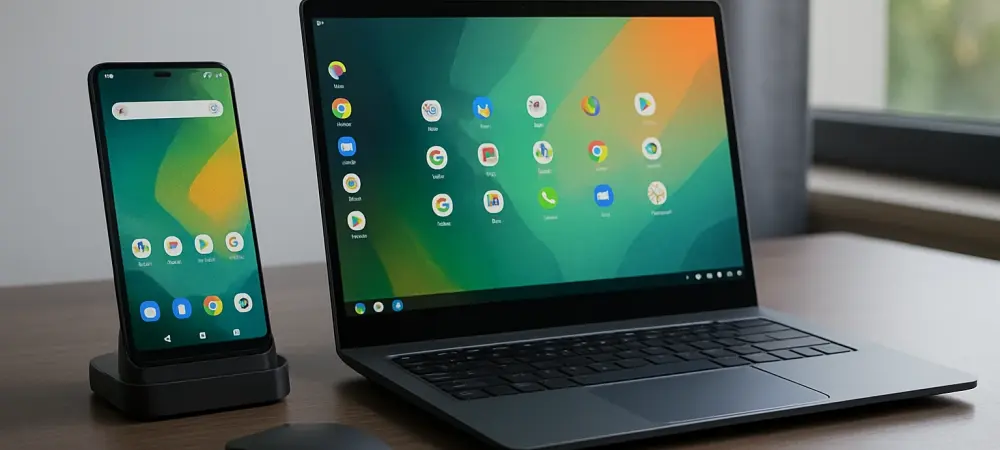
The long-held boundary separating the vibrant, app-rich world of mobile computing from the productivity-focused domain of the desktop has officially been dismantled by Google’s ambitious new platform. The unification of mobile and desktop operating systems represents a significant advancement in personal computing, and this review explores the evolution of this concept through Google’s latest offering. Its purpose is to provide a thorough understanding of this new operating system, its current capabilities, and its potential future development as a major rival to the long-standing duopoly of Windows and macOS.
The Dawn of a Unified Operating System
Google’s new desktop environment is built on the core principle of unifying Android and ChromeOS into a single, cohesive experience. This strategic initiative moves beyond simple interoperability, establishing a “common technical foundation” that fundamentally merges the two platforms. By re-baselining the technology of ChromeOS on top of an Android core, Google has engineered an ecosystem where the distinction between mobile and desktop begins to dissolve.
This bold move positions the platform as a direct challenger to the established dominance of Microsoft and Apple. For years, users have been locked into separate ecosystems, but Google is now leveraging its massive Android user base to create a compelling, integrated alternative. The relevance of this launch extends beyond just a new product; it signals a potential paradigm shift in how users interact with their digital lives across different devices.
Core Architecture and Defining Features
The Foundational Shift to Snapdragon Hardware
A fundamental change powering this new experience is the hardware shift away from traditional Intel processors. The new generation of “Android PCs” is built upon Qualcomm’s Arm-based Snapdragon chips, which feature the high-performance Oryon CPU cores. This move is not merely a component swap but a strategic realignment toward an architecture optimized for the demands of modern computing.
This partnership with Qualcomm is engineered to deliver a superior balance of power and efficiency, forming the bedrock of the converged experience. The Arm-based architecture allows for fanless designs, all-day battery life, and the instant-on responsiveness that users have come to expect from their smartphones. This hardware foundation is critical for enabling the platform’s more advanced software and AI capabilities.
A Truly Seamless App Ecosystem
Perhaps the most significant feature is the platform’s native support for the entire Android application ecosystem on a desktop. This integration eliminates the performance bottlenecks and compatibility issues that have plagued previous attempts to run mobile apps on computers through emulation or containerization. Millions of existing applications are now available on a larger screen without modification. By running these applications natively, the system promises a much smoother, more responsive, and fully integrated user experience. This means productivity apps, creative tools, and games originally designed for a touchscreen can now leverage the precision of a keyboard and mouse. This seamless access transforms the desktop into a far more versatile and dynamic environment.
Intelligence Woven into the Core
The new platform heavily leverages Android’s significant advancements in artificial intelligence, making intelligence a core component of the user experience rather than an add-on. This is most evident in the deep integration of Google’s AI assistant, Gemini, which is woven into the fabric of the desktop environment to offer contextual assistance and proactive suggestions.
Moreover, the merger of the operating systems is designed to accelerate AI development and feature deployment across Google’s entire device portfolio. By creating a unified foundation, innovations in machine learning and on-device processing developed for mobile can be rapidly and efficiently rolled out to the desktop, ensuring a consistent and constantly evolving intelligent experience for all users.
Strategic Market Entry and Positioning
The timing of this platform’s launch appears meticulously planned to capture a significant market segment searching for new options. With official support for the widely used Windows 10 having ended, millions of users and organizations are faced with the choice of upgrading hardware or seeking a modern, secure alternative. Google’s new OS presents itself as a compelling path forward.
This strategic positioning allows it to be framed not just as another competitor but as a timely and necessary evolution for the next generation of computing. It targets users who are already deeply integrated into the Android mobile ecosystem and are seeking a more unified and intelligent workflow, making it a powerful contender for their next primary computing device.
Real-World Impact and User Experience
The most immediate real-world application of this technology is the creation of a seamless, converged experience between a user’s smartphone and their computer. This mirrors the powerful synergy that Apple users have long enjoyed between their iPhones and Macs, where notifications, files, and workflows transition effortlessly between devices. Google has finally delivered a comparable level of integration.
The initial reception from industry partners has been overwhelmingly positive, lending credibility to the platform’s potential. Cristiano Amon, CEO of hardware partner Qualcomm, branded a preview of the operating system as “incredible,” praising its ability to fulfill the long-sought “vision of convergence of mobile and PC.” Such endorsements from key stakeholders suggest a strong foundation for market adoption and success.
Overcoming Challenges and Hurdles
Despite its promising features, the platform faces significant challenges on its path to widespread adoption. The technical task of flawlessly merging two historically distinct operating systems is immense, and maintaining stability, security, and performance across a vast array of hardware will be an ongoing effort. Any perceived instability could deter users accustomed to mature desktop environments.
Furthermore, the market obstacles are formidable. Competing against the entrenched user loyalty and vast software libraries of Windows and macOS is a monumental undertaking. Success will also depend heavily on the developer community’s willingness to embrace the platform, optimizing existing Android apps and creating new experiences that take full advantage of the desktop form factor.
The Future Trajectory of Converged Computing
This launch is clearly the first step in a much broader, long-term vision for a single, unified Google ecosystem that spans mobile, desktop, and beyond. Future developments will likely focus on deepening the integration between devices, blurring the lines until the user’s digital identity and data flow fluidly across any screen they choose to use.
This unified platform has the potential to unlock significant breakthroughs in both performance and artificial intelligence. By standardizing the underlying architecture, Google can push advancements in on-device AI and ambient computing more rapidly. The long-term impact on the PC industry could be transformative, forcing competitors to rethink their own strategies around cross-device convergence.
Conclusion A New Era for the Desktop
The core pillars of this new platform are clear: a unified foundation merging the strengths of Android and ChromeOS, a strategic hardware shift to power-efficient Qualcomm Snapdragon chips, native support for the vast Android app ecosystem, and deep, pervasive AI integration through Gemini. These elements combine to create a compelling and modern desktop experience.
This review ultimately found that Google’s platform represented more than just a new product; it was a well-executed strategic maneuver. By leveraging its dominance in mobile and patiently building a converged hardware and software ecosystem, Google successfully positioned itself not merely as an alternative to Windows and macOS, but as a formidable competitor that reshaped the conversation around the future of personal computing.