

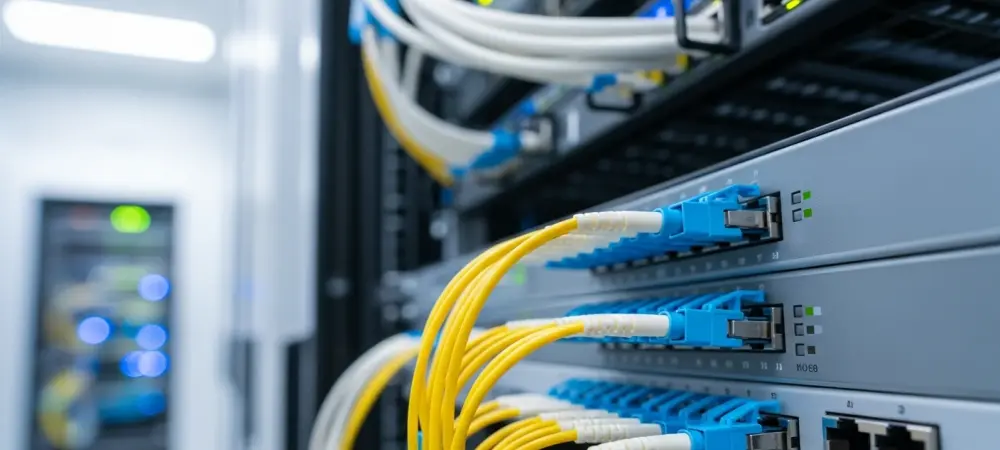
The intricate web of global data, streaming media, and instant communication that defines modern life is supported not by ethereal clouds, but by a vast and often overlooked physical infrastructure of meticulously engineered cables. In a world increasingly captivated by the convenience of wireless connectivity, the physical wiring that forms the true backbone of our digital existence remains more critical than ever, with every Wi-Fi signal ultimately beginning and ending its journey on a tangible, physical medium. The selection of this foundational wiring is far from a trivial commodity purchase; it is a pivotal strategic decision that dictates the speed, reliability, and future scalability of any network, from a simple home office to a sprawling enterprise campus. This journey through the landscape of network cabling will explore the foundational technologies that built the internet, the contemporary standards that power our daily lives, and the future-forward innovations poised to handle the data demands of tomorrow, providing a comprehensive framework for understanding and choosing the right physical connections. The prevailing wisdom among network engineers and IT strategists underscores that a robust and thoughtfully planned cabling infrastructure is not merely a component of a network but its very heart, pumping the lifeblood of data to every connected device and system.
Beyond Wireless Understanding the Physical Backbone of Digital Communication
The proliferation of wireless technologies has created a common misconception that physical cables are becoming obsolete. However, industry experts consistently affirm that the opposite is true. Every wireless access point, cellular tower, and satellite gateway relies on a high-capacity wired connection to the larger network. These physical links are the superhighways that aggregate and transport the massive volumes of data generated by countless wireless devices. The performance of any wireless network is therefore fundamentally capped by the capacity of its wired backbone. Consequently, the strategic planning and installation of high-quality cabling is an indispensable prerequisite for building a reliable and high-performing wireless ecosystem, acting as the silent enabler of the mobile and untethered experiences users have come to expect. Without this robust physical layer, the promise of seamless wireless connectivity would remain unfulfilled, bottlenecked by an inadequate foundation.
Making an informed decision about network cabling is one of the most impactful long-term investments an organization can make in its technological infrastructure. The choice between different cable types and standards has profound implications for network performance, directly influencing everything from data transfer speeds and latency to overall system reliability and the ability to support emerging applications. Opting for a lower-grade cable to reduce initial costs can create persistent performance issues and necessitate a costly and disruptive replacement years sooner than anticipated. Conversely, investing in a cabling standard that offers headroom beyond current needs is a strategic move toward future-proofing the network. This foresight ensures that the infrastructure can accommodate the exponential growth in data traffic driven by video conferencing, cloud computing, and the Internet of Things (IoT) without requiring a complete overhaul, thus maximizing the return on investment and supporting business agility for years to come.
This comprehensive guide serves to demystify the complex world of network cabling, charting a course from the historical origins of data transmission to the cutting-edge technologies that define modern high-speed networks. The exploration begins with the resilient coaxial cables that pioneered early Ethernet and continue to serve critical roles in specific applications. From there, the focus shifts to the ubiquitous twisted-pair copper cabling, examining the evolution of its category standards and the transformative capabilities of technologies like Power over Ethernet (PoE). Finally, the journey culminates with an in-depth look at the unparalleled power of fiber optics, the technology illuminating the path toward 100 Gbps speeds and beyond. By understanding the unique strengths, limitations, and ideal use cases of each technology, network designers and IT managers can architect an infrastructure that is not only effective for today’s demands but also resilient and scalable enough for the innovations of the future.
The Core Technologies from Copper Wires to Light Pulses
Coaxial Connections The Resilient Foundation of Modern Networks
The structural design of coaxial cable is a masterclass in electrical engineering, purpose-built to protect signal integrity in challenging environments. Its architecture consists of a central conductor, typically solid or stranded copper, which carries the data signal. This core is enveloped by a dielectric insulator, a non-conductive layer that maintains a precise distance between the core and the next layer, which is a metallic shield. This shield, often a woven copper braid, foil, or a combination of both, acts as the return path for the electrical circuit and, more importantly, provides robust protection against electromagnetic interference (EMI) and radio frequency interference (RFI). An outer plastic jacket then encases the entire assembly, offering physical protection from moisture and abrasion. This concentric, layered design effectively creates an electromagnetic cage around the central conductor, preventing external noise from corrupting the signal and stopping the signal itself from radiating outward and interfering with nearby devices, a key reason for its enduring value.
Historically, coaxial cable was the backbone of the first commercially successful local area networks. The pioneering 10Base-5 Ethernet standard, colloquially known as “Thick Ethernet,” utilized a rigid, thick coaxial cable to create a shared network bus capable of 10 Mbps speeds over segments up to 500 meters. This was followed by the more flexible and affordable 10Base-2 (“Thin Ethernet”), which simplified installations. While twisted-pair cabling has since supplanted coax in most modern LAN environments, its legacy continues. Today, it remains the dominant medium for delivering high-speed broadband internet and cable television to millions of homes. Furthermore, its inherent resilience to noise makes it the preferred choice in harsh industrial settings, such as factory floors or power plants, where high levels of EMI from heavy machinery would render unshielded cables unreliable. Its ability to carry high-frequency signals over long distances with minimal loss ensures its continued relevance in these specialized, demanding applications.
Despite its declining prevalence in office networking, the principles behind coaxial design have been adapted into more specialized cabling for modern data centers and high-frequency systems. Twinaxial cable, for instance, features two inner conductors instead of one, creating a balanced pair that supports extremely high data rates for short-distance connections, such as linking servers to top-of-rack switches, often at a lower cost than fiber optic alternatives. For even more demanding applications, triaxial and quadraxial cables provide additional layers of shielding. Triax adds a second isolated shield used for grounding or carrying power, making it ideal for high-definition broadcast video. Quadrax contains four inner conductors, forming two twisted pairs within a double-shielded construction, a design used in some high-speed Gigabit Ethernet standards. These variations demonstrate that while traditional coax may be a legacy technology for LANs, its core design principles of robust shielding and signal isolation continue to evolve and find new life in the most demanding corners of the digital world.
The Twisted-Pair Revolution from Telephone Lines to Gigabit Speeds
The foundational principle of twisted-pair cabling is a testament to the power of simple yet ingenious design. Originally developed by Alexander Graham Bell in the late 19th century to reduce interference on telephone lines, the concept involves twisting two insulated copper wires together along their length. When an external source of electromagnetic noise, such as a fluorescent light or an electric motor, induces a current in the wires, it affects both wires in the pair almost equally. Because the wires are carrying opposite signals (one positive, one negative), the receiving equipment can easily identify and reject this common-mode noise, as it appears identically on both lines. This twisting also significantly reduces crosstalk, which is the unwanted signal leakage between adjacent pairs within the same cable. The more twists per inch, the more effective the noise cancellation, an elegant and remarkably cost-effective method for preserving signal integrity that has allowed copper wiring to remain the workhorse of networking for decades.
This technology is broadly divided into Unshielded Twisted-Pair (UTP) and Shielded Twisted-Pair (STP) variants, each suited for different environments. UTP is the most common and widely deployed type of network cable, found in the vast majority of office and home networks. It relies solely on the wire-twisting principle for noise rejection and is favored for its low cost, flexibility, and ease of installation. STP, in contrast, incorporates an additional layer of metallic shielding—either a foil wrap or a braided screen—around the bundle of twisted pairs. This shield provides a crucial extra defense against high levels of ambient EMI, making STP the preferred choice for installations near powerful electrical equipment, in manufacturing facilities, or in any environment where signal corruption is a significant concern. Some premium designs, often referred to as Foil Twisted Pair (FTP) or Shielded/Foil Twisted Pair (S/FTP), even feature individual shielding for each pair in addition to an overall cable shield, offering the maximum possible protection for copper cabling.
The evolution of twisted-pair cabling is best understood through its standardized category system, which defines performance capabilities. The journey began with legacy standards like Cat3, capable of only 10 Mbps, but the modern era was ushered in by Cat5e (Enhanced Category 5), which improved manufacturing standards to reliably support 1 Gigabit per second (Gbps) speeds, becoming the default choice for years. Cat6 followed, introducing a tighter twist rate and often a physical separator (spline) between the pairs to reduce crosstalk further, enabling 10 Gbps speeds over shorter distances (up to 55 meters). Cat6a (Augmented) improved upon this by using higher-grade materials and more shielding to support a full 10 Gbps over the standard 100-meter channel length. The latest standard, Cat8, is a high-performance cable designed almost exclusively for data centers, supporting staggering speeds of 25 or 40 Gbps over short distances of up to 30 meters. This progression demonstrates a continuous refinement of copper technology, pushing its physical limits to meet escalating bandwidth demands.
A transformative development in twisted-pair technology is the integration of Power over Ethernet (PoE). This innovation allows a single network cable to transmit both data and low-voltage electrical power, radically simplifying the deployment of network-connected devices. With PoE, devices such as wireless access points, IP security cameras, VoIP phones, and IoT sensors can be installed in locations without a nearby electrical outlet, drawing power directly from the network switch through their data cable. Early PoE standards delivered modest power levels, but successive generations have increased the power budget significantly, now capable of supporting more demanding devices like pan-tilt-zoom cameras and even small digital displays. This capability not only reduces installation costs by eliminating the need for separate electrical wiring but also enables centralized power management and backup through an uninterruptible power supply (UPS) connected to the network switch, enhancing the overall resilience and flexibility of the network infrastructure.
Illuminating the Future The Unmatched Power of Fiber Optics
The advent of fiber optic technology represents a fundamental paradigm shift in data transmission, moving away from the movement of electrons through copper wire to the transmission of photons—pulses of light—through a hair-thin strand of pure glass. This core, known as the optical fiber, is surrounded by a layer of glass called cladding, which has a different refractive index. This critical difference causes light traveling down the core to be continuously reflected inward, a phenomenon called total internal reflection, which effectively traps and guides the light signal along the path of the fiber with incredibly low signal loss. Because the data is encoded in light rather than an electrical current, fiber optic cable is completely immune to the electromagnetic and radio-frequency interference that can plague copper cabling. This inherent immunity makes it the ideal choice for environments with high electrical noise and for secure communications, as the optical signal cannot be easily tapped without being detected.
Fiber optic cabling comes in two primary forms, multimode and single-mode, each engineered for distinct applications and distances. Multimode fiber features a relatively large core diameter (typically 50 micrometers), which allows light signals to travel along multiple paths, or “modes,” simultaneously. This larger core makes it easier and less expensive to connect to light sources like LEDs, reducing overall system cost. However, the multiple paths of light cause the signal pulse to spread out over distance, a phenomenon known as modal dispersion, which limits its effective bandwidth and range. Consequently, multimode fiber is the dominant choice for short-reach applications within a building or across a campus, such as in data centers connecting servers and switches, where it can support speeds of 100 Gbps over distances up to 150 meters.
In stark contrast, single-mode fiber utilizes an extremely narrow core, often just 9 micrometers in diameter—smaller than a human red blood cell. This tiny aperture forces light to travel in a single, straight path, eliminating modal dispersion entirely. While the precision required for its manufacturing and the laser light sources it uses make it a more expensive solution, the benefits are extraordinary. Signal degradation is minimal, allowing single-mode fiber to transmit data at exceptionally high rates over vast distances. It is the undisputed technology of choice for long-haul telecommunications, connecting cities, countries, and continents through undersea cables. Within a large enterprise or data center campus, it serves as the high-capacity backbone, capable of carrying 400 Gbps signals or higher over distances measured in kilometers, providing a level of bandwidth and reach that copper technology simply cannot match.
The long-held perception of fiber optics as a prohibitively expensive luxury is rapidly becoming outdated. While the initial material and installation costs remain higher than for copper, a broader analysis of total cost of ownership and future scalability paints a different picture. As network speeds push beyond the 10 Gbps capabilities of most copper standards, fiber is no longer just an option but a necessity. The cost of fiber optic components has steadily decreased due to manufacturing advancements and widespread adoption. More importantly, a well-designed fiber infrastructure offers immense scalability. A single fiber pair installed today can have its bandwidth upgraded exponentially in the future simply by replacing the electronics at either end, without the disruptive and costly process of pulling new cable. For organizations planning for the data demands of the next decade, industry consensus holds that investing in a fiber backbone is the most prudent and cost-effective long-term strategy.
Making the Right Connection A Strategic Selection Framework
Selecting the optimal cabling for a network is a strategic balancing act, weighing multiple competing factors to find the right fit for a specific application. A comparative analysis across key criteria reveals distinct roles for each technology. In terms of pure data rate, fiber optics is the clear leader, with current deployments reaching 400 Gbps and future standards targeting even higher speeds, while copper’s top-end Cat8 standard peaks at 40 Gbps. For transmission distance, single-mode fiber can span many kilometers, whereas the best-performing copper cables are limited to a 100-meter channel. Coaxial cable finds its niche in specialized high-frequency, moderate-distance roles like broadband delivery. Environmental factors are also critical; in areas with high EMI, the immunity of fiber or the robust shielding of STP or coax is non-negotiable, while UTP is sufficient for standard office environments. Finally, budget remains a primary driver. UTP is the most cost-effective solution for horizontal desktop runs, while fiber, despite its higher upfront cost, often provides the best long-term value for high-capacity backbone links due to its unparalleled scalability.
A consensus among network infrastructure experts strongly advocates for future-proofing when making cabling decisions. This approach involves selecting a cabling standard that not only meets current performance requirements but also provides significant headroom to accommodate the inevitable growth in bandwidth demand. For example, while Cat5e can support 1 Gbps speeds, installing Cat6a for new horizontal deployments is widely seen as a wiser investment. The marginal increase in initial cost is easily justified by the ability to support 10 Gbps in the future, a speed that is becoming increasingly relevant with the adoption of multi-gigabit wireless standards and data-intensive cloud applications. This proactive strategy avoids the “rip and replace” cycle, a highly disruptive and expensive process of upgrading an entire cabling plant. By planning for the technologies of tomorrow, organizations ensure their physical infrastructure remains a long-term asset rather than a short-term liability.
In practice, the most effective solution for complex enterprise and data center environments is rarely a single, monolithic cabling type. Instead, a hybrid cabling strategy is almost always the most logical and cost-efficient approach. A typical design might use high-capacity single-mode fiber for the primary network backbone, connecting buildings across a campus or linking main distribution frames within a large facility. Multimode fiber might then be used for shorter, high-speed connections within the data center, linking server racks to aggregation switches. For the final connection to user workstations, office equipment, and wireless access points, the cost-effectiveness and flexibility of Cat6 or Cat6a twisted-pair cabling make it the ideal choice. This tiered, hybrid model leverages the specific strengths of each cable type, deploying the right technology for the right job to create a network infrastructure that is optimized for performance, scalability, and budget.
Decoding Your Network Needs Practical Guidance and Best Practices
The primary use cases for each major cable category are well-defined by their performance characteristics. For typical home networking and small office environments, where demands include web browsing, file sharing, and video streaming, Cat5e and Cat6 UTP cables provide more than sufficient bandwidth at an affordable price point. As organizations grow and requirements intensify, Cat6a becomes the recommended standard for enterprise networks, providing the necessary 10 Gbps capability to support high-density Wi-Fi deployments and connections to powerful workstations. Within the demanding confines of hyperscale data centers, the conversation shifts almost exclusively to high-performance solutions. Here, Cat8 copper is used for very short top-of-rack server connections, while multimode and single-mode fiber form the high-speed fabric that interconnects rows of racks and data halls, handling the immense data flows of modern cloud computing and artificial intelligence workloads.
Making the correct choice requires a direct mapping of performance needs and environmental conditions to the appropriate cabling. An architectural firm working with massive 3D rendering files requires a 10 Gbps connection to the desktop, making Cat6a a minimum requirement. In contrast, a standard office worker primarily using email and web-based applications is well-served by a 1 Gbps link provided by Cat6. Environmental challenges must also be factored in. A manufacturing plant deploying IP cameras on a factory floor must use shielded cabling (STP) or fiber to protect video signals from the intense EMI generated by heavy machinery. Similarly, connecting two buildings across a campus presents a risk of ground potential differences, which can damage network equipment connected by copper; in this scenario, fiber optics is the only safe and reliable choice, as its glass construction provides complete electrical isolation.
A foundational best practice, often emphasized by infrastructure specialists, is to ensure that the entire network channel is certified to the same performance level. The adage that a chain is only as strong as its weakest link is particularly true for network cabling. Installing high-performance Cat6a cable is a wasted investment if it is terminated with lower-grade Cat5e jacks or connected through a Cat6 patch panel. Such a mismatch will degrade the performance of the entire channel to that of the lowest-rated component, preventing the network from achieving its designed speed and reliability. Therefore, a professional installation mandates that all components—the horizontal cable, wall jacks, patch panels, and patch cords—are all certified to the same standard (e.g., Cat6a). This holistic approach guarantees end-to-end performance and ensures that the infrastructure investment delivers its full potential.
The Unseen Backbone Why Cabling Remains Critical in a Digital Age
The core theme that emerged throughout this analysis was the undeniable and enduring role of physical infrastructure as the ultimate enabler of all digital innovation and connectivity. The convenience of wireless networks and the abstract nature of cloud services often obscure the reality that every byte of data, every video call, and every online transaction travels across a physical medium. This unseen backbone of copper and fiber optic cables forms the bedrock upon which our digital society is built. The performance, stability, and security of our most advanced digital systems are inextricably linked to the quality and capacity of this foundational physical layer, reinforcing its status as a critical asset rather than a simple utility.
It was evident that the relentless, exponential growth in data creation and consumption will continue to be the primary force driving the evolution of cabling standards. The rise of 8K streaming, virtual and augmented reality, artificial intelligence model training, and the proliferation of billions of IoT devices are generating data volumes that were once unimaginable. This data deluge places immense pressure on network infrastructures, demanding ever-increasing bandwidth and lower latency. In response, industry standards bodies are constantly working to push the boundaries of what is possible with both copper and fiber optic technologies, ensuring that the physical pathways exist to support the next wave of digital transformation. The development from 1 Gbps to 400 Gbps and beyond was not an academic exercise but a direct response to real-world demands.
Finally, the discussion solidified the insight that wireless and wired technologies are not competitors but partners in a symbiotic relationship. The performance of cutting-edge wireless standards like Wi-Fi 7 and 6G cellular networks is fundamentally dependent on the capacity of the wired fiber optic networks to which they connect. A multi-gigabit wireless access point cannot deliver on its promise if it is connected to a network with a 1 Gbps bottleneck. As wireless speeds continue to climb, the demand for high-capacity, low-latency wired backhaul will only intensify. The key takeaway was that investing in a robust, scalable, and future-ready cabling infrastructure is not just about improving the wired network; it is the essential prerequisite for unlocking the full potential of all future communication technologies, both wired and wireless.