

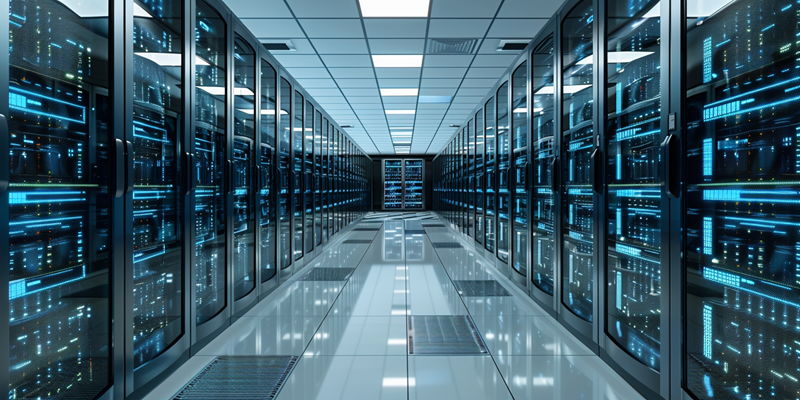
In a strategic move that underscores the dynamic evolution of data processing, American Tower Corporation has broken ground on a state-of-the-art Edge data center, RAI1, in Raleigh, North Carolina. With an initial footprint of 4,000 square feet, it will begin by supplying 1MW of power but has the potential to quadruple its capacity to 4MW, stretching over a vast 16,000 square feet. Designed as an aggregation point, this facility stands to revolutionize the way cloud services are delivered by acting as a crucial link in the data exchange chain. This “middle mile” strategy promises to bring the cloud closer to users, effectively bridging the gap between expansive cloud data centers and the peripheries of the network.
Revolutionizing Cloud Services with Strategic Edge Expansion
RAI1 is not just any ordinary data center; it’s an innovative colocation and interconnection hub intent on enhancing the digital experience within Raleigh’s bustling tech landscape. Leveraging cutting-edge technologies, such as direct expansion cooling and assisted hot aisle containment, it boasts an impressive capacity of 15kW per rack. This underscores American Tower’s commitment to driving efficiency and high performance within the industry. The Raleigh facility, expected to be operational in early 2025, marks a significant milestone in the expansion of American Tower’s Edge services. The company’s venture into the data center sphere, following its 2021 acquisition of CoreSite, has not only enriched its burgeoning portfolio but has reinforced its position as a frontrunner within the telecommunications infrastructure sector.
A Global Strategy Complemented by Partnerships
American Tower Corporation is making a significant leap in data processing with the groundbreaking of RAI1, a cutting-edge Edge data center, in Raleigh, North Carolina. Spanning an initial 4,000 square feet with a 1MW power supply, RAI1 is designed to eventually expand to a robust 16,000 square feet, ramping up its energy supply to 4MW. This expansion will not merely accommodate additional equipment but will redefine the delivery of cloud services. As an aggregation site, RAI1 is poised to transform the existing cloud service paradigm by serving as an essential node in the data relay network. This innovative approach places the cloud within closer reach of end-users, minimizing the distance data travels from sprawling cloud infrastructures to network edges. American Tower Corporation’s strategy is set to enhance connectivity by optimizing the “middle mile” of data transmission, thereby improving how information is exchanged across the internet.