

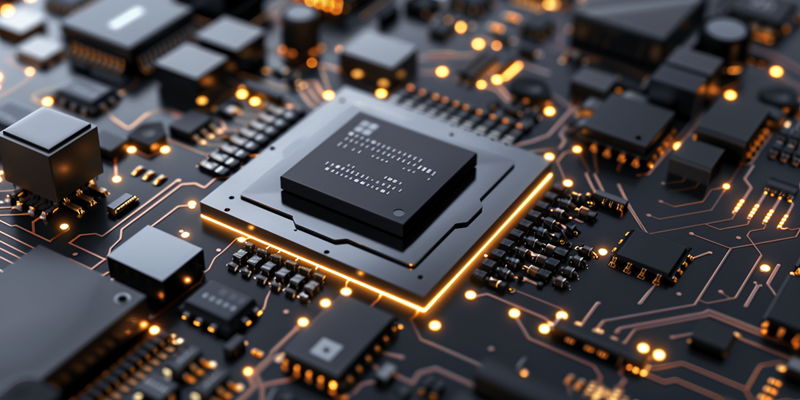
The microchip industry is on the cusp of a major transformation, and all eyes are on AMD as they prepare to unveil their Zen 5 APUs. These advanced chips promise to deliver a powerful combination of processing speed, cutting-edge integrated graphics, and AI capabilities. AMD’s roadmap suggests a breakthrough in computer chip technology that might redefine our computing experience. There’s been significant buzz following a leak, first spotted on an online forum and now the talk of the tech community, suggesting that AMD’s upcoming chips could eclipse current market offerings. This leak hints at a future where the performance of integrated chips will reach new heights, possibly sooner than expected. If the speculation holds true, AMD’s Zen 5 could be a game-changer, establishing new standards for what we expect from our computing devices.
Strix Point and Halo: The Future of Integrated Chips
Fueling the flames of anticipation, the leaked details describe the Strix Point Halo APUs as nothing short of behemoths in the realm of processors. They are projected to boast up to 16 cores, a staggering 32 threads, and an RDNA 3.5 graphics architecture equipped with 40 compute units. But it is the inclusion of a groundbreaking 32MB MALL cache designed to bolster GPU performance that could well be the game-changer. The Halo variants are also rumored to come equipped with a Neural Processing Unit (NPU) capable of delivering 60 TOPs – a measure of AI processing power that goes head-to-head with the best in the industry.
The release of such processing giants suggests a fundamental shift in the laptop market, as AMD indicates its readiness to take on the pinnacle of integrated technology presently dominated by companies like Apple and Intel. The notion of a processor matching the graphical might of a discrete RX 7600 XT GPU represents a paradigm shift, rendering cumbersome multi-chip setups obsolete in the face of seamless integration. With such conjectured specifications, the Halo Zen 5 APUs could well find homes not just in personal computing but in domains demanding both graphical fidelity and AI acuity, such as digital content creation and machine learning.
A Paradigm Shift in Computing
AMD’s upcoming Strix Point chips, while not as robust as the Halo series, still impress with features like 12 cores, 24 threads, and RDNA graphics with 16 CUs. Boasting 50 TOPs in AI processing power, these chips encapsulate CPU, GPU, and NPU in one unit, aligning with industry trends towards more efficient and AI-capable devices. By integrating AI directly, AMD anticipates its central role in future computing. With the Zen 5 APUs, the reliance on separate hardware is minimized, providing users with a robust computing experience within a single chip.
These developments hint at AMD’s vision for a future where the boundaries between CPUs, GPUs, and AI processors are virtually nonexistent. Although these innovations are projected for 2025 or later, the computing community awaits confirmation from AMD with great anticipation, eager for a transformative leap in integrated computing technology.