

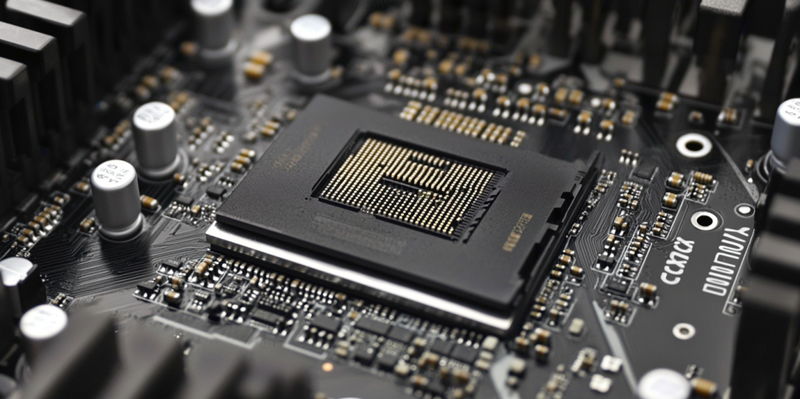
Amid the rapidly evolving tech landscape, AMD has introduced the Versal Prime Series "Gen 2" SoCs, incorporating advanced technologies like Compute Express Link (CXL) 3.1, LPDDR5x memory, and PCIe Gen 6.0. These SoCs are designed to push the boundaries of performance and connectivity, marking a significant leap forward for complex, data-intensive tasks. As the first in the industry to support CXL 3.1 and PCIe Gen 6, the Versal Prime Series Gen 2 sets new standards, ensuring faster data transfer rates and enhanced system flexibility. The integration of LPDDR5x memory further enhances these capabilities, making the SoCs an ideal choice for applications ranging from data centers to aerospace and defense.
Enhanced System Acceleration
AMD’s Versal Prime Series Gen 2 SoCs are a testament to the company’s commitment to enhancing system acceleration for a wide array of workloads. These new SoCs are capable of efficiently managing real-time processing and storage demands, positioning them as a strong contender in markets such as data centers, communications, test and measurement, and aerospace and defense. The unmatched performance and connectivity provided by the Versal Prime Series Gen 2 are made possible through its pioneering support for CXL 3.1 and PCIe Gen 6. This support ensures lightning-fast data transfers and seamless communication between processors and accelerators, which significantly improves overall system throughput and efficiency.
These advancements are particularly beneficial for data-intensive applications that require robust and reliable performance. For example, in the data center environment, the ability to handle large volumes of data quickly and efficiently is crucial. The Versal Prime Series Gen 2 SoCs excel in this aspect, leveraging the latest technology to ensure optimal data management and processing. Furthermore, the high-speed data transfer capabilities offered by these SoCs can provide a competitive edge in industries that rely heavily on data analytics and real-time decision-making.
Improved Host Connectivity
One of the standout features of the Versal Prime Series Gen 2 SoCs is the improved host connectivity enabled by CXL and PCIe Gen 6. This improvement translates into higher bandwidth and faster line rates compared to competing FPGAs, ensuring superior CPU-to-accelerator connectivity. The enhanced connectivity allows system architects to effectively accelerate data-intensive applications, addressing the rapid growth of data seen across various sectors. An important aspect of this connectivity is the pairing of these SoCs with AMD EPYC CPUs, which can considerably boost the performance of data-intensive tasks.
By facilitating faster and more efficient connections between CPUs and accelerators, the Versal Prime Series Gen 2 SoCs contribute to the creation of high-performance computing environments. This is particularly important in data-driven fields such as artificial intelligence (AI), machine learning (ML), and big data analytics, where quick data handling and processing are paramount. Additionally, the advanced connectivity features make these SoCs a suitable choice for use in edge computing scenarios, where data needs to be processed and analyzed in real-time.
Memory Bandwidth and Utilization
Memory bandwidth and utilization also take center stage in the design of the Versal Prime Series Gen 2 SoCs. By leveraging LPDDR5X memory, these SoCs offer ultra-fast data transfer rates, up to 2.7 times faster host connectivity compared to rivals utilizing LPDDR4/5 memory. This capability is crucial for optimizing data movement and improving system performance, particularly in environments requiring substantial data throughput. Additionally, the ability to connect to CXL memory expansion modules can further enhance bandwidth, allowing for efficient memory pooling and utilization across multiple accelerators.
The increased memory bandwidth and improved utilization not only boost performance but also ensure that systems can handle complex, data-heavy tasks with ease. This is particularly important in sectors like communications and aerospace, where efficient data management and quick processing are essential. By providing these advanced memory capabilities, the Versal Prime Series Gen 2 SoCs enable more efficient and streamlined operations, ultimately contributing to enhanced productivity and performance across various applications.
Advanced Data Security
Data security is another critical aspect addressed by the Versal Prime Series Gen 2 SoCs. As the first FPGA to support integrated PCIe Integrity and Data Encryption (IDE) in hard IP, these SoCs ensure secure data transactions at high speeds. The built-in inline encryption for data at rest, coupled with the 400G High-Speed Crypto Engines, enables fast and secure data transfer, providing an additional layer of security. Given the increasing concerns around data privacy and security, these advanced features are highly valuable and offer peace of mind for users handling sensitive or confidential information.
The advanced data security features of the Versal Prime Series Gen 2 SoCs make them a suitable choice for industries where data protection is paramount. For instance, in the defense sector, ensuring the security and integrity of data is a top priority. Similarly, in financial services, the ability to securely handle and transfer large volumes of sensitive data is crucial. By offering robust security measures, the Versal Prime Series Gen 2 SoCs address these needs effectively, fostering trust and confidence among users.
Development Timeline and Future Prospects
Amidst the rapidly changing tech landscape, AMD has unveiled the Versal Prime Series "Gen 2" SoCs, which incorporate cutting-edge technologies such as Compute Express Link (CXL) 3.1, LPDDR5x memory, and PCIe Gen 6.0. These system-on-chips are engineered to elevate performance and connectivity, representing a notable advancement for handling complex, data-intensive tasks. Being the first in the industry to support the combination of CXL 3.1 and PCIe Gen 6, the Versal Prime Series Gen 2 establishes new benchmarks, providing faster data transfer rates and greater system versatility. The inclusion of LPDDR5x memory further amplifies these capabilities, rendering the SoCs ideal for a wide variety of applications, from data centers to aerospace and defense sectors. This lineup promises improvements in computational efficiency and system responsiveness, making it a game-changer in numerous high-stakes fields. AMD’s innovation continues to set new industry standards, paving the way for future technological advancements.