

Introduction
The arrival of a processor capable of redefining the boundary between enthusiast gaming gear and professional workstation hardware marks a pivotal moment for the high-performance computing market. AMD is officially scheduled to release its high-end Ryzen 9 9950X3D2 on April 22, setting a new benchmark for what consumers can expect from a flagship desktop chip. This launch signifies a strategic pivot toward heavy-duty computational tasks that demand massive amounts of on-chip memory.
As the industry moves through 2026, the need for specialized silicon in creative and technical fields has never been more apparent. This article explores the specifications, pricing, and architectural breakthroughs of the upcoming release, providing a comprehensive look at how this dual-cache powerhouse intends to reshape the landscape.
Key Questions or Key Topics Section
What Makes the Dual-Cache Architecture of the Ryzen 9 9950X3D2 Unique?
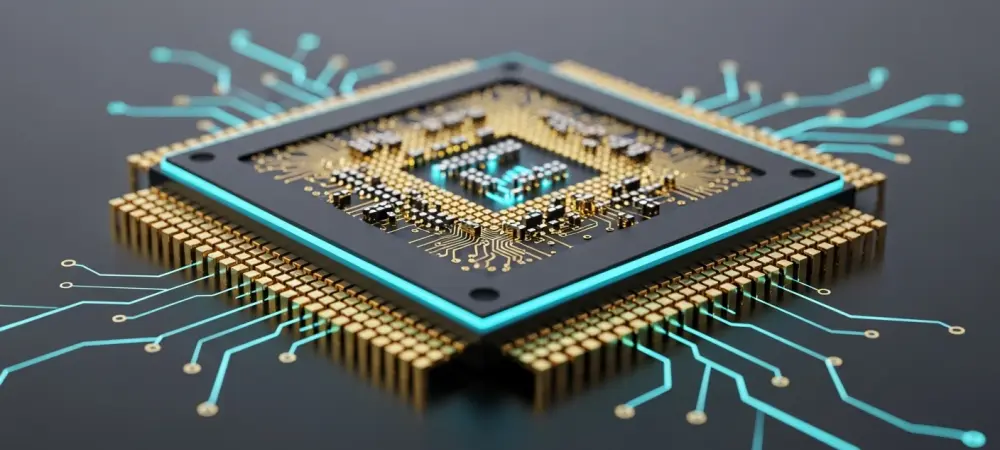
Historically, AMD restricted its 3D V-Cache technology to a single core complex die, which often forced the operating system to manage complex scheduling between high-cache and high-frequency cores. This new iteration breaks that mold by equipping both core complex dies with stacked cache memory, a design choice that results in a staggering 208MB of total cache.
Such a massive pool of memory allows for much faster data retrieval during intensive workloads, effectively reducing the latency associated with traditional system RAM access. By doubling the physical footprint of the 3D V-Cache, the hardware ensures that all 16 cores have direct, high-speed access to the supplemental memory.
How Does the $899 Price Point Reflect the Professional Market Pivot?
With a confirmed MSRP of $899, the Ryzen 9 9950X3D2 enters the market at a significant $200 premium over its predecessor. While initial retail leaks suggested a price reaching as high as $1,000, David McAfee, AMD’s VP and GM, has solidified the official cost as a reflection of its status as a premium professional tool. This pricing strategy indicates that the manufacturer is no longer targeting gamers exclusively. The focus has shifted toward workstation professionals who require extreme efficiency for AI model execution and complex 3D rendering. The increased cost covers the expensive manufacturing process of the dual-cache layout.
What Performance Gains Can Workstation Users Expect From This Chip?
Early benchmarks suggest that the hardware excels in specific productivity sectors. Users can anticipate a 13% improvement in simulation tasks and AI-driven workloads, alongside a 7% boost in professional rendering software like Blender and V-Ray when compared to the previous flagship model.
Technical adjustments include an increased Thermal Design Power of 200W and a slightly reduced boost clock of 5.6 GHz to accommodate the thermal demands of the extra cache layers. While gaming performance remains strong, the lack of dedicated gaming benchmarks suggests that the primary benefits are realized in data-heavy environments such as game engine compilation.
Summary or Recap
The Ryzen 9 9950X3D2 represents a bold leap in processor design, emphasizing the importance of cache capacity for modern professional workflows. By integrating 3D V-Cache on both dies, AMD delivers a specialized product that prioritizes efficiency in AI and rendering. The $899 price tag and the 200W power requirement underscore its identity as a high-end workstation component rather than a standard consumer part.
Conclusion or Final Thoughts
Professionals seeking the pinnacle of Zen 5 performance should have looked toward specialized cooling solutions to manage the increased thermal output of this flagship. Investing in high-speed DDR5 memory was also a critical step for those wanting to maximize the throughput of the 208MB cache system. As software began to leverage these massive memory pools, the industry saw a shift in how developers optimized their applications for high-core-count desktop environments.