

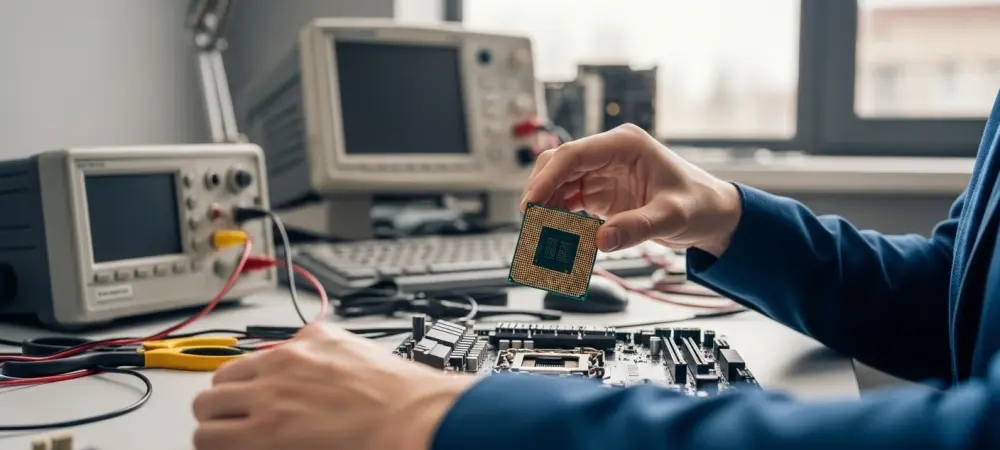
The excitement surrounding the assembly of a new high-performance computer built with the latest-generation components can quickly sour into a deeply frustrating ordeal when the system is plagued by inexplicable instability and crashes. A recent report from a user has brought a troubling situation to light, detailing the successive failures of two premium AMD processors, including what may be the very first documented case of a failing Ryzen 7 9850X3D. This user’s experience paints a concerning picture where the central processing unit, the very heart of the machine, appears to be degrading over a short period. The investigation into this recurring problem has shifted focus away from the CPUs themselves and toward another critical component: the motherboard. The user’s detailed account suggests that an ASUS TUF X870P WiFi motherboard could be the underlying cause, potentially supplying incorrect voltages and leading to the premature and catastrophic failure of these advanced, high-cost processors, turning a dream build into a persistent technical nightmare.
A Recurring Nightmare for High-End Processors
The ordeal began after the user installed a new AMD Ryzen 7 9800X3D processor, which operated flawlessly for approximately one week before the system’s stability began to unravel. The computer started experiencing persistent freezes, sudden crashes, and an increasing inability to boot properly, symptoms that point toward a severe hardware malfunction. After returning the seemingly faulty processor, the user invested in the newly released Ryzen 7 9850X3D, hoping to resolve the issue with a fresh start. However, within a few weeks, the same problems reappeared, this time with even greater frequency. While neither of the CPUs failed completely, their erratic and deteriorating performance indicated a process of progressive degradation. Diagnostic stress tests confirmed the severity of the problem, consistently generating numerous WHEA (Windows Hardware Error Architecture) errors. These errors are a clear indicator of hardware instability, often linked to the CPU, its integrated memory controller, or issues with voltage regulation, strongly suggesting a systemic problem rather than a simple case of a defective chip.
Pinpointing the Prime Suspect
With two different high-end processors exhibiting the same pattern of degradation, the investigation logically shifted to other components that could influence CPU health and stability. The user suspected the ASUS TUF X870P WiFi motherboard was the primary culprit, theorizing that its BIOS might have been applying incorrect and potentially damaging voltages to the CPU socket. This hypothesis was reinforced by the fact that no manual overclocking had been performed on the system, and toggling memory profiles like EXPO on and off did nothing to alleviate the instability. A physical inspection of both processors revealed no visible damage, such as burnt pads or a bulging heat spreader, further pointing to an electrical issue rather than a manufacturing defect in the CPUs themselves. To definitively isolate the problem, the user decided to take a crucial troubleshooting step and ordered a new motherboard from a different manufacturer, MSI. This systematic process of elimination aimed to confirm whether the ASUS board was indeed the root cause of the repeated hardware failures, a move that could finally bring stability to the troubled system.