

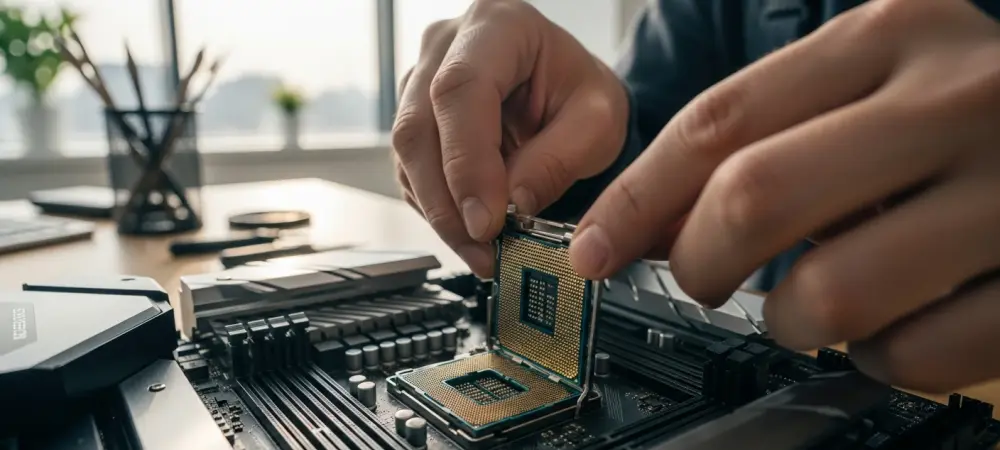
The decision to purchase a motherboard once and use it for nearly a decade was previously considered a technical impossibility, yet AMD turned this radical concept into the defining competitive advantage of the modern computing era. While the semiconductor industry typically thrives on the rapid turnover of hardware standards, the Ryzen ecosystem challenged the status quo by proving that architectural innovation does not always require a physical redesign of the CPU socket. This strategy did more than just save consumers money; it forced a fundamental reassessment of how we define the value of a personal computer. By prioritizing a stable foundation, AMD successfully shifted the conversation from “how fast is this chip today” to “how relevant will this system be in five years,” creating a ripple effect that continues to shape the strategies of every major player in the high-performance computing market.
This review explores the architectural decisions that allowed the AM4 and AM5 platforms to endure while competitors cycled through multiple, incompatible iterations. We will analyze the technical milestones, such as the introduction of 3D V-Cache, and examine how these developments impacted the total cost of ownership and environmental sustainability. By looking at the trajectory of the market through the lens of long-term stability, this analysis provides a comprehensive verdict on whether the “socket staying power” remains the most critical factor for enthusiasts and professionals in the current hardware climate.
Foundations of the Zen Architecture and the AM4 Socket
The launch of the Ryzen 1000 series in 2017 represented a desperate but brilliant gamble to break the stagnation of the quad-core mainstream era. Before this shift, the industry was locked in a cycle of incremental 5% performance gains, where each minor update often necessitated an entirely new motherboard. AMD broke this pattern by introducing the Zen architecture, which prioritized high core counts and multi-threaded efficiency, but more importantly, they anchored it to the AM4 socket with a promise of multi-generational support. This wasn’t just a technical choice; it was a marketing masterstroke that appealed to the “builder” mindset, offering a clear path for future growth without the penalty of a platform tax.
Strategic market positioning played a massive role in the initial adoption of this ecosystem. By keeping processors unlocked and ensuring that even mid-range B-series motherboards supported overclocking and high-speed memory, AMD lowered the barrier to entry for high-end performance. This flexibility created a “value through longevity” proposition that the competition struggled to match. While early Zen chips trailed in raw gaming speed, the sheer versatility of the platform allowed it to gain a foothold among content creators and multitaskers who saw the potential in a system that could grow alongside their professional needs.
Technical Evolution and Architectural Milestones
Maintaining a single socket for over half a decade was a feat that required more than just physical compatibility; it demanded an architecture capable of massive scaling within strict power and thermal envelopes. The transition from the original 14nm process to the sophisticated 5nm nodes seen in later generations allowed for a doubling of performance-per-watt without requiring new power delivery systems. This technical discipline ensured that a high-quality motherboard purchased at the start of the cycle could still reliably power a flagship processor years later, a consistency that remains rare in the world of high-performance electronics.
Impact of 3D V-Cache Technology
The introduction of 3D V-Cache technology was arguably the most significant architectural “pivot” in the history of the Ryzen platform. By vertically stacking L3 cache directly on top of the CPU die, AMD managed to bypass the traditional limitations of memory latency and bandwidth without changing the physical footprint of the chip. This innovation was not just a performance boost; it was a life-extension protocol for the AM4 socket. It allowed older systems to leapfrog newer architectures in gaming workloads, effectively resetting the clock on when a user would feel the need to perform a total system overhaul.
This specific milestone demonstrated the power of specialized silicon. The Ryzen 7 5800X3D, for example, proved that massive amounts of on-chip memory could compensate for an aging platform’s slower interconnects. For the consumer, this meant that a mid-range build from years prior could suddenly compete with the most expensive “bleeding edge” systems on the market through a simple, ten-minute component swap. This technological breakthrough validated the entire concept of platform longevity, showing that clever engineering could overcome the perceived need for a new socket.
Power Efficiency and Node Shrinks
Underlying the success of these upgrades was a rigorous focus on performance-per-watt and thermal management. As AMD moved through successive Zen iterations, they managed to pack more transistors and higher clock speeds into the same Thermal Design Power (TDP) targets. This meant that the cooling solutions and power supplies enthusiasts invested in during the early days of the platform remained perfectly viable. In a market where high-end components often demand increasingly exotic cooling, the ability to maintain a consistent thermal profile across generations is a massive logistical win for the user.
Moreover, these node shrinks were essential for maintaining signal integrity over the existing physical traces of older motherboards. While newer standards like PCIe 4.0 and 5.0 eventually pushed the limits of what older boards could handle, the core processing power remained accessible. This balance of pushing the envelope while respecting the limitations of legacy hardware is what truly defined the Ryzen era. It ensured that the “drop-in upgrade” was a reality for the vast majority of users, rather than a niche feature reserved for those with the most expensive enthusiasts-grade equipment.
Market Trends and Shifting Consumer Behavior
The existence of a long-lived platform has fundamentally altered the psychology of the PC hardware buyer. The “total rebuild” cycle, once an accepted biennial ritual for performance enthusiasts, has largely faded in favor of incremental refinement. This shift has changed how people allocate their budgets; rather than buying a cheap motherboard and planning to replace it soon, consumers are now more likely to invest in a high-quality “anchor” board, knowing it will serve as the foundation for multiple CPU generations. This behavior has stabilized the secondary market as well, as older Ryzen chips retain significant value because they remain compatible with millions of existing systems.
This trend toward longevity has also forced a change in how manufacturers approach retail dominance. In the DIY sector, brand loyalty is now tied directly to how well a company treats its existing customers. AMD’s commitment to AM4, and now the stated longevity of AM5 through 2027 and beyond, has created a “trust dividend.” When a user knows their hardware won’t be orphaned by a sudden socket change, they are more willing to purchase flagship-tier parts. This cycle of confidence has allowed AMD to capture a significant portion of the enthusiast market, as the perceived risk of “buying into the wrong platform” has been greatly diminished.
Real-World Applications and Industry Impact
In the gaming sector, the impact of platform longevity is visible in the extended lifespan of mid-range “workhorse” builds. A gamer who started with a modest 6-core setup could eventually transition to high-refresh 4K gaming by simply installing a modern X3D processor. This path allowed users to stay at the cutting edge of software requirements without the friction of reinstalling operating systems or re-cabling their entire chassis. For the budget-conscious gamer, this meant that the money saved on a new motherboard could instead be redirected toward a more powerful graphics card, resulting in a significantly better overall experience.
Beyond gaming, the professional workstation market saw an even more direct return on investment. Small businesses and freelance creators could scale their rendering and video editing power as their needs grew. Moving from an 8-core to a 16-core processor on the same motherboard provided an immediate boost to productivity with zero downtime for platform migration. This “scalability on demand” made Ryzen a favorite for those who view their PC as a tool rather than a hobby. Additionally, the reduction in electronic waste contributed to a more sustainable model of computing, as millions of motherboards were kept out of landfills through the simple act of extended compatibility.
Challenges to Sustained Platform Support
Despite the overwhelming benefits, the road to long-term socket support is fraught with technical compromises. One of the primary hurdles involves the physical capacity of the BIOS ROM chips on older motherboards. As AMD added support for more and more processors, the firmware files grew too large for the memory available on early-generation boards. This led to a period of “firmware fragmentation,” where motherboard manufacturers had to release specialized BIOS versions that stripped away support for older chips or removed graphical user interface elements just to make room for the microcode of newer CPUs.
Furthermore, electrical and signal integrity became a bottleneck as the industry moved toward faster data standards. While a new CPU might fit in an old socket, the physical wiring of a 2017-era motherboard was not always designed to handle the frequencies required for PCIe 4.0 or 5.0. This led to “feature tiering,” where a user could enjoy the speed of a new processor but would be limited by the older board’s slower communication lanes for storage and graphics. These limitations highlight the reality that while a socket can stay the same, the world around it continues to evolve, creating a disparity between “working” and “optimal” performance that users must navigate.
Future Outlook: AM5 and the Next Decade
As the industry moves deeper into the era of DDR5 memory and integrated AI processing units, the concept of platform longevity faces its toughest test yet. The AM5 platform was designed with these future-looking technologies in mind, featuring a high-density LGA (Land Grid Array) design that allows for more complex power delivery and data paths. AMD has publicly committed to supporting this socket through 2027, signaling that they intend to replicate the success of AM4. The challenge now lies in managing the transition to even faster interconnects and potentially new power standards without breaking the promise of continuity.
The competitive response to this strategy will likely define the next few years of the market. If competitors continue to use short-lived sockets, they risk further alienation of the DIY community. However, there are signs that the industry is moving toward a “modular” approach, where the core processing unit is just one part of a larger, upgradable ecosystem. As chiplet designs become even more advanced, we may see a future where different parts of the processor—such as the memory controller or the AI engine—can be updated independently. For now, the focus remains on ensuring that the motherboard remains the most stable part of the build, acting as the consistent heartbeat for an ever-evolving array of silicon.
Conclusion and Final Assessment
The evolution of the Ryzen platform served as a transformative case study in the power of consumer-centric engineering. By refusing to follow the established pattern of frequent socket changes, AMD successfully demonstrated that hardware value is not solely defined by peak performance at launch, but by the longevity of the ecosystem as a whole. This approach provided a clear financial advantage to users, allowing for significant upgrades that cost hundreds of dollars less than a total system replacement. The technical hurdles, from BIOS limitations to signal integrity issues, were real, yet they were largely overcome through a combination of community feedback and innovative firmware management.
Looking back at the trajectory of the market, it is clear that the “drop-in upgrade” became the gold standard for the modern PC builder. The success of this model has permanently altered expectations, forcing all silicon providers to consider the long-term viability of their platforms. The final verdict on this era of computing was that stability and continuity proved to be just as important as raw clock speeds. AMD’s strategy didn’t just win over benchmarks; it won over the trust of a generation of users who now view their PC builds as long-term investments rather than temporary tools. This shift has established a new benchmark for the industry, ensuring that the legacy of the “staying socket” will influence hardware design for years to come.