

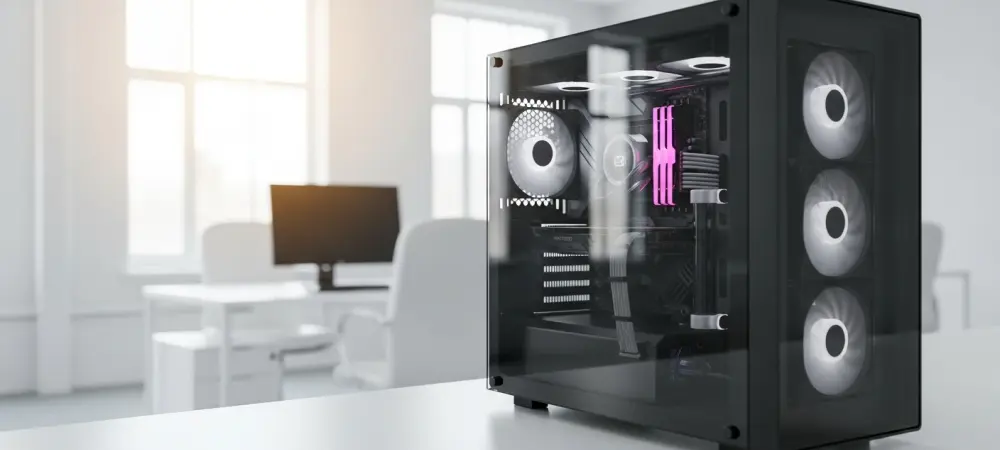
The current trajectory of silicon development suggests that the historical trade-off between ultra-low latency gaming and multi-threaded professional productivity is finally nearing its definitive end. This shift is most visible in the Zen 5 flagship, which utilizes a refined fabrication process to push instruction-per-clock efficiency while maintaining the scalability required for heavy computational tasks. It represents a pivot toward high-bandwidth performance within a unified, high-performance environment.
The Evolution of Zen 5 and the Dual Edition Architecture
The 9950X3D2 introduces the Dual Edition layout, a design choice that addresses the primary criticism of its predecessors. By populating both Core Complex Dies with additional cache, AMD eliminated the core dynamic that often confused operating system schedulers. This ensures that all 16 cores have equal access to the massive L3 reservoir, allowing for smoother data handling.
Moreover, this evolution reflects a broader trend in the technological landscape where specialization is no longer a trade-off. The integration of Zen 5 architecture with a dual-cache layout provides a balanced foundation for both high-frame-rate gaming and dense workstation workloads.
Technical Architecture and Performance Capabilities
The Dual 3D V-Cache Configuration
Totaling a staggering 208 MB of cache, this configuration drastically minimizes the time spent waiting for data from system RAM. In memory-intensive scenarios like AI inferencing or large-scale code compilation, the ability to store more active datasets directly on the processor translates to a significant uplift in responsiveness. This implementation effectively kills latency for modern data science applications.
Frequency Management and Power Delivery
Managing a 200W Thermal Design Power requires sophisticated voltage regulation to prevent the delicate 3D-stacked layers from overheating. AMD achieved a 5.6 GHz boost clock through improved power delivery paths and aggressive silicon binning. However, this increased energy requirement demands premium cooling solutions, marking a departure from the efficient profile of standard components.
Emerging Trends in High-End Processing Power
The market is shifting away from monolithic designs toward complex, vertically stacked solutions. As software becomes more reliant on rapid data access, the “X3D” approach has moved from a niche experiment to a standard expectation for premium computing. This reflects a shift toward prioritizing data throughput over raw clock speeds alone.
Real-World Applications and Workflow Integration
Beyond typical gaming, this hardware is gaining traction in 3D rendering where real-time feedback is crucial. Professionals working in architectural visualization found that the reduced latency allowed for more fluid interaction with dense polygon models. It effectively bridges the gap between consumer hardware and entry-level workstation platforms.
Furthermore, the chip excels in complex software compilation and simulation environments. By keeping more data local to the execution cores, the processor reduces the bottlenecks typically associated with large-scale digital projects.
Engineering Hurdles and Market Obstacles
Thermal density remains a substantial engineering challenge that limits the potential for traditional overclocking. Furthermore, the reliance on specialized packaging increases production costs, which might affect widespread adoption in the mid-range market. There is also the software side to consider, as developers must continue to optimize code to extract the maximum performance from these architectures.
Future Outlook for the X3D Ecosystem
The future of this ecosystem likely involves deeper integration of AI-driven power management to balance the heat generated by stacked dies. We may soon see 3D cache applied to specialized NPU units to further enhance the versatility of the AM5 platform. This trajectory points toward a modular future where cache size becomes as configurable as core counts.
Summary and Final Assessment
The Ryzen 9950X3D2 proved to be a transformative release that redefined the ceiling of mainstream processing. It successfully addressed the core-symmetry issues of previous generations while setting a new standard for combined workload efficiency. The industry recognized this as a vital step toward more specialized, yet accessible, high-performance computing solutions. Future development was expected to focus on further miniaturization and enhanced thermal efficiency.