

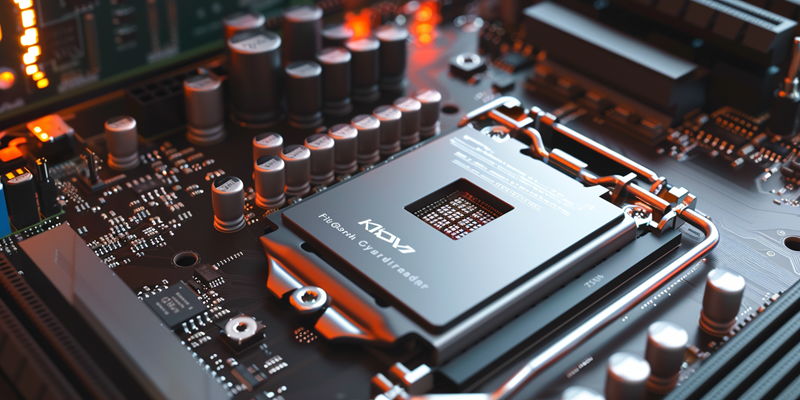
The newly announced AMD Ryzen 7 9700X “Zen 5” CPU has generated significant buzz within the tech community, primarily due to its touted performance enhancements over the Ryzen 7 7800X3D. With gaming at the forefront of its capabilities, this article delves into the detailed benchmarks and architectural advancements that make the Ryzen 7 9700X a compelling choice for gamers and tech enthusiasts alike.
Advancements in Performance
Benchmark Comparisons
The Ryzen 7 9700X “Zen 5” showcases a 2% improvement in gaming performance when compared to the Ryzen 7 7800X3D, demonstrating AMD’s commitment to iterative enhancements in CPU design. While a 2% boost might seem modest, it underscores significant architectural optimizations that have contributed to these gains. In the fiercely competitive gaming market, even slight improvements can offer a more polished and immersive gaming experience.
Besides its immediate predecessor, the Ryzen 7 9700X also shows remarkable performance increases over older models like the Ryzen 7 5800X3D. Users upgrading from the 5800X3D can expect a compelling 30% faster gaming performance and a 12% overall performance boost. These improvements indicate AMD’s persistent advancements in CPU architecture, offering substantial benefits for gamers and tech enthusiasts who prioritize the latest technology and performance.
Architectural Innovations
At the heart of these performance improvements is AMD’s new Zen 5 architecture. This architecture not only enhances raw computational power but also optimizes data throughput and latency, essential for high-performance gaming. The Zen 5 architecture incorporates various technological advancements, such as improved instruction per clock (IPC) rates and refined cache management, boosting overall efficiency and speed. These innovations ensure that the Ryzen 7 9700X can deliver seamless and responsive gameplay, minimizing lag and maximizing user satisfaction.
Furthermore, AMD engineers have focused on enhancing the CPU’s power delivery and thermal design, ensuring that the Zen 5 CPUs can operate at higher performance levels without compromising stability or generating excessive heat. This commitment to power efficiency and thermal management represents a balance between raw power and practical usability, making the Ryzen 7 9700X a versatile choice for different gaming setups and user needs.
Efficiency and Thermals
Power Consumption
One of the standout features of the Ryzen 7 9700X is its impressive power efficiency. Operating at a TDP of 65W, the 9700X is significantly more power-efficient than the Ryzen 7 5800X3D, which has a TDP of 105W. This lower power draw not only means cost savings on energy but also reduced heat output, contributing to better overall system stability and longevity. For gamers, this translates to fewer interruptions due to overheating and lower electricity bills—a win-win scenario for both performance and cost-effectiveness.
This enhanced power efficiency also has broader implications for environmentally conscious consumers. Lower power consumption means a reduced carbon footprint, aligning with global trends towards more sustainable technology solutions. By delivering strong performance while minimizing energy use, the Ryzen 7 9700X positions itself as an eco-friendly choice for modern users who value sustainability alongside cutting-edge technology.
Thermal Management
This power efficiency plays a critical role in thermal management, making the Ryzen 7 9700X an attractive option for systems where cooling solutions are constrained. The reduced thermal footprint can lead to quieter operation and fewer demands on cooling infrastructure, which can be particularly beneficial for small form factor builds or environments where noise is a concern. The lower heat output ensures that the CPU can maintain high performance without causing thermal throttling issues, thereby preserving performance consistency over extended gaming sessions.
Effective thermal management also extends the lifespan of other system components by preventing excessive heat buildup, promoting overall hardware durability. In compact or noise-sensitive environments, the 9700X’s efficient thermal design offers additional flexibility in choosing cooling solutions. Users can opt for less aggressive cooling setups without sacrificing performance, resulting in quieter and more pleasant operating conditions.
Competing With Intel
Market Positioning
AMD has designed the Ryzen 7 9700X to compete not only with its internal lineup but also with Intel’s offerings, specifically the Core i5-14600K. By benchmarking against Intel, AMD aims to demonstrate that the 9700X can deliver competitive, if not superior, performance, especially in gaming scenarios. This direct competition emphasizes AMD’s strategy to capture a larger share of the gaming and tech enthusiast market by offering high-performance CPUs that rival the best in the industry.
The comparative results present the Ryzen 7 9700X as a strong contender against Intel’s Core i5-14600K, with AMD focusing on delivering not just raw performance but also superior power efficiency and thermal management. This holistic approach appeals to a wide range of users, from budget-conscious gamers seeking value to hardcore enthusiasts demanding top-tier performance.
Comparative Analysis
Compared to Intel’s Core i5-14600K, the Ryzen 7 9700X shows promising results. Users can expect similar, if not better, gaming performance combined with the added benefits of power efficiency and thermal management. This balance of performance and efficiency makes the 9700X an appealing choice for gamers and power users who demand high performance without high energy costs. The 9700X’s advantage in power consumption ensures that it can deliver top-tier performance consistently, making it a compelling alternative to Intel’s offerings.
AMD’s strategic positioning allows the Ryzen 7 9700X to appeal to a diverse audience, offering them competitive gaming performance with fewer compromises. This approach puts AMD in a favorable position within the CPU market, showcasing their ability to innovate and deliver products that meet varied user demands. It also sets the stage for future advancements, highlighting AMD’s commitment to evolving its CPU lineup to stay ahead of industry trends and consumer expectations.
The Future of Zen 5
Expected Enhancements
As promising as the Ryzen 7 9700X is, the future of the Zen 5 lineup looks even brighter. AMD plans to introduce 3D V-Cache-enhanced versions of Zen 5 CPUs around September-October 2024. These upcoming CPUs are projected to deliver an additional 10-15% increase in gaming performance, thanks to the advanced caching technology that can significantly boost speed and efficiency. This enhancement underscores AMD’s dedication to continuous improvement, providing users with more powerful and efficient solutions with each new release.
The anticipated launch of 3D V-Cache-enhanced Zen 5 CPUs promises further advancements in gaming performance, enabling more immersive and responsive gameplay experiences. As games become increasingly complex and demanding, the need for high-performance CPUs is more critical than ever. AMD’s forward-looking approach ensures that their products can meet and exceed these demands, keeping pace with the rapidly evolving gaming landscape and providing an edge in competitive gaming environments.
Implications for Gamers
The recently unveiled AMD Ryzen 7 9700X “Zen 5” CPU has created quite a stir in the tech world, mainly due to its promising improvements in performance compared to the Ryzen 7 7800X3D. Building on the solid foundation of its predecessor, the Ryzen 7 9700X brings notable enhancements such as faster clock speeds and increased core efficiency, resulting in superior gaming experiences and overall system performance. The new architecture incorporates advanced thermal management and power efficiency features, making it not only a powerhouse for gaming but also an energy-efficient option.
These significant upgrades cater to the ever-growing demands of modern gaming and heavy-duty applications, reinforcing AMD’s commitment to pushing the boundaries of CPU technology. For anyone invested in high-performance computing, the Ryzen 7 9700X represents a compelling leap forward in processing power and efficiency, embodying the cutting-edge advancements synonymous with AMD’s Zen architecture.