

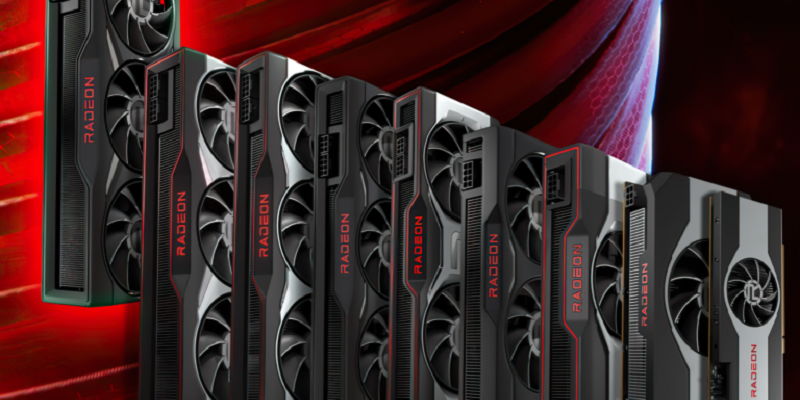
The graphics card market has experienced some significant changes in recent months, with AMD emerging as a more dominant player in the industry. AMD has recently achieved great sales success on Mindfactory, a popular computer hardware retailer in Germany, leaving its competitors behind. In this article, we will take a closer look at AMD’s recent success on Mindfactory, the reasons behind it, and what the future holds for the graphics card market.
AMD’s recent sales success on Mindfactory is remarkable. The company’s graphics cards have become the go-to choice for consumers, and the most significant factor behind this success has been the huge discounts and price drops offered by AMD. The affordability of the products has played a crucial role in driving these sales.
GeForce RTX 30 & RTX 40 Offerings
NVIDIA’s GeForce RTX 30 and RTX 40 offerings have been among the most anticipated releases in the graphics card market. Despite NVIDIA’s popularity, AMD has managed to maintain its lead on Mindfactory by providing affordable options for gamers and enthusiasts.
Consumer Hesitation and User Revolt against High Hardware Costs
The current world economic situation has made consumers hesitant to make significant purchases. With users revolting against the costs of hardware, it has become challenging for manufacturers to make sales. However, AMD’s affordability has overcome this hurdle, leading to its recent success on Mindfactory.
According to TechEpiphany, the XFX Radeon RX 6950 XT Merc Black graphics card is one of the leading GPUs in sales on Mindfactory. This can be attributed to the card’s affordability and reliable performance.
AMD’s risky sales tactic of providing huge discounts and price drops has paid off and allowed the company to maintain its lead. The approach has delivered affordable products to consumers while still providing competitive performance.
AMD is releasing the Radeon RX 7600 GPU in the near future. It is expected to compete with NVIDIA’s offerings and continue AMD’s streak of providing affordable yet powerful graphics cards.
NVIDIA is set to launch its GeForce RTX 4060 series graphics cards in the upcoming months. It will be interesting to see how they stack up against AMD’s offerings, and whether NVIDIA can gain an edge in the market.
Intel’s entry into the graphics card market has been closely watched by enthusiasts. The company’s GPU series offers comparable performance to last-gen mainstream NVIDIA GPUs. It will be intriguing to see how Intel fares in the market and how it may impact AMD and NVIDIA’s sales.
Intel Offers “Day One” Support for New Game Releases
Another advantage of Intel’s GPUs is that they offer “Day One” support for new game releases. Gamers can expect reliable and optimized performance on launch day, giving Intel an edge.
The recent success of AMD on Mindfactory can be attributed to their affordability and risky sales tactics. With NVIDIA and Intel also releasing new graphics cards, the market is set to become more competitive in the coming months. It will be fascinating to see how the market develops and whether AMD can maintain its lead in the industry.