
AMD Launches Epyc 4004 CPUs for Cost-Conscious Server Market

In a strategic move targeted at the server market, AMD has announced the release of its Epyc 4004 series CPUs. These processors represent a more budget-friendly alternative to AMD’s high-end server offerings, distinctly appealing to customers in need of server-grade hardware without the necessity or financial room for CPUs boasting large core counts.

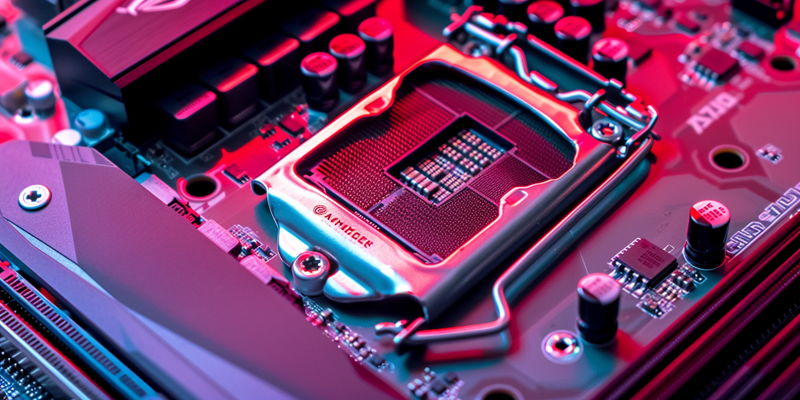
The Epyc 4004 series differentiates itself with a modest 16 cores and 32 threads, yet stands out due to its AM5 socket compatibility. Traditionally used for AMD’s consumer Ryzen CPUs, this move not only bridges server capability with desktop infrastructure but also drastically reduces hardware costs. Motherboards for the AM5 socket, manufactured by the likes of Asus and Gigabyte, are considerably more affordable compared to those dedicated to server use. Thereby, AMD’s Epyc 4004 chips could reshape the economic landscape of server setups.

Competitive Edge and Market Implications

AMD’s decision to introduce the Epyc 4004 series disrupts the traditional server market model while placing pressure on its closest competitor, Intel, which currently lacks a parallel offering for its LGA 1700 socket. If these new Epyc CPUs are indeed repurposed Ryzen chips, specifically akin to the Ryzen 7950X3D in terms of core count and L3 cache, this could cement AMD’s reputation for resourceful innovation.

The potential user base for these processors might comprise those currently eyeing AMD’s Threadripper CPUs, an option that, while less expensive than the premium server CPUs, still demands a higher budget than top-end consumer CPUs. With Epyc 4004 CPUs, AMD could carve out a niche for cost-effective, server-capable processors, delivering Epyc performance at a more accessible price point. This initiative underscores AMD’s commitment to catering to a diverse array of market needs and budgets, ensuring that server-grade computing is within reach for a broader audience.

Explore more

Jenacie AI Debuts Automated Trading With 80% Returns

We’re joined by Nikolai Braiden, a distinguished FinTech expert and an early advocate for blockchain technology. With a deep understanding of how technology is reshaping digital finance, he provides invaluable insight into the innovations driving the industry forward. Today, our conversation will explore the profound shift from manual labor to full automation in financial trading. We’ll delve into the mechanics

Chronic Care Management Retains Your Best Talent

With decades of experience helping organizations navigate change through technology, HRTech expert Ling-yi Tsai offers a crucial perspective on one of today’s most pressing workplace challenges: the hidden costs of chronic illness. As companies grapple with retention and productivity, Tsai’s insights reveal how integrated health benefits are no longer a perk, but a strategic imperative. In our conversation, we explore

DianaHR Launches Autonomous AI for Employee Onboarding

With decades of experience helping organizations navigate change through technology, HRTech expert Ling-Yi Tsai is at the forefront of the AI revolution in human resources. Today, she joins us to discuss a groundbreaking development from DianaHR: a production-grade AI agent that automates the entire employee onboarding process. We’ll explore how this agent “thinks,” the synergy between AI and human specialists,

Is Your Agency Ready for AI and Global SEO?

Today we’re speaking with Aisha Amaira, a leading MarTech expert who specializes in the intricate dance between technology, marketing, and global strategy. With a deep background in CRM technology and customer data platforms, she has a unique vantage point on how innovation shapes customer insights. We’ll be exploring a significant recent acquisition in the SEO world, dissecting what it means

Trend Analysis: BNPL for Essential Spending

The persistent mismatch between rigid bill due dates and the often-variable cadence of personal income has long been a source of financial stress for households, creating a gap that innovative financial tools are now rushing to fill. Among the most prominent of these is Buy Now, Pay Later (BNPL), a payment model once synonymous with discretionary purchases like electronics and