

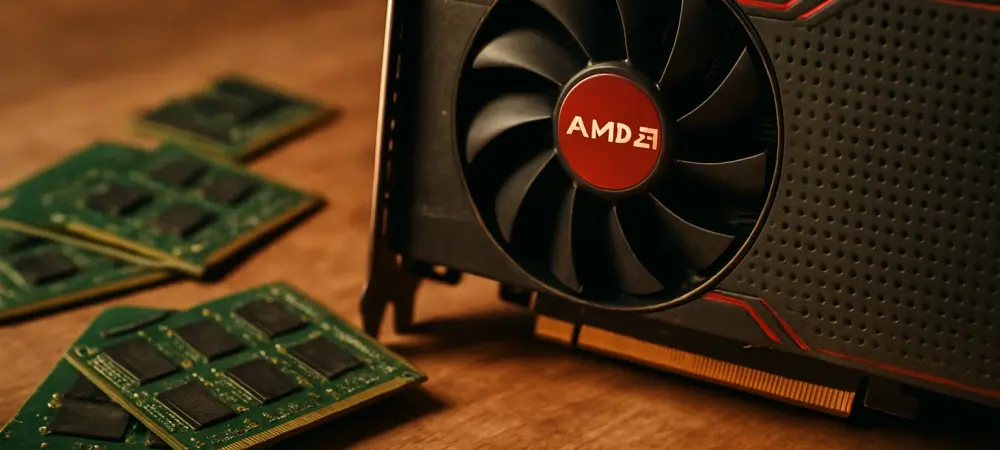
Imagine building your dream gaming rig or upgrading a workstation for cutting-edge AI projects, only to find that the graphics card you’ve been eyeing is suddenly out of reach due to a price spike. This frustrating scenario is becoming a reality for many as AMD has signaled yet another increase in GPU prices across its entire lineup, including the beloved Radeon series. The culprit behind this unwelcome news isn’t a greedy manufacturer but a deeper, systemic issue in the memory market. Escalating costs of DRAM and NAND flash memory, critical components in GPUs, are sending shockwaves through the industry. This development doesn’t just affect gamers; it ripples across workstation and AI applications too. As the tech world grapples with these challenges, it’s clear that the affordability of high-performance graphics cards is at stake, raising questions about how consumers and manufacturers will navigate this turbulent landscape.
Unpacking the Price Hike Drivers
Memory Market Turmoil Fuels Cost Increases
The core issue driving AMD’s decision to raise GPU prices lies in the volatile memory market, where DRAM and NAND flash prices have surged dramatically. A staggering increase of over 200% in memory costs has hit manufacturers hard, as these components are indispensable for GPU production. This isn’t a small bump; it’s a seismic shift fueled by high demand, particularly from the AI sector, which is gobbling up memory at an unprecedented rate. Meanwhile, memory producers have been slow to scale up production, creating a supply bottleneck that’s squeezing GPU makers. AMD, caught in this crunch, has little choice but to pass these inflated costs onto partners and, ultimately, consumers. What’s striking is how this situation underscores a broader vulnerability in the tech supply chain. When one segment like memory stumbles, the domino effect hits everything downstream, leaving even powerhouse companies like AMD with limited options to absorb the blow.
A Second Hit in a Short Span
Compounding the frustration is the timing of this price adjustment, as AMD has already implemented a minor hike just a few months ago in October. This second increase, reportedly more significant than the last, reflects the unrelenting pressure from memory procurement costs. Internal notifications from AMD to its partners indicate that the next shipment of GPUs will carry a higher price tag, though the exact date and amount remain under wraps. This rapid succession of price adjustments signals a troubling trend for budget-conscious buyers who were hoping for some stability in the market. Gamers and professionals alike are now forced to rethink their upgrade plans, as even entry-level GPUs might soon edge out of affordable territory. The uncertainty around the specifics of this hike only adds to the anxiety—will it be a manageable uptick, or a steep climb that reshapes purchasing decisions entirely? For now, the industry watches closely as AMD sets the tone.
Industry-Wide Ripples and Future Outlook
Other Manufacturers Poised to Follow
AMD isn’t alone in facing this memory-driven challenge; whispers in the industry suggest that competitors like NVIDIA are gearing up for similar price adjustments as early as next year. This shared struggle highlights that the issue isn’t company-specific but rather a systemic flaw in the memory supply chain. As both giants navigate these choppy waters, the burden inevitably shifts to consumers who may find high-performance graphics cards from any brand becoming a luxury item. However, this also raises a critical point: neither AMD nor NVIDIA can be held solely accountable for the hikes. The root lies with memory manufacturers who haven’t ramped up production to meet soaring demand. This lack of agility in the supply chain creates a frustrating deadlock, where GPU makers are caught between maintaining profit margins and keeping products accessible. The ripple effect is undeniable—every sector relying on GPUs feels the pinch.
Long-Term Implications for Accessibility
Looking ahead, the persistent scarcity of memory and resulting cost surges cast a shadow over the future of GPU affordability, especially in the budget segment. If memory production continues to lag behind demand, price stability could remain a distant dream for years to come. This scenario poses a real threat to smaller developers, casual gamers, and emerging markets where cost is a primary barrier to entry. Moreover, the heavy reliance on memory for AI and data center applications means that demand isn’t likely to ease up soon, potentially locking the industry into a cycle of rising costs. On a brighter note, this challenge might spur innovation—could manufacturers find ways to optimize memory usage in GPUs, or might alternative technologies emerge to lessen dependence on DRAM? As the tech landscape evolved through past disruptions, stakeholders reflected on the need for proactive solutions. Exploring partnerships with memory producers or investing in supply chain resilience became key considerations to prevent such crises from recurring.