

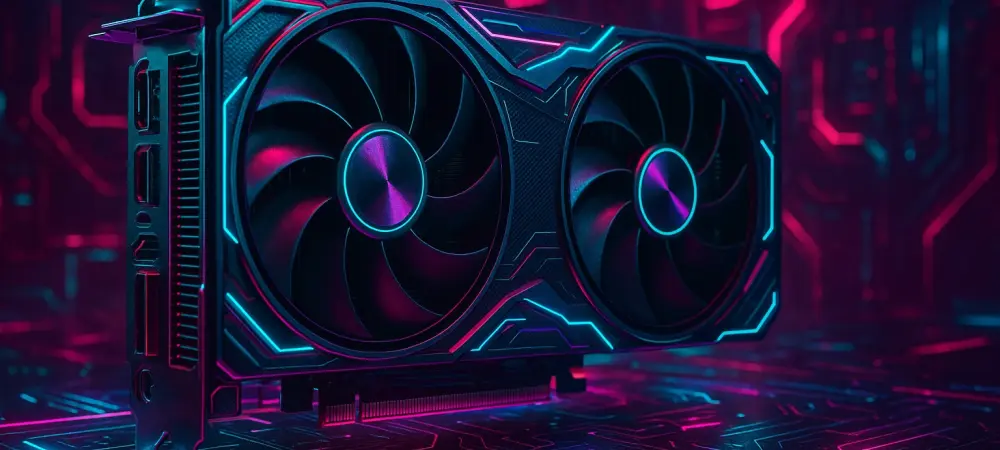
Imagine a world where the relentless demand for AI training hardware no longer hinges on a single dominant player, where innovation thrives through competition, and costs are driven down by viable alternatives. This isn’t a distant dream but a tangible reality taking shape in the AI industry today, as AMD steps into the spotlight with its groundbreaking advancements in GPU technology for AI training. Specifically, the milestone achieved with the ZAYA1 model—a pioneering Mixture-of-Experts foundation model built entirely on AMD infrastructure—signals a seismic shift. This review dives deep into AMD’s capabilities, focusing on the Instinct MI300X GPUs and the transformative potential they hold for large-scale AI tasks, challenging the long-standing supremacy of NVIDIA in this critical field.
Setting the Stage for AMD in AI Training
The rapid expansion of artificial intelligence has placed immense pressure on hardware resources, with NVIDIA traditionally holding the reins as the go-to provider for AI training infrastructure. However, supply bottlenecks and soaring costs have pushed the industry to seek alternatives, creating an opening for AMD to carve out a significant role. The introduction of the ZAYA1 model marks a pivotal moment, showcasing that AMD GPUs, paired with cutting-edge networking and software, can handle the rigorous demands of training complex AI architectures.
This development isn’t merely about adding another player to the game; it’s about addressing real pain points in AI development. AMD’s emergence offers a breath of fresh air for organizations grappling with limited access to high-end hardware, promising not just performance but also cost efficiency. As this review unfolds, the focus will be on how AMD’s technology, exemplified by ZAYA1, stands as a credible contender in a field ripe for disruption.
Unpacking the Core Strengths of AMD GPU Technology
Powerhouse Performance with Instinct MI300X GPUs and High-Bandwidth Memory
At the heart of AMD’s foray into AI training lies the Instinct MI300X GPU, a technological marvel that powers models like ZAYA1 with unparalleled memory capacity. Boasting 192GB of high-bandwidth memory per GPU, this hardware reduces the need for intricate parallelism during the initial phases of training. Such a feature streamlines workflows, allowing developers to iterate quickly without the burden of complex configurations, ultimately slashing costs.
Moreover, the MI300X’s design prioritizes scalability. By minimizing the dependency on extensive parallel setups, it enables smoother scaling of training processes as project demands grow. This capacity for handling massive datasets with ease positions AMD as a serious player for enterprises looking to optimize their AI training budgets without compromising on speed or efficiency.
The significance of this memory advantage extends beyond mere numbers. It translates into tangible benefits, such as reduced iteration times and simplified cluster designs, which are critical for long-running AI projects. This capability ensures that AMD’s hardware can support the evolving needs of AI research and deployment in diverse sectors.
ROCm Software Stack: Bridging the Gap in Workflow Adaptation
Complementing the raw power of MI300X GPUs is the ROCm software stack, a vital tool for adapting AI training workflows to AMD’s ecosystem. Transitioning from NVIDIA-centric processes to ROCm has not been without challenges, yet efforts by collaborators like Zyphra highlight a meticulous approach to optimization. This includes fine-tuning model dimensions and matrix multiplication patterns to align seamlessly with AMD hardware.
Despite early hurdles, the adaptability of ROCm demonstrates AMD’s commitment to enterprise-ready solutions. Real-world tests with ZAYA1 reveal that, while the learning curve can be steep, the resulting performance matches up competitively with established benchmarks. This adaptability ensures that organizations can integrate AMD’s technology without completely overhauling their existing systems.
Furthermore, the focus on optimizing microbatch sizes and compute preferences through ROCm underscores a pragmatic approach to overcoming initial compatibility issues. Such efforts pave the way for broader adoption, as they address the practical concerns of developers transitioning to a new hardware paradigm in AI training environments.
Cutting-Edge Trends in AMD-Driven AI Training
The success of ZAYA1 reflects a broader industry trend toward diversifying hardware dependencies, a movement gaining momentum as NVIDIA’s dominance faces scrutiny over supply and cost concerns. AMD’s ability to support large-scale AI training through conventional enterprise cluster designs—rather than experimental setups—signals a maturing ecosystem ready for mainstream adoption. This shift is not just a reaction but a strategic evolution in how AI infrastructure is procured and utilized.
Additionally, there’s a noticeable pivot toward hybrid strategies that blend AMD and NVIDIA hardware. This approach allows organizations to leverage AMD’s strengths, such as memory capacity, for specific training phases while maintaining NVIDIA’s robust production environments. Such flexibility mitigates risks tied to single-vendor reliance and enhances overall training capacity.
Another emerging focus is on operational efficiency, particularly in fault tolerance for prolonged training runs. Innovations like distributed checkpointing and automated failure detection services ensure uptime and protect valuable GPU hours. These advancements align with the industry’s push to streamline processes, making AMD’s contributions not just competitive but forward-thinking in addressing real-world training challenges.
Real-World Impact of AMD GPUs in AI Applications
Turning to practical deployments, AMD GPUs, as demonstrated by ZAYA1, offer compelling use cases across various sectors. In industries like banking, where domain-specific models are crucial for tasks such as fraud detection, AMD’s hardware provides a cost-effective solution for training sophisticated architectures like Mixture-of-Experts models. These models, with efficient inference memory usage, enable impactful results without prohibitive expenses.
In data-intensive research fields, the memory headroom of MI300X GPUs proves invaluable. Researchers can iterate on expansive datasets without the constant need for complex parallelism, accelerating discovery timelines. This capability opens doors for smaller institutions or startups to engage in high-level AI research previously reserved for well-funded giants.
Beyond specific industries, the broader implication of AMD’s technology lies in democratizing access to powerful AI training tools. By reducing costs and simplifying workflows, it empowers a wider range of organizations to develop tailored solutions, fostering innovation in niche areas that might otherwise be overlooked due to resource constraints.
Navigating Challenges and Limitations in AMD GPU AI Training
Despite its promise, AMD’s journey in AI training is not without obstacles. Adapting workflows to a new ecosystem often involves a steep learning curve, particularly for teams accustomed to NVIDIA’s entrenched tools and libraries. This transition can introduce delays and technical complexities, especially in large-scale setups where precision is paramount.
Additionally, competition remains fierce. NVIDIA’s mature ecosystem, backed by years of refinement and widespread adoption, presents a formidable benchmark. AMD must continually innovate to close gaps in areas like software intuitiveness and third-party support, which are critical for gaining broader market trust and acceptance.
Nevertheless, ongoing collaborations with partners like Zyphra and IBM are addressing these challenges head-on. Optimized software stacks, fault tolerance mechanisms like the Aegis service, and streamlined cluster designs are gradually mitigating limitations. These efforts reflect a commitment to not just compete but to redefine standards in AI training hardware resilience and accessibility.
Looking Ahead: AMD’s Future in AI Training
Peering into the horizon, AMD’s trajectory in AI training appears poised for significant growth. Potential breakthroughs in memory capacity and further refinements in ROCm software optimization could solidify its position as a leader in cost-effective AI infrastructure. Such advancements would likely attract more enterprises seeking to diversify their hardware portfolios over the coming years, from now through at least 2027.
Moreover, the ripple effect of a more competitive market cannot be understated. As AMD gains ground, it could drive down costs across the board, making AI development more accessible to a wider audience. This democratization of resources might spur innovation in unexpected corners of the tech landscape, reshaping how AI solutions are conceived and implemented.
The long-term vision also includes AMD fostering a collaborative industry ethos. By pushing for open standards and hybrid compatibility, it could help create a more interconnected ecosystem where hardware choices are dictated by project needs rather than vendor lock-in. This potential to influence market dynamics positions AMD as a catalyst for change in AI training methodologies.
Final Reflections on AMD’s AI Training Journey
Looking back, the milestone achieved with ZAYA1 stood as a testament to AMD’s ability to challenge entrenched norms in AI training, proving that robust, large-scale models could be developed outside NVIDIA’s domain. The Instinct MI300X GPUs, coupled with strategic software adaptations, delivered performance that rivaled established benchmarks, marking a turning point for hardware diversity in the field. As a closing thought, the path forward involves actionable integration—organizations should consider piloting AMD hardware for specific training stages, leveraging its cost efficiencies while maintaining stability with hybrid setups. Exploring partnerships with AMD and its collaborators could further unlock tailored solutions, ensuring that the momentum sparked by this achievement continues to reshape AI development for the better.