

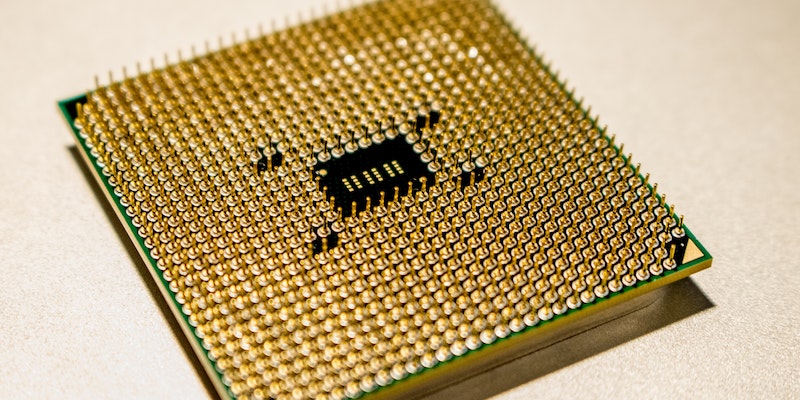
The AMD EPYC 8004 ‘Siena’ CPU family is set to redefine server processors with its impressive range of chips, spanning from 8 cores to a groundbreaking 64 cores. This article delves deep into the specifications, architecture, and performance advantages offered by this innovative CPU series.
Unleashing the Power: An Overview of the AMD EPYC 8004 ‘Siena’ CPU Family
The AMD EPYC 8004 ‘Siena’ CPU family comprises a total of 12 chips, showcasing AMD’s commitment to catering to diverse server requirements. Ranging from 8 cores to a staggering 64 cores, this lineup offers scalability and flexibility for various computing needs.
Meet the flagship: EPYC 8534P
At the forefront of the EPYC 8004 series is the EPYC 8534P, a behemoth boasting 64 cores, 128 threads, a base clock of 2.3 GHz, and a boost clock of 3.1 GHz. This powerhouse ensures exceptional performance for complex workloads, including virtualization, data analytics, and AI-driven applications.
Zen 4C Architecture: The Engine Behind EPYC 8004
Underpinning the EPYC 8004 series is AMD’s Zen 4 architecture. While Zen 4 offers a standard 256 MB L3 cache, the Zen 4C architecture brings forth 128 MB of L3 cache. This difference translates into optimized performance and efficient data processing capabilities.
TCO-Optimized Offerings for Low-End Servers
The EPYC 8004 series, together with the AMD SP6 platform, presents an enticing TCO-optimized solution for low-end servers. With cost-effectiveness as a primary focus, this combination delivers excellent performance and value, making it an attractive choice for businesses seeking budget-friendly server solutions.
Zen 4 EPYC CPUs: Entry-Level Solutions with Impressive Core Density
The EPYC Siena family, part of the Zen 4 EPYC CPU lineup, offers entry-level solutions showcasing up to 32 Zen 4 cores and up to 64 Zen 4C cores. While the core count may be limited compared to higher-tier variants, the EPYC 8004 series still delivers exceptional performance, making it ideal for a wide range of computing needs.
Unparalleled Power Efficiency: SPECpower Performance Advantage
With power efficiency at the core of its design, the EPYC 8004 series boasts a significant advantage over competitors’ top networking models. In fact, these processors can provide up to 2x better SPECpower performance per system watt, making them a formidable choice for energy-conscious enterprises.
Empowering Video Encoding Workloads
The EPYC 8534P, part of the EPYC 8004 series, outshines the competition in video encoding workloads. With up to 2.4 times the aggregate frames per hour per system watt advantage over comparable networking products, these CPUs offer exceptional performance while remaining energy-efficient.
Energy-saving potential and improved throughput
In intelligent edge deployments of one, three, or ten servers, the AMD EPYC 8004 series processors offer unparalleled energy efficiency compared to competitors. With higher core density and increased throughput, these processors have the potential to save customers thousands of dollars in energy costs over a five-year period.
Deconstructing the AMD EPYC 8004 ‘Siena’ CPU Package
The EPYC 8004 ‘Siena’ CPU package houses four Zen 4C CCDs, with each CCD providing up to 16 cores and a 16 MB L3 cache. This architecture ensures superior multitasking capabilities and smooth data processing, making it an excellent choice for demanding workloads.
Memory Support and Capacity: Going Beyond Expectations
The EPYC 8004 series chips come in two variations: ‘P’ and ‘N’, both supporting DDR5-4800 memory. With the ability to accommodate up to a staggering 1.152 TB of memory capacity, these chips ensure seamless handling of extensive datasets and memory-intensive applications.
The AMD EPYC 8004 ‘Siena’ CPU family heralds a new era in server processors. With a diverse range of chips, exceptional performance, power efficiency, and scalability, this series offers a winning solution for businesses of all sizes, irrespective of their server needs. The EPYC 8004 ‘Siena’ CPU family is well-positioned to drive innovation and power the next generation of data centers and computational workloads.