

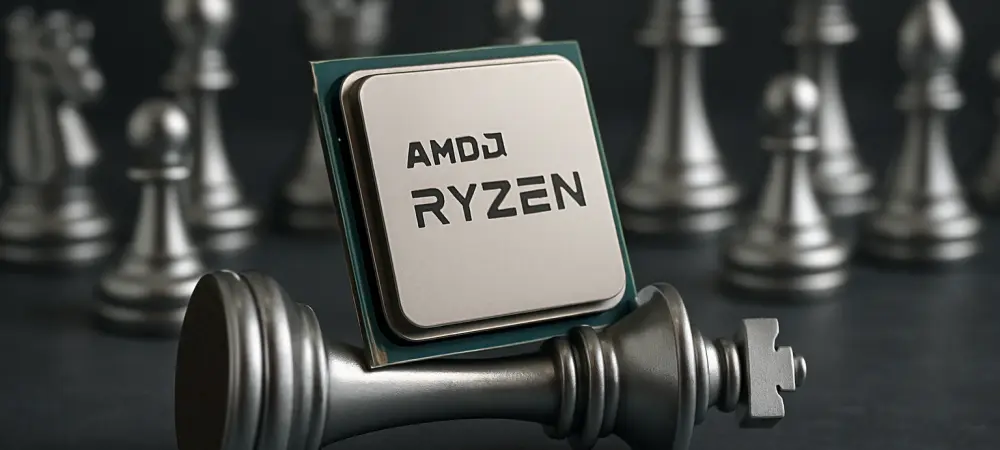
In a fierce two-company race for silicon supremacy that has defined personal computing for decades, recent sales data reveals a market shift so profound it borders on a complete takeover by one competitor. The central processing unit (CPU) is the brain of any computer, and for years, the choice for consumers largely bounced between two titans: Intel and AMD. However, a cascade of evidence from major online retailers and gaming platforms now paints a clear picture of a market where one company has achieved an overwhelming advantage, reshaping the landscape for PC builders everywhere. This is not just a story about market share; it is about a fundamental change in the value and performance proposition that directly impacts every consumer’s next build.
When the Best-Seller List Tells the Whole Story
In a market defined by a two-company race, what does it mean when one competitor claims 19 of the top 20 spots on a major retailer’s sales chart? This is the critical question raised by the startling reality of Amazon’s current CPU best-seller list. The data presents a near-monopolistic presence for AMD, suggesting its strategy has resonated deeply with a broad spectrum of consumers.
This is not a case of a few popular products skewing the results. Instead, it demonstrates a comprehensive triumph across different price points and generations. AMD’s presence is not just strong; it is nearly absolute, signaling a level of consumer preference that goes beyond a single product cycle and points to a more enduring shift in brand allegiance and perceived value.
The Shifting Battlefield of Silicon Supremacy
The rivalry between AMD and Intel has long been the foundational narrative of the consumer PC industry. For decades, builders and enthusiasts have debated the merits of each company’s architecture, pricing, and performance, with the top position often changing hands. This competition has fueled innovation and provided consumers with a dynamic range of choices.
The outcome of this ongoing battle directly impacts every PC builder’s decisions. The prevailing market leader influences everything from motherboard and memory costs to the long-term viability of a chosen platform. Therefore, understanding the current state of this silicon battlefield is essential for anyone looking to build a system that balances performance, budget, and future-proofing.
Quantifying the Conquest: A Look at the Data
The Amazon sales data reveals a landslide victory. AMD processors occupy the entire top 14 positions, with its high-performance Ryzen 7 9800X3D leading the charge. In stark contrast, Intel’s sole representative in the top 20 is the Core i9-14900K. The list showcases the wide appeal of AMD’s offerings, featuring CPUs across multiple generations from Zen 2 to Zen 5, underlining both its cutting-edge performance and its sustained value.
This trend extends well beyond a single retailer. The latest Steam hardware survey, a key barometer for PC gaming trends, shows AMD’s user share rocketing to a record 42.6%. This significant increase positions the company to potentially overtake Intel’s long-held majority among gamers. On the European front, data from German retailer Mindfactory is even more decisive, showing AMD outselling Intel by a ratio of over ten to one and capturing an incredible 90% of CPU revenue in a single week.
The Twin Pillars of AMD’s Success
A closer analysis reveals two primary drivers behind this market conquest. The first pillar is the unmatched gaming performance delivered by AMD’s innovative 3D V-Cache technology. Processors like the Ryzen 7 9800X3D leverage an extra layer of L3 cache stacked directly on the chip, providing a massive boost in frame rates for gaming. This has made them the definitive choice for enthusiasts who prioritize top-tier gaming power above all else. The second, equally important pillar is a value-driven strategy centered on the sustained relevance of its older AM4 platform. As the cost of new DDR5 memory remains high, many builders are strategically opting for AM4-compatible CPUs. This allows them to build powerful, budget-friendly systems using more affordable and widely available DDR4 RAM, creating a compelling off-ramp for those who want performance without paying a premium for the latest platform technology.
A Builder’s Guide to the Current CPU Market
For the performance-focused user, the market data points directly toward AMD’s 3D V-Cache CPUs. These processors have established a clear lead in gaming benchmarks, making them the default choice for anyone building a high-end gaming rig where maximizing frame rates is the primary objective. The sales charts confirm that this is the path most enthusiasts have chosen. Conversely, the smart saver can find immense value by leveraging the longevity of AMD’s AM4 ecosystem. By pairing an AM4-socket CPU with DDR4 memory, builders can assemble a cost-effective yet highly capable PC, sidestepping the entry costs associated with the newest platforms. This approach provides a powerful and practical solution for a significant portion of the market. While Intel faces significant market challenges, its flagship processors may still appeal to a niche of users focused on specific productivity applications that can leverage its architecture, though for the average consumer and gamer, the current landscape overwhelmingly favored its competitor.