

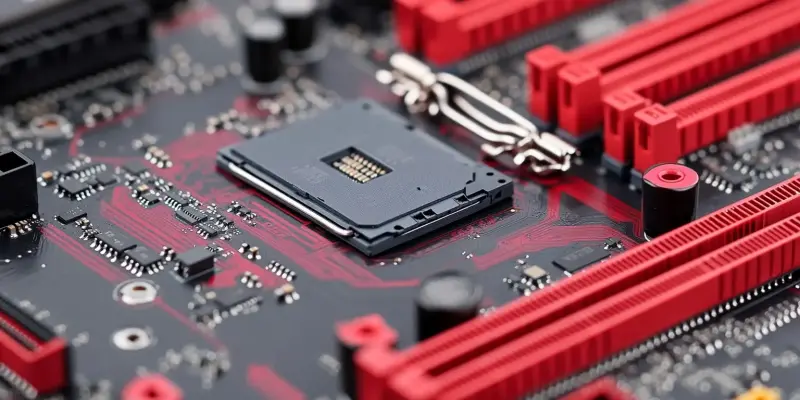
In an impressive display of market dominance, AMD’s AM5 and AM4 motherboard platforms have significantly outperformed Intel’s offerings in the German market through the retailer Mindfactory. This remarkable achievement highlights one of the largest growth periods the company has experienced within this retail environment. During the last week alone, AMD managed to sell approximately 5,000 motherboards, vastly surpassing Intel’s mere 555 units across all platforms. This surge in sales underscores a growing preference for AMD hardware among German consumers, reflecting the company’s robust performance and strategic advancements.
AMD’s Impressive Sales Numbers
The boom in AMD’s motherboard sales can be attributed to numerous factors, including the high quality of their Zen hardware and a current lack of strong competition from Intel. AMD’s increasing global CPU market share aligns closely with its rising motherboard sales. Specifically, the newer AM5 motherboards saw around 3,500 units sold, while the older yet still popular AM4 platform crossed 1,500 units. In stark contrast, Intel’s highest-selling platform, the LGA 1700, which caters to Alder/Raptor Lake and Raptor Lake Refresh CPUs, managed to move only about 500 units. Other Intel platforms, such as the LGA 1200, sold just 30 units, and the LGA 1851 sold a mere 25 units in the same timeframe, putting into perspective the vast gap between the two competitors.
Financial Impact and Market Share
Data compiled from Mindfactory reveals that AMD currently holds an astounding 90% of the total motherboard market share in Germany. This dominant position generated revenue totaling €836,231, while Intel’s revenue in comparison stood at just €93,299. Despite both manufacturers having an equal average selling price of €168 per unit, AMD has significantly outpaced Intel in both the number of units shipped and overall revenue share. This financial impact highlights the broader market trend and the consumer shift towards AMD’s offerings. The substantial lead in market share and revenue is a testament to AMD’s strategic prowess and the strong appeal of its product lineup.
Implications for Market Competition
This impressive surge in sales indicates a growing preference for AMD hardware among German consumers, highlighting AMD’s strong performance and strategic progress in the market. The substantial difference in sales figures between AMD and Intel suggests that AMD’s product offerings, which include advanced features and competitive pricing, are resonating more effectively with customers. This trend is reflective of AMD’s continuous innovations and successful capture of consumer interest, cementing its position as a formidable player in the market, particularly in terms of motherboard sales through major retailers like Mindfactory.