
Alienware Launches Aurora Series Gaming Laptops

Article Highlights
Off On

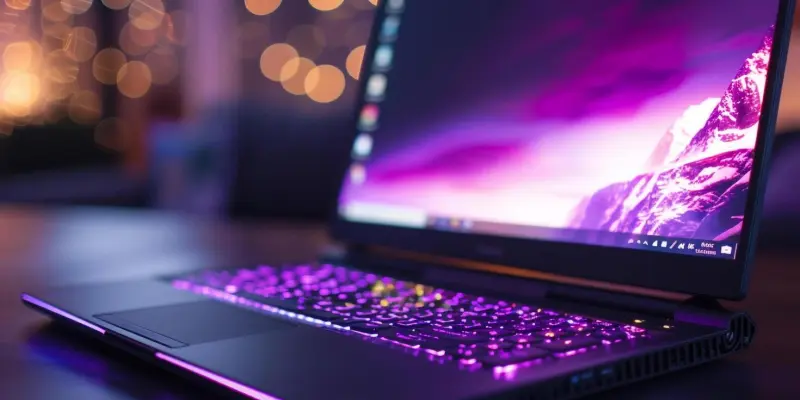
In an exciting development for gaming enthusiasts, Alienware unveiled two remarkable gaming laptops, the Alienware 16 Aurora and the 16X Aurora. This launch marks Alienware’s introduction of Aurora-named models, the first of their kind in nearly two decades. These laptops are designed to offer cutting-edge performance while being accessible at competitive price points, beginning at $1,149 for the 16 Aurora and $1,949 for the 16X Aurora. The Alienware 16 Aurora showcases a 16-inch display boasting a resolution of 2,560 x 1,600 with a 120Hz refresh rate. Equipped with a Core i5 processor, RTX 3050 GPU, and 8GB of RAM in its basic configuration, it sets a solid foundation for high-quality gaming experiences. Furthermore, for those seeking enhanced capabilities, options are available to upgrade the laptop to a Core i9 CPU, RTX 5070, up to 32GB of RAM, and a generous 2TB of storage, paving the way for ultimate performance.

Advanced Features and Versatility

The 16X Aurora gaming laptop sets a new benchmark in design, boasting impressive specs. It weighs 5.9 pounds and enhances gameplay with a 240Hz refresh rate and 500 nits peak brightness. Integrated with advanced tech, it’s powered by an Arrow Lake Intel chip, upgradeable to Core Ultra 9 275HX for more processing prowess. Its base includes an RTX 5060 GPU and 16GB RAM, with options for up to 64GB RAM and 4TB storage. Connectivity features a variety of ports, including USB-A, USB-C, HDMI 2.1, Ethernet, and Wi-Fi 7. The addition of Thunderbolt 4 offers rapid data transfer and enhanced docking capabilities. Distinct from Alienware’s robust Area-51 lineup, the Aurora series offers sleek portability with high performance. Its thoughtful design includes a thermal system beneath the device with exhaust vents and ultra-thin fans to manage temperature during intense gaming. Available in North America, the Aurora series targets tech-savvy users valuing powerful and stylish gaming laptops, exemplifying Alienware’s innovative legacy.

Explore more

Is Second-Chance Hiring Putting Young Workers at Risk?

The pursuit of a diverse and inclusive workforce often leads major corporations to adopt second-chance hiring initiatives, yet the execution of these programs requires a delicate balance between social rehabilitation and the non-negotiable safety of young, vulnerable employees. In a high-stakes legal battle currently unfolding in Oklahoma, a teenage worker’s harrowing experience has cast a shadow over the “family-friendly” image

Can AI Automation Close the $9 Trillion Insurance Gap?

Global economic volatility and the increasing frequency of climate-driven catastrophes have pushed the worldwide insurance protection gap to a staggering nine trillion dollars, leaving millions of households and small businesses dangerously exposed to financial ruin. This massive deficit, representing the difference between total economic losses and those covered by insurance policies, continues to widen as traditional underwriting models struggle to

Can Conversational AI Transform Customer Segmentation?

Static demographic data like age, zip code, and gender has historically served as the cornerstone of marketing strategies, but the volatility of current market trends requires a much more nuanced approach to audience identification. When a customer interacts with a modern AI interface, they provide a wealth of unstructured data that transcends simple purchase history or basic identity markers. This

Is Safari or Google Chrome the Best Browser for macOS?

Every time a user opens a lid on a modern MacBook Pro or clicks the dock on an iMac, they are essentially entering a digital workspace where the browser acts as the primary conductor for almost every professional and personal task. This decision between Safari and Google Chrome has evolved beyond simple aesthetic preferences into a significant technical strategy that

Why Power Users Are Switching From Windows to ChromeOS

High-performance computing was once synonymous with the meticulous management of local registries and system drivers, yet the modern digital landscape increasingly favors architectural simplicity over traditional complexity. For decades, power users defined their expertise by their ability to troubleshoot Windows environments, optimize startup sequences, and navigate the labyrinthine file structures required to keep a machine running at peak efficiency. However,