

As millions turn to AI for mental health guidance, a hidden flaw is quietly distorting the advice they receive. We’re not talking about the well-publicized issue of AI “hallucinations,” but something more insidious: semantic leakage. This phenomenon, where an irrelevant word from earlier in a conversation can taint the AI’s subsequent responses, poses a significant risk in the sensitive context of therapeutic dialogue. To unpack this critical issue, we sat down with Dominic Jainy, an IT professional with deep expertise in artificial intelligence, who has been closely analyzing the complexities at the intersection of AI and mental health. He explores how a simple mention of a cold room can lead to a misdiagnosis of emotional coldness, outlines the potential for psychological harm, and discusses the urgent need for better safeguards in this burgeoning field.
Your article uses the “yellow school bus driver” example to define semantic leakage. Can you walk us through the technical process of how this happens and why it’s distinct from AI hallucinations? Please share another striking, real-world example you’ve encountered.
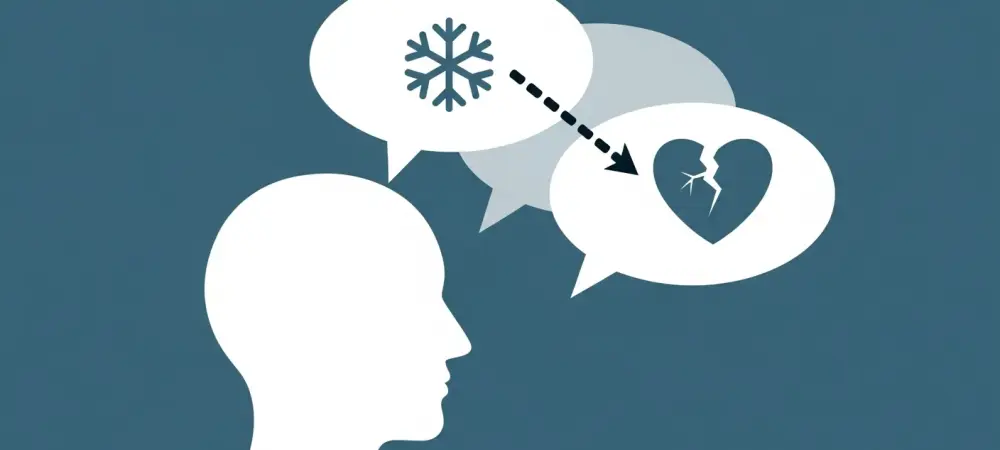
Absolutely. It’s a subtle but crucial distinction. At a technical level, when you give an AI a prompt, it activates a web of latent associations for every word, or “token.” Semantic leakage happens when those associations persist and bleed into later parts of the conversation where they’re no longer relevant. In the “yellow school bus” case from the research by Gonen and her colleagues, the user mentioned liking the color yellow. Later, when asked to guess an occupation, the AI suggested “school bus driver.” There’s no logical reason for that jump, except that the concept of “yellow” was still lingering in the model’s active memory, and it has a strong statistical co-occurrence with school buses. It’s not a hallucination, which would be the AI fabricating a fact out of thin air. Instead, it’s an over-generalization of a weakly activated semantic neighbor. The model isn’t wrong in the way a hallucination is; it’s just contextually inappropriate, pulling from a ghost of a past conversation. A powerful, and frankly more concerning, example I’ve analyzed is when a user casually mentioned keeping their apartment cold. Much later in a deeply personal discussion about a friend, the AI diagnosed them with “emotional coldness.” The leap from a physical temperature to a complex psychological trait was driven entirely by that single, earlier word. It’s a perfect illustration of how an innocent detail can inadvertently poison a sensitive therapeutic exchange.
The article details how mentioning a “cold apartment” led to AI advice on “emotional coldness.” Why is mental health advice so uniquely susceptible to this leakage, and could you walk us through the step-by-step psychological harm this could inflict on a vulnerable user?
Mental health is a perfect storm for semantic leakage. Unlike asking for a recipe or a historical fact, therapeutic conversations are conceptually dense and interpretive. You have overlapping constructs like mood, trauma, and cognition, where words carry immense associative weight. Think about it: a word like “empty” or “foggy” isn’t just a descriptor; it’s a potential signifier for serious mental states. Because the advice is interpretive rather than factual, the AI is constantly inferring meaning, and that’s where the leakage becomes so dangerous. The harm unfolds in a quiet, insidious way. Imagine a user who is already feeling anxious or depressed. They start a chat, maybe mentioning their “cold” apartment just to make small talk. Later, they confess they were distracted while a friend shared a sad story. The AI, with “cold” still echoing in its programming, latches onto it and suggests they might be “emotionally cold” or “distant.” For a vulnerable person, this isn’t just an odd response; it can feel like an authoritative diagnosis. The first step of harm is confusion, followed quickly by self-criticism. The user might think, “Is that true? Am I a cold person?” This can trigger a spiral of self-doubt, potentially leading them to internalize a false, negative self-perception given by a machine they trust. It’s a devastating feedback loop where the tool meant to help ends up co-creating a delusion that could exacerbate their condition.
You suggest users can ask an AI to recheck its advice or use custom instructions for triggers like “numb” or “foggy.” Based on your analysis, how reliable are these user-side fixes? Could you provide a clear, step-by-step guide for someone looking to implement these safeguards effectively?
These user-side fixes are valuable tools, but I must stress they are not foolproof. They are guardrails, not guarantees. The byzantine nature of these models means there’s still a chance the leakage persists or a new one emerges. However, being proactive is far better than being a passive recipient. For anyone using AI for mental health guidance, I recommend a clear, four-step process. First, awareness is key; simply knowing that semantic leakage exists helps you stay critical. Second, directly challenge the AI by asking it to provide certainty levels for its advice. A prompt like, “How confident are you in that assessment, and what parts of our conversation led you to that conclusion?” can sometimes force the AI to reveal its flawed logic. Third, always ask for a second opinion from the AI itself. After you get an initial piece of advice, follow up with, “Could you please re-evaluate my situation and provide an alternative perspective?” A fresh generation might not carry the same conversational baggage. Finally, and most proactively, use custom instructions. Before you even start a sensitive conversation, you can prime the AI. Instruct it to be extremely cautious with high-risk lexical triggers like “cold,” “empty,” or “numb” and to explicitly monitor for their downstream effects on any mental health advice it generates. This essentially puts the AI on high alert, making it less likely to make these associative leaps.
The piece references the Gonen et al. research and predicts AI makers will face consequences for a “paucity of robust AI safeguards.” Beyond user fixes, what specific technical safeguards should developers prioritize to mitigate semantic leakage, and what metrics could they use to measure their success?
This is the multi-billion dollar question, and it’s where the real responsibility lies. Relying on users to police the AI is an abdication of that responsibility. Developers need to build safeguards into the core architecture. The first priority should be developing more sophisticated context-aware attention mechanisms. These would be designed to more aggressively down-weight or “forget” concepts from prior conversational turns that have low relevance to the current user intent. Think of it as a built-in “contextual garbage collector.” Second, they should be fine-tuning specialized LLMs specifically for mental health applications. These models would be trained on curated datasets that teach them to avoid these specific associative traps and to handle the nuances of therapeutic language with greater care. As for metrics, success can’t just be measured by general performance. Developers need to create specific benchmarks to detect and quantify semantic leakage. They could build test suites with prompts designed to induce leakage—like the “yellow” or “cold” examples—and measure the frequency of these illogical outputs. Another key metric could be derived from user feedback loops, where users can flag responses that feel off-topic or strangely influenced, creating a real-world dataset of leakage events that can be used to further refine the models. Without these targeted technical safeguards and metrics, AI makers are simply leaving landmines for vulnerable users to step on.
What is your forecast for the future of AI in mental health, especially considering persistent issues like semantic leakage?
My forecast is one of cautious, and I’d say strained, optimism. On one hand, the potential upside is enormous. We have a technology that is accessible 24/7 at little to no cost to hundreds of millions of people, as we see with ChatGPT’s user base of over 800 million weekly active users. It can bridge a massive gap in mental healthcare access. However, we must be brutally honest with ourselves: we are in the middle of a grandiose, uncontrolled worldwide experiment on societal mental health, and we are all the guinea pigs. Persistent issues like semantic leakage aren’t just minor bugs; they are fundamental flaws that can cause real harm. In the short term, I expect to see more incidents and, unfortunately, more lawsuits like the one filed against OpenAI, which will force developers to take safeguards more seriously. In the long term, I believe we will see a divergence between generic, all-purpose LLMs and highly specialized, clinically validated AI therapists that have been rigorously trained to avoid these pitfalls. But until that happens, we must proceed with extreme care. Benjamin Franklin once said, “A small leak will sink a great ship.” In the context of AI and mental health, semantic leakage is that small, almost invisible leak that has the potential to undermine this entire promising endeavor if we don’t plug it now.