

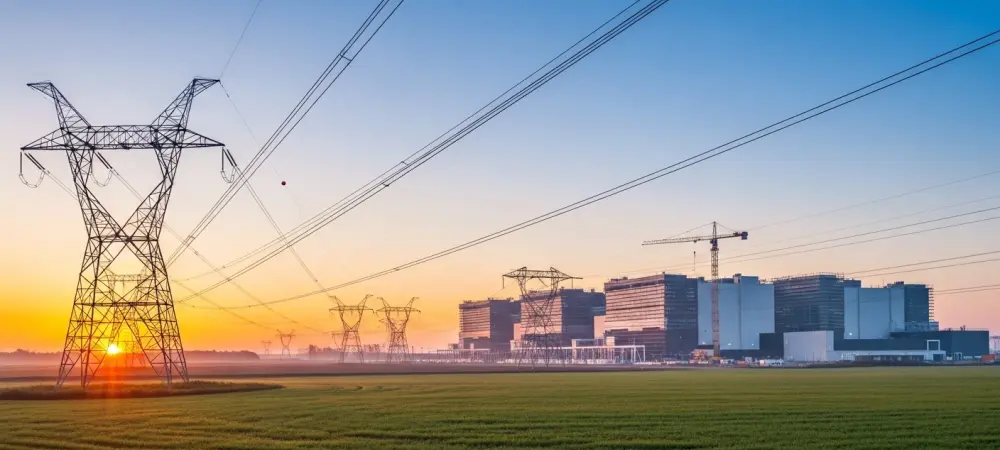
The digital map of our world is being aggressively redrawn, not by cartographers, but by the colossal energy demands of artificial intelligence and high-performance computing. A profound migration is underway as data center developers, faced with insurmountable power and land constraints in traditional hubs like Northern Virginia and Silicon Valley, are forced to look beyond familiar territory. This is no longer a search for incremental capacity; it’s a foundational quest for locations capable of supporting unprecedented scale, exemplified by audacious projects like OpenAI’s reported $100 billion Stargate facility. The criteria for site selection have been fundamentally altered, pushing a diverse array of secondary and tertiary markets into the spotlight. Regions that can offer a trifecta of abundant power, streamlined regulations, and robust connectivity are now poised to become the new epicenters of digital infrastructure, fundamentally reshaping the economic and technological geography of the nation.
The New Site Selection Playbook
Power as the Prime Directive
In the modern calculus of data center development, the availability of massive, reliable power has transitioned from a key variable to the absolute determinant of a project’s viability. The sheer energy consumption of facilities designed for AI and HPC workloads has made grid capacity a non-negotiable prerequisite, granting an overwhelming advantage to regions capable of delivering substantial power directly to development sites. This has elevated the importance of state-level energy policy, as developers now conduct deep analyses of regulatory landscapes, heavily favoring locations where rules have a neutral or positive impact on the complex economics of a deal. Proactive, large-scale investments in the electrical grid—encompassing everything from new power generation and upgraded transmission infrastructure to enhanced grid reliability—are now interpreted by the industry as the clearest possible signal of a state’s long-term commitment to attracting and supporting this capital-intensive form of development, making such regions magnets for future investment.
The Supporting Cast Incentives Land and Labor
As states and municipalities awaken to the transformative economic potential of attracting multi-billion dollar data center investments, they are increasingly leveraging sophisticated economic and regulatory tools to gain a competitive edge. Emerging markets are aggressively positioning themselves not merely as sites for construction but as long-term strategic partners, offering comprehensive incentive packages that include significant tax abatements and other direct financial concessions. Just as crucial is the regulatory environment itself; regions that have successfully streamlined their permitting processes and established flexible, predictable frameworks for approval are capturing the attention of hyperscalers. Pennsylvania stands as a compelling model, where concerted bipartisan legislative support, the formation of a dedicated state task force for data center attraction, and a transparent incentive structure have created a powerful draw, demonstrating a clear commitment to making digital infrastructure a core pillar of local economic growth.
The physical attributes of a location remain foundational to any development plan, with a clear trend emerging toward rural and semi-rural regions across states like Texas, Wisconsin, Michigan, and Ohio. These areas present the compelling dual advantages of vast, inexpensive tracts of land, which are essential for accommodating the sprawling campus-style architecture of modern AI data centers. Furthermore, these less densely populated locales often experience fewer constraints on other critical resources, such as power generation capacity and water access for cooling systems. However, an abundance of land is rendered irrelevant without robust connectivity. A data center cannot function as an isolated island; its value is derived from its connection to the global network. Consequently, proximity to major cross-country fiber optic routes and critical peering points remains a decisive factor that distinguishes a promising emerging market from an unserviceable and remote location, ensuring operators can extend high-capacity, low-latency connectivity to their new facilities without incurring prohibitive build-out costs.
Mapping the New Hotspots
Americas Emerging Data Center Hubs
An analysis of these critical factors reveals several key regions emerging as the next frontiers for data center expansion. The entire state of Texas is currently a hotbed of intense activity, with significant interest moving beyond the established Dallas-Fort Worth market into Houston, Austin, and San Antonio. The state’s appeal is so strong that it is attracting development in less conventional locations like El Paso and was chosen as the site for OpenAI’s monumental Project Stargate in Abilene. This prominence is further underscored by its inclusion in national strategy, with Texas sites appearing on a list released under Executive Order 14141, which identifies AI development as vital to national security. Meanwhile, Pennsylvania has rapidly ascended to national prominence, buoyed by the restart of a nuclear reactor and the announcement of the Crane Clean Energy Center. The state benefits from robust bipartisan support, a proactive task force, and a prime strategic location within the bustling Northeast corridor. The Carolinas are rapidly coalescing into a powerful regional hub, capitalizing on their strategic geographic position between the world’s largest data center market in Virginia and one of the fastest-growing markets in Atlanta. This area offers a compelling combination of strong power infrastructure, extensive fiber networks, and more favorable deal economics compared to its larger neighbors, making it a highly attractive alternative for developers seeking to de-risk their portfolios and tap into new growth zones. In a different category, Central Washington presents a unique value proposition centered on the nation’s lowest energy costs, a direct benefit of two massive hydroelectric power plants on the Columbia River. This allows data centers to operate on 100% renewable energy, a crucial factor for major operators focused on sustainability goals. This advantage is paired with abundant and affordable land, creating a powerful draw. However, the market is now facing its own significant power constraints, a critical caveat that could temper the pace of its future expansion.
Global Shifts and On Premises Innovation
The decentralization of digital infrastructure is a global phenomenon, extending far beyond the borders of North America. Industry analysis highlights Malaysia as one of the fastest-growing data center markets in the world. Its strategic location in Southeast Asia makes it an ideal hub for serving the burgeoning digital economies of the region. Furthermore, it presents a compelling option for China-inbound business and for Chinese technology firms seeking to establish infrastructure outside the “great firewall,” a move that can potentially facilitate easier access to high-end GPUs and other critical hardware subject to international trade dynamics. This growth demonstrates that the same fundamental drivers—the search for power, space, and favorable operating conditions—are reshaping digital geography on a worldwide scale, creating new centers of gravity for data and computation in previously overlooked regions, thereby diversifying the global network. A fascinating evolution in the hyperscaler service model is further accelerating this decentralization: the rise of dedicated, on-premises AI projects. This approach, which originally gained traction in smaller-scale edge computing deployments, is now being applied by major cloud providers to deploy massive AI infrastructure directly for specific clients at their own facilities. Oracle was a pioneer in this model, but AWS has since productized the offering, Google is pursuing a similar strategy with FluidStack, and Microsoft is widely expected to follow suit. This trend represents the ultimate decentralization of data center geography. Instead of being tethered to a traditional hyperscaler availability zone, these powerful computing projects will be located wherever the client needs them to be, whether that is adjacent to a manufacturing facility, a research lab, or a corporate headquarters. This bespoke deployment model shatters the old paradigm of centralized hubs and distributes AI infrastructure more deeply and widely than ever before.
A Distributed Digital Future
The era defined by a heavy reliance on a few legacy data center hubs had conclusively ended. The industry’s migration was not merely a trend but a necessary evolution, driven by the revolutionary demands of artificial intelligence. The regions that ultimately succeeded in this new landscape were those that had proactively aligned their foundational assets—ample power availability, streamlined permitting, and compelling economic incentives—with the unprecedented scale of the AI era. This strategic foresight created opportunities for a host of emerging markets, which rose to become the next critical nodes in our global digital infrastructure. In doing so, they not only captured immense economic value but also contributed to building a more resilient, geographically diverse, and strategically distributed digital backbone for the world.