

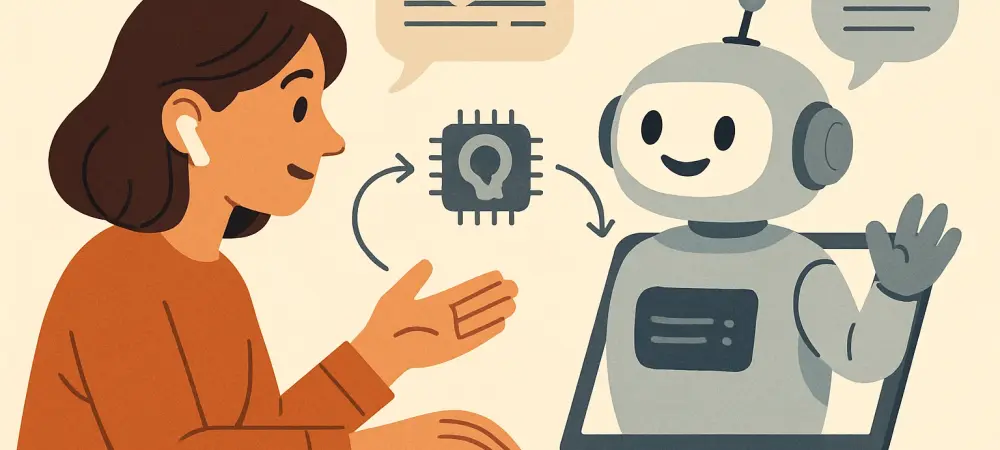
I’m thrilled to sit down with Dominic Jainy, a seasoned IT professional whose deep expertise in artificial intelligence, machine learning, and blockchain has positioned him as a thought leader in the tech world. With a passion for exploring how these cutting-edge technologies can transform industries, Dominic offers a unique perspective on the future of AI and its potential to reshape our daily lives. In this conversation, we dive into the exciting advancements on the horizon, from multimodal systems to distributed intelligence, and discuss how AI might evolve to understand us better, solve complex problems, and even redefine what intelligence means in a global context.
How do you see the next major breakthrough in AI unfolding over the coming years?
I believe we’re on the cusp of a transformative shift with multimodal AI. This isn’t just about text-based interactions anymore; it’s about AI gaining depth through voice, robotics, and even physical outputs like operating machinery or creating audio and video. Imagine systems that don’t just reply to a typed question but can engage through spoken dialogue or assist in real-world tasks like picking fruit or driving vehicles. This leap will make technology far more integrated into our physical environment, changing how we interact with it on a fundamental level.
Can you break down what multimodal AI means for someone who isn’t tech-savvy?
Absolutely. Multimodal AI refers to systems that can handle and combine different types of input and output—think text, speech, images, and even physical actions. Right now, most AI chats with us via text on a screen. Multimodal AI would allow it to speak to you, understand visual cues, or even move a robotic arm to perform a task. It’s like upgrading from a basic phone call to a video chat where you can also share documents and see emotions—it’s a richer, more complete way of communicating.
How do you envision AI assistants becoming more attuned to us as individuals?
AI assistants are going to move beyond just processing commands to truly understanding the nuances of who we are. They’ll pick up on subtle things like our tone of voice, facial expressions, and even the context of our surroundings. For instance, if you sound frustrated, the AI might adjust its responses to be more empathetic or offer help proactively. Over time, these systems will build a deeper awareness of our preferences and moods, making interactions feel less mechanical and more like talking to a friend who really gets you.
What specific human cues do you think AI will master in the future to enhance these interactions?
I think tone of voice will be a game-changer—AI could detect if you’re excited, annoyed, or sarcastic just by how you sound. Facial expressions are another big one; imagine an AI noticing a furrowed brow and asking if something’s wrong. Beyond that, understanding social context—like knowing you’re in a noisy café versus a quiet office—will help it tailor responses. These cues will make AI feel more intuitive, almost like it’s reading the room, which is something we humans do naturally.
There’s a lot of buzz about AI surpassing human intelligence. What’s your take on this possibility?
It’s a fascinating and somewhat daunting idea. I don’t think we’re at the point of AI outsmarting humans across the board, but we’re definitely moving toward personal AI agents that could hold more knowledge than entire communities. This isn’t just about raw data—it’s about how AI can process and connect information in ways humans can’t. We’re talking about systems that could anticipate needs or solve problems before we even ask, which raises both exciting opportunities and ethical questions about control and dependency.
How does edge computing fit into this vision of powerful, personal AI?
Edge computing—running powerful AI directly on devices like smartphones rather than relying on distant servers—will be critical. It means faster responses since data doesn’t need to travel to the cloud and back, plus better privacy because your information stays local. Imagine having a super-smart assistant on your phone that doesn’t need constant internet access to function. This could democratize access to advanced AI, letting everyone carry a pocket-sized genius that’s tailored to their life.
You’ve mentioned distributed intelligence as an alternative to centralized AI systems. Can you elaborate on this concept?
Sure. Instead of building one massive, all-knowing AI brain in the cloud, distributed intelligence is about creating many smaller, localized AIs that work together. Think of it like a company where the CEO doesn’t know everything but orchestrates a team of experts. These micro AIs could operate on local data and tools, understanding specific contexts—like your neighborhood or workplace—and when they connect globally, a collective intelligence emerges. It’s a more flexible, resilient approach compared to a single, centralized system that could be a point of failure.
What advantages do you see in a network of smaller AIs over one giant system?
For one, it’s more adaptable. Smaller AIs can specialize in local needs—say, healthcare data in one region or legal rules in another—without being bogged down by irrelevant information. It also reduces risks; if a centralized system crashes or gets hacked, everything’s down, but a network can keep functioning. Plus, it’s more privacy-friendly since data doesn’t always need to be sent to a central hub. Ultimately, this setup mirrors how human societies work—diverse expertise coming together for a greater whole.
Have you noticed any trends in the industry that suggest companies are already shifting toward decentralizing AI?
Yes, there’s definitely movement in this direction, even if it’s not always openly acknowledged. Many big players are breaking tasks into specialized systems—think of one AI handling language, another focusing on image recognition, and yet another on reasoning. They’re creating what’s sometimes called a ‘mixture of experts’ model, where different components tackle specific pieces of a problem. It’s a practical way to manage complexity, and I’ve seen this approach in how some tech giants are structuring their AI development pipelines.
Looking at AI’s progress in areas like reasoning and math, what excites you most about these advancements?
I’m really thrilled about how AI is getting better at reasoning, especially in domains like math and coding. By turning complex problems—like mathematical proofs—into computer code, AI can systematically work through solutions with incredible precision. What’s even more exciting is the idea of verified superintelligence, where systems learn from their mistakes and improve over time. This could revolutionize how we tackle real-world challenges, from engineering breakthroughs to medical research, by providing reliable, self-correcting intelligence.
What’s your forecast for the future of AI in terms of its impact on global problem-solving?
I think we’re entering an era of what I’d call mass intelligence, where AI’s ability to reason and solve problems becomes widely accessible and affordable. This could unlock solutions in fields we haven’t even fully explored yet—think physics, climate modeling, or personalized healthcare at scale. The speed and reach of AI, especially when paired with fundamental sciences like math, could accelerate progress in ways we can’t fully predict. My hope is that we steer this power toward equitable, sustainable outcomes, addressing some of humanity’s biggest challenges with unprecedented collaboration.