

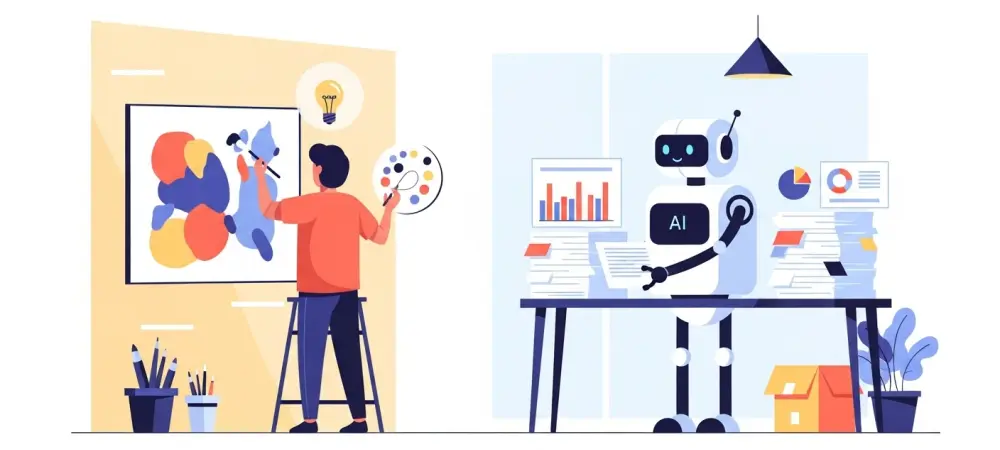
While executive boardrooms buzz with the transformative promise of artificial intelligence, a silent and corrosive anxiety is spreading through the cubicles and home offices of the employees expected to deploy it. This growing chasm between leadership’s enthusiasm and the workforce’s deep-seated fear of obsolescence represents the single greatest threat to successful AI integration. The primary challenge is not technological implementation but human leadership, demanding a strategic approach that prioritizes people over platforms and transforms fear into a catalyst for growth. Overcoming this internal friction is paramount, as no algorithm can optimize a culture of distrust or automate the process of building psychological safety.
Are You Celebrating AI’s Potential While Your Team Is Quietly Fearing for Their Jobs?
A fundamental disconnect is emerging in organizations across every sector. At the highest levels, AI is viewed through a lens of opportunity—a powerful tool for unlocking unprecedented efficiency, driving innovation, and securing a competitive edge. This perspective is valid, backed by projections of increased productivity and streamlined operations. For leaders, the path forward seems clear and paved with technological advancements that promise a more intelligent and responsive enterprise.
However, on the ground floor, this top-down optimism often fails to translate. Employees hear the same announcements not as opportunities for advancement but as a countdown to their own redundancy. The prevailing narrative, amplified by headlines and speculation, positions AI as a direct competitor for their roles. This perception creates a climate of uncertainty where staff may become disengaged, hesitant to embrace new tools they believe are designed to replace them, and quietly begin to look for exits. This gap in perception is not merely a communication failure; it is a fundamental leadership crisis that undermines the very foundation of trust necessary for any major organizational transformation.
Why the Prevailing AI Threat Narrative Is a Business-Critical Problem
When employees fear for their job security, the consequences ripple through the entire organization with tangible, negative effects. Morale plummets, and productivity suffers as mental energy is diverted from collaborative tasks toward personal anxiety and job-hunting. Innovation stalls because a workforce that feels threatened is less likely to experiment, take risks, or offer the discretionary effort required to master new systems. This climate of fear can also trigger an exodus of valuable talent, as skilled employees who feel their contributions are being devalued seek environments that offer greater stability and a clear vision for their future.
The core responsibility of leadership, therefore, extends far beyond simply procuring and implementing new technology. It is about actively managing the human experience of change. This requires cultivating an atmosphere of psychological safety, where employees feel secure enough to voice concerns, ask difficult questions, and participate in the transition process without fear of retribution. A leader’s primary role in the age of AI is not to be a technologist but a translator and a trusted guide, steering the organization through uncertainty by placing human needs at the center of the strategy.
The Three Pillars of an Augmentation-First AI Strategy
An effective strategy begins with reframing the internal narrative from one of job loss to one of job evolution. This requires a deliberate shift in communication, moving away from discussions about automating tasks and toward a vision of liberating time. When AI is positioned as a tool that absorbs repetitive, data-heavy, and mundane work, it frees human talent to focus on what they do best: strategic thinking, creative problem-solving, and building meaningful relationships with clients and colleagues. This approach transforms AI from a perceived threat into a supportive partner that enhances an employee’s capacity to perform more fulfilling and higher-value work.
This technological shift also creates a paradoxical rise in the market value of uniquely human-centric skills. As AI competently handles analytical and formulaic processes, abilities rooted in empathy, nuanced judgment, and complex interpersonal connection become more critical differentiators. A generative AI can produce a grammatically perfect report, but it cannot replicate the wisdom and contextual understanding of a seasoned mentor or resolve a delicate client issue with genuine compassion. Organizations must champion these “people skills,” recognizing that they are not soft attributes but hard assets in an AI-integrated economy.
Finally, a forward-thinking strategy positions AI as a powerful catalyst for the creation of entirely new roles and career opportunities. The integration of AI necessitates new specializations that demand “AI fluency.” Software engineers will be needed to build and fine-tune specialized AI agents, marketers will leverage generative tools to craft innovative campaigns, and operations managers will be tasked with optimizing AI-driven workflows. For employees who are proactive in acquiring these new competencies, AI opens clear pathways for career growth and makes them more valuable to the organization than ever before.
Evidence from the Field Augmentation in Action
The radiology profession provides a powerful real-world example of AI-driven job growth, not reduction. When AI tools capable of analyzing medical images with remarkable accuracy were introduced, many predicted the obsolescence of human radiologists. The opposite occurred. At institutions like the Mayo Clinic, the integration of hundreds of AI models enhanced diagnostic speed and precision, which in turn enabled the radiology staff to handle a greater volume of complex cases and focus on patient-centered care. This synergy of human expertise and machine efficiency led to a 50% expansion of its radiology department, demonstrating a clear model where technology augments capabilities and drives growth.
Within corporate settings, a similar pattern emerges. The implementation of an AI-powered customer support chatbot, for instance, did not lead to layoffs but instead restructured the support function for greater effectiveness. The chatbot efficiently resolved common, low-level inquiries, which reduced the overall workload and allowed human agents to dedicate their time to resolving more complex and sensitive customer issues. This not only improved the quality and speed of support but also created new roles, as several team members were reassigned to oversee, train, and continuously improve the AI system’s performance, leveraging their deep domain expertise.
The transformation from fear to opportunity can even happen at the individual level through direct and empathetic dialogue. Consider a manager who expressed anxiety that a new AI tool, designed to automate a monitoring task he performed, would diminish his role. Through a candid conversation, it was reframed not as a replacement but as an assistant. The tool would handle the repetitive oversight, liberating hours of his time each week to focus on more strategic, creative initiatives that he previously lacked the bandwidth to pursue. This simple shift in perspective turned a source of fear into a source of empowerment.
Your Action Plan How to Connect the Dots for Your Team
The first step in alleviating workforce anxiety is to replace impersonal corporate memos with candid, two-way conversations. Leaders must create forums—whether through town halls, small group discussions, or one-on-one meetings—where the vision for AI as a collaborative partner can be shared transparently. More importantly, these must be spaces where employees feel safe to voice their concerns, ask challenging questions, and contribute to the dialogue. This human-centered communication builds trust and ensures the team feels heard and valued throughout the transition.
Next, organizations must actively redefine and reward the contributions that are uniquely human. This involves updating job descriptions and performance metrics to explicitly value skills that AI cannot replicate, such as mentorship, emotional intelligence, complex problem-solving, and cross-functional collaboration. By formally recognizing and incentivizing these ‘people skills,’ leaders send a clear message that while tasks may be automated, the essential human element of the workforce is becoming more critical, not less.
Finally, this vision must be supported by tangible investments in employee development. It is not enough to simply state that roles will evolve; leaders must provide a clear and accessible path forward. This means offering robust training opportunities—from in-person workshops on AI collaboration to AI-powered learning agents that deliver personalized upskilling programs. By equipping employees with the skills and ‘AI fluency’ needed to thrive in new and redesigned roles, a company demonstrates a genuine commitment to its existing workforce, effectively connecting the dots between today’s uncertainty and tomorrow’s opportunities.
The dialogue surrounding AI in the workplace had often been dominated by a narrative of replacement, which, if left unaddressed, could become a self-fulfilling prophecy driven by internal fear rather than external reality. Successful integration was not merely a technological challenge but a fundamentally human one, hinging on a leader’s ability to reframe the conversation. The organizations that ultimately succeeded were those that moved beyond top-down mandates and engaged in transparent communication, invested in reskilling their people, and deliberately redesigned work to fuse machine efficiency with human ingenuity. In doing so, they built a culture where AI was viewed not as a threat, but as a powerful partner in human achievement.