

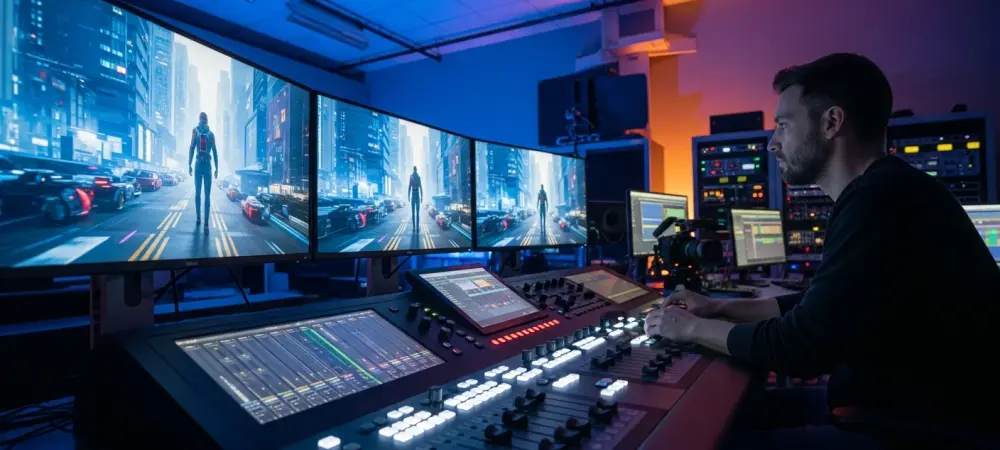
The threshold where digital artifice becomes indistinguishable from captured reality has been crossed, leaving the industry to grapple with a world where a single descriptive sentence can manifest a cinematic masterpiece in minutes. This seismic shift in digital media represents more than just a faster way to animate; it is a fundamental reconstruction of how visual information is synthesized. By leveraging complex diffusion models and deep neural networks, modern systems have matured from generating flickering, low-resolution artifacts to producing production-grade 4K content that adheres to the laws of optics and motion. This transition is not merely about resolution but about the democratization of high-end production, effectively dismantling the financial and technical barriers that once restricted filmmaking to major studios.
The Evolution of Generative Video Architectures
Current generative architectures represent a departure from simple frame-by-frame interpolation toward a more holistic understanding of 3D space and time. At the core of this technology are latent diffusion models that have been trained on vast datasets of video and metadata, allowing them to predict not just the next pixel, but the next logical movement of an object in a physical environment. This evolution has moved the industry away from experimental clips toward reliable, scalable assets. The transition is significant because it shifts the focus from “what can the machine make” to “how can the creator control the machine,” marking a new chapter where complex visual synthesis is a standard utility rather than a specialized luxury.
This technological maturation has fundamentally altered the broader landscape by automating the most labor-intensive aspects of visual effects. In traditional workflows, a simple lighting change could take days of re-rendering and compositing; now, neural networks can recalculate global illumination and reflections across a sequence in real-time. By removing these bottlenecks, the technology has invited a more diverse range of voices into the creative sector, allowing small teams to produce marketing campaigns and cinematic shorts that rival the quality of traditional heavyweights.
Core Technical Pillars and Performance Metrics
Multimodal Synergy and Synchronized Audio
One of the most impressive feats in current video generation is the seamless integration of visual and auditory data within a single generative pass. Modern models no longer treat sound as an afterthought or a separate post-production step. Instead, they utilize multimodal transformers to generate physics-accurate movement alongside synchronized soundscapes. When a digital character speaks or an object strikes the ground, the system calculates the acoustic properties of the environment, ensuring the reverb and timing align perfectly with the visual cues. This synergy reduces the cognitive dissonance often found in early AI attempts, creating a more immersive and believable experience for the viewer.
Beyond simple synchronization, these models are now capable of generating automated scripts that inform the visual pacing. This means the AI understands the narrative weight of a scene, adjusting the camera movement and lighting to match the mood of the generated dialogue. Such an integrated approach ensures that the “soul” of the video remains consistent across all sensory inputs. It reflects a shift from basic video generation toward a comprehensive “media synthesis” where the boundaries between director, cinematographer, and sound engineer begin to blur into a unified algorithmic process.
Temporal Consistency and Physical Reasoning
The persistent problem of “hallucinations”—where objects morph or disappear between frames—has been largely solved through advanced spatial reasoning. Modern engines now employ physics-based rendering logic that functions as a guardrail for the generative process. By simulating gravity, light refraction, and skeletal constraints within the latent space, these models ensure that human expressions and environmental physics remain constant. If a character walks behind a tree, the model maintains a persistent memory of that character’s appearance, ensuring they emerge on the other side without any unintended alterations to their clothing or features. This leap in physical reasoning is what makes current tools viable for professional use. It provides the reliability necessary for long-form storytelling where continuity is paramount. Moreover, the ability of the AI to understand how light interacts with different materials—such as the translucency of skin or the metallic sheen of a car—means that generated footage can be spliced with real-world video with minimal color grading. This level of fidelity ensures that the viewer’s suspension of disbelief is never broken by technical glitches, allowing the narrative to take center stage.
Granular Directorial Control and Manipulation
The gap between raw generative output and professional visual effects has been bridged by tools like “Motion Brushes” and “Director Mode.” These features allow creators to move beyond simple text prompts and exert precise control over specific elements within a frame. For instance, a creator can highlight a specific area of a still image and dictate the speed and direction of the wind blowing through a character’s hair without affecting the rest of the scene. This granular manipulation turns the AI from a black box into a sophisticated digital puppet, offering a level of agency that was previously the sole domain of specialized VFX software.
Furthermore, the introduction of multi-camera perspectives within a single generation allows for more complex storytelling. Creators can now request a “master shot” and then generate matching “close-ups” or “reverse angles” that maintain perfect environmental and character consistency. This capability essentially provides a virtual film set where the “Director” can move their digital camera at will. It represents a significant move toward “workflow synthesis,” where the AI acts as a collaborative partner that understands the specific technical vocabulary of professional filmmaking.
Current Industry Trends and Ecosystem Shifts
The industry is currently moving away from fragmented, standalone applications toward “unified interfaces” and aggregators. Users no longer want to be locked into a single model’s aesthetic; instead, they prefer platforms that allow them to toggle between different engines based on the specific needs of a project. This shift toward interoperability means that a creator might use one engine for its superior physics and another for its high-fidelity facial animations, all within the same timeline. This trend toward a modular ecosystem suggests that the future of AI video lies in the seamless integration of various specialized strengths rather than a “one size fits all” winner.
Moreover, the rise of API-based distribution is changing how creative software functions. Rather than visiting a specific website to generate video, professionals are finding these high-end models integrated directly into the creative platforms they already use, such as non-linear editors and graphic design suites. This integration facilitates a “frictionless” creative process where AI generation is just another tool in the toolbar. As these models become more accessible through third-party platforms, the emphasis is shifting from the novelty of the technology to the efficiency and quality of the output it provides in a commercial context.
Strategic Applications Across Diverse Sectors
In the cinematic industry, photorealistic models are now being used as primary tools for high-end VFX prototyping and pre-visualization. Filmmakers can “shoot” an entire movie in low-fidelity AI versions to test pacing and composition before a single real camera is rented. This reduces the financial risk of large-scale productions by allowing directors to iterate on complex sequences in a digital sandbox. When a sequence is approved, the AI can then be used to generate the final high-resolution background plates or crowd simulations, significantly cutting down the time spent in traditional post-production.
Outside of Hollywood, corporate sectors are utilizing “AI Avatars” to revolutionize multilingual training and internal communication. A single video of a CEO can be instantly localized into dozens of languages, with the AI adjusting the lip-sync and tone to match each specific dialect. Simultaneously, automated marketing tools are being used to curate existing stock libraries into polished, high-converting advertisements. By analyzing audience data, these tools can generate thousands of variations of a single ad, each tailored to a specific demographic, which has fundamentally changed the economics of digital advertising by making hyper-personalization at scale a reality.
Technical Constraints and Market Obstacles
Despite these leaps forward, the technology still faces significant computational hurdles. The energy and hardware requirements for real-time, high-resolution rendering are immense, often requiring massive server farms to process even a short clip. This creates a bottleneck for individual creators who may not have the budget for high-tier subscriptions or the local hardware to support offline processing. While the efficiency of these models is improving, the trade-off between rendering speed and visual fidelity remains a primary challenge for developers aiming to bring these tools to a broader audience.
Security and regulatory compliance also remain major hurdles for enterprise adoption. Large corporations require strict adherence to data privacy standards, such as SOC 2 compliance, and clear legal frameworks regarding commercial licensing. There are ongoing debates concerning the ethical sourcing of training data and the potential for “deepfakes” to be used maliciously. Until there is a globally recognized standard for digital watermarking and provenance, many high-stakes industries may remain hesitant to fully integrate generative video into their core operations. Addressing these legal and security concerns is just as critical for the technology’s growth as the refinement of the algorithms themselves.
Future Projections and Societal Impact
The trajectory of this technology points toward a transition from generating short, disjointed clips to producing full-length, autonomous cinematic features. In the coming years, we will likely see the first feature-length films where every frame, sound, and line of dialogue is synthesized by AI, directed by a human “prompt engineer.” This will fundamentally alter the labor market within the creative arts. While traditional technical roles like rotoscoping or manual color correction may diminish, the demand for individuals who can orchestrate these complex AI workflows will skyrocket. The value will shift from the “how” of production to the “what” of creative vision.
This shift suggests a future where the cost of high-quality storytelling drops to near zero, potentially leading to an explosion of niche content. While this democratization is exciting, it also poses a challenge to the traditional media economy. When anyone can produce a blockbuster-quality film from their bedroom, the competition for human attention will become fiercer than ever. The long-term societal impact will be a move toward a “personalized media” era, where content is not just consumed by an audience but is generated specifically for the individual viewer’s preferences and emotional state.
Comprehensive Review Summary
The maturation of AI video generation tools has turned what were once perceived as novelty toys into essential industrial engines. This review found that the technology has successfully navigated the transition from experimental curiosity to a robust professional utility, offering unprecedented levels of physical realism and directorial control. The integration of multimodal synchronization and temporal consistency has provided a foundation for reliable commercial use, proving that these tools are ready for the rigors of high-end production. While computational costs and regulatory gray areas persisted as notable obstacles, the momentum of the ecosystem suggested that these were temporary hurdles rather than permanent barriers. Ultimately, the democratization of professional-grade video production has permanently shifted the economics of content creation. The assessment of the technology’s current state revealed a landscape where the primary constraint is no longer the budget, but the imagination and strategic integration of the user. As these tools continue to evolve, the distinction between “AI-generated” and “human-made” became less relevant than the quality of the narrative being told. The move toward a more accessible, efficient, and personalized media landscape was not just an evolution of technology, but a complete reimagining of the creative process itself.