

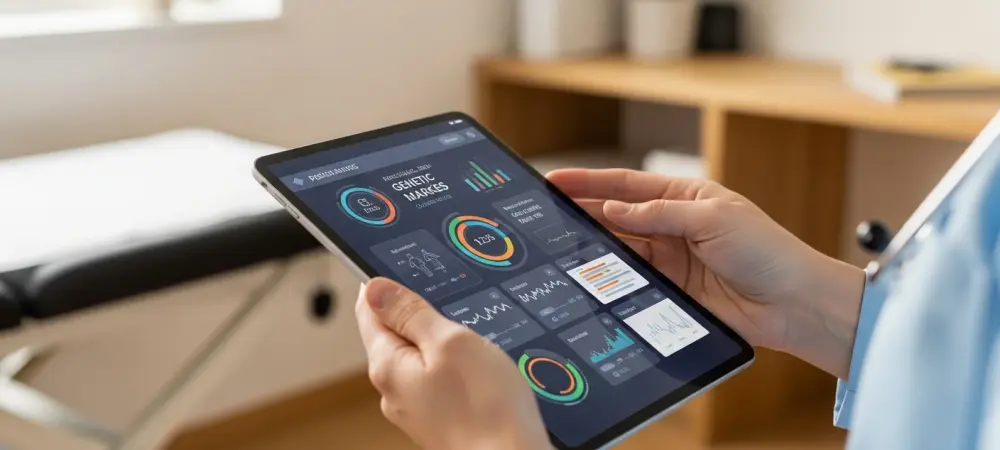
The relentless pressure on global healthcare systems has created an inflection point where the sheer volume of data and patient demand outpaces the capacity of human clinicians alone. This environment has become the proving ground for artificial intelligence, not as a replacement for medical professionals, but as an indispensable partner. AI is stepping in to manage systemic challenges, including aging populations, the escalating prevalence of chronic diseases, and persistent staff shortages. By processing vast datasets that are beyond human scale, intelligent systems are augmenting the capabilities of doctors, nurses, and administrators, paving the way for a more efficient, accessible, and personalized standard of care. This synergy between human expertise and machine intelligence marks the beginning of a profound transformation in how medicine is practiced, promising a future where technology amplifies the very human art of healing.
The New Digital Frontier in Medicine: AI’s Current Role and Impact
Global healthcare infrastructure is straining under unprecedented demand. Developed nations face the dual challenge of aging populations requiring more complex care, while the worldwide rise in chronic conditions like diabetes and heart disease consumes a significant portion of medical resources. Compounding these issues are persistent staffing shortages that leave clinicians overworked and increase the risk of burnout. These systemic pressures create an urgent need for innovative solutions that can optimize workflows, enhance diagnostic capabilities, and manage resources more effectively. Into this breach steps artificial intelligence, positioned not as an autonomous practitioner but as a sophisticated collaborative tool. The core premise of its integration is to augment, rather than replace, the skills of medical professionals. AI excels at pattern recognition, data analysis, and process automation, freeing human experts from repetitive tasks and providing them with deeper insights for decision-making. This partnership allows clinicians to focus on what they do best: complex problem-solving, patient communication, and delivering compassionate care.
The integration of AI is already well underway across several key segments of the healthcare ecosystem. In diagnostics, machine learning algorithms are becoming instrumental in analyzing medical images with a level of precision that can surpass the human eye. Within hospital operations, predictive analytics help manage patient flow and allocate resources like beds and staff more efficiently. For patient care, AI is enabling the shift toward highly personalized treatment plans tailored to an individual’s genetic makeup and lifestyle. Propelling these advancements are core technologies like natural language processing, which automates clinical documentation and administrative tasks, and deep learning models that power the next generation of diagnostic and predictive tools.
The Momentum of Intelligent Medicine: Key Trends and Growth Projections
From Diagnosis to Data Entry: How AI is Reshaping Clinical Workflows
The most visible impact of AI is emerging in diagnostic assistance, where algorithms are enhancing the accuracy and speed of clinical assessments. In radiology, AI-powered tools are now commonly used to screen for subtle signs of disease in X-rays, CT scans, and MRIs, flagging potential abnormalities for human review. Similarly, in oncology, AI models analyze tissue samples and genomic data to help identify cancer subtypes and predict treatment responses. Cardiology is also benefiting, with algorithms that can detect irregular heart rhythms from ECG readings or predict the risk of cardiovascular events based on patient data, enabling earlier intervention.
Beyond the examination room, AI is fundamentally restructuring hospital operations and administrative workflows. Predictive analytics systems are being deployed to forecast emergency room admissions, optimize surgical schedules, and manage supply chains, leading to significant efficiency gains and cost savings. The automation of routine administrative duties is another major trend, with natural language processing tools transcribing physician notes, coding medical bills, and handling patient scheduling. This automation alleviates a significant portion of the administrative burden that contributes to clinician burnout, redirecting valuable time toward patient-facing activities.
This technological evolution is simultaneously transforming the healthcare workforce. The demand for digital literacy among all medical professionals is growing, as interacting with AI-driven systems becomes a standard part of clinical practice. Moreover, this shift is creating entirely new roles at the intersection of medicine and technology. Positions such as Clinical Data Analysts, who interpret the outputs of AI models, and AI Health Ethicists, who ensure these systems are deployed responsibly, are becoming increasingly vital. The healthcare professional of the near future will be a hybrid expert, blending deep clinical knowledge with the skills to leverage intelligent technology effectively.
Quantifying the Impact: Real-World Applications and Future Market Trajectory
The tangible benefits of AI integration are increasingly supported by real-world evidence. Studies have demonstrated that AI-assisted diagnostics can lead to a measurable improvement in accuracy, particularly in detecting early-stage diseases that are often missed in initial screenings. This enhancement not only improves patient outcomes but also accelerates clinical decision-making, allowing treatments to begin sooner. By rapidly analyzing complex patient data, AI-powered clinical decision support systems provide physicians with evidence-based recommendations, reducing diagnostic uncertainty and standardizing the quality of care.
Successful applications are now visible across a spectrum of medical disciplines. In personalized medicine, oncologists use AI to analyze a tumor’s unique genetic profile and identify the most effective targeted therapies, moving beyond one-size-fits-all treatment protocols. Public health has also become a major area of application, with AI models used to track the spread of infectious diseases, predict outbreak hotspots, and allocate public health resources more strategically. These use cases underscore AI’s ability to function at both the individual patient level and the broader population scale.
The market for AI in healthcare is consequently on a steep upward trajectory, reflecting growing confidence and accelerating adoption rates. Projections show robust market growth continuing from 2026 through the end of the decade, fueled by the increasing demand for more efficient, data-driven healthcare solutions. Investment is flowing into startups and established technology firms alike, with a focus on developing specialized AI for diagnostics, drug discovery, and operational management. This expanding market signals a permanent shift in the industry toward intelligent, technology-augmented healthcare delivery.
Navigating the Hurdles: Addressing the Ethical and Technical Complexities of AI
Despite its immense potential, the deployment of AI in healthcare is not without significant challenges, the most pressing of which is algorithmic bias. If an AI model is trained on data that does not accurately represent the full diversity of the patient population, it can learn and perpetuate existing societal biases. This could lead to systems that are less accurate for minority groups, women, or other underrepresented communities, thereby amplifying health disparities rather than reducing them. Mitigating this risk requires careful curation of training data and continuous auditing of algorithms for fairness.
The sensitive nature of patient information places data privacy and security at the forefront of implementation concerns. AI systems often require access to vast stores of personal health records, creating vulnerabilities that could be exploited. Establishing robust cybersecurity measures, anonymization techniques, and clear governance protocols for data handling is critical to maintaining patient trust. Without assurances that their most private information is protected, widespread public acceptance of AI-driven healthcare will remain elusive.
Furthermore, it is essential to confront the inherent limitations of artificial intelligence. Current AI technology, for all its analytical power, lacks the uniquely human qualities of empathy, compassion, and nuanced moral judgment that are indispensable to patient care. An algorithm can identify a tumor on a scan, but it cannot comfort a patient receiving a difficult diagnosis or navigate the complex ethical considerations of end-of-life care. Recognizing these boundaries reinforces AI’s role as a supportive tool, ensuring that the final decisions and the human connection remain firmly in the hands of clinicians.
Building a Framework of Trust: The Critical Role of Regulation and Governance
As AI becomes more integrated into clinical practice, the regulatory landscape must evolve to ensure patient safety and efficacy. Government bodies and health authorities are actively developing new frameworks to oversee the entire lifecycle of medical AI, from initial development and validation to post-deployment monitoring. These regulations are designed to hold AI systems to the same rigorous standards as other medical devices and treatments, ensuring they perform as intended without causing harm.
Beyond government regulation, the establishment of clear ethical guidelines is essential for building trust among clinicians and patients. Professional medical organizations and ethics committees are working to create standards for transparency, demanding that the logic behind an AI’s recommendation is understandable and explainable. Accountability is another cornerstone of these guidelines, defining who is responsible—the developer, the hospital, or the clinician—when an AI system contributes to an adverse outcome.
Ultimately, compliance with these emerging regulatory and ethical standards is what will determine the successful and equitable adoption of AI. Ensuring that AI systems are validated across diverse patient populations, audited for bias, and transparent in their operations is not just a legal requirement but a moral imperative. A robust framework of trust, built on a foundation of safety, equity, and effectiveness, is the only way to ensure that AI serves the best interests of all patients.
The Collaborative Clinic of Tomorrow: Charting the Future of Human-AI Partnership
The future healthcare ecosystem is envisioned as a hybrid model where the analytical power of intelligent systems seamlessly augments human expertise. In this collaborative clinic, a physician’s diagnostic process might begin with an AI-generated report that highlights areas of concern in a patient’s scans or lab results, along with a summary of relevant clinical literature. This allows the doctor to synthesize information faster and more accurately, elevating their role from data gatherer to expert interpreter and strategist.
This partnership is expected to fundamentally reshape the daily work of clinicians for the better. By automating administrative tasks, managing routine data analysis, and streamlining operational logistics, AI will free medical professionals to dedicate more time to direct patient interaction and complex care. This shift promises to restore the focus of medicine to the patient-doctor relationship, enhancing patient satisfaction and reducing the rates of clinician burnout that currently plague the industry.
Looking ahead, this human-AI collaboration is poised to unlock new frontiers in medicine and disrupt existing care models. AI-powered remote patient monitoring systems will allow for the continuous tracking of chronic conditions from a patient’s home, enabling proactive interventions before a crisis occurs. Preventative medicine will also see significant growth, as AI analyzes lifestyle, genetic, and environmental data to identify individuals at high risk for disease and recommend personalized prevention strategies. These innovations represent the next wave of growth, pushing healthcare from a reactive to a proactive and highly personalized paradigm.
A Synthesized Vision: Maximizing AI’s Potential for a Healthier Future
The convergence of artificial intelligence and healthcare presented a transformative opportunity to forge a more efficient, effective, and patient-centric system. By augmenting the capabilities of medical professionals, AI addressed long-standing challenges of scale, complexity, and resource constraints. It offered a path toward improved diagnostic accuracy, streamlined operations, and care that was truly personalized to the individual. The greatest advancements realized did not come from machines operating in isolation, but from the collaborative synergy between human intelligence and artificial intelligence. The most successful implementations treated AI as a powerful tool that enhanced, rather than replaced, the judgment, empathy, and ethical oversight of human clinicians. This human-in-the-loop model proved to be the key to unlocking the technology’s full potential safely and responsibly.
The prospects for continued growth in this sector were directly tied to the commitment to a human-centric approach. By navigating the ethical hurdles, establishing robust governance, and prioritizing the patient-doctor relationship, the healthcare industry successfully harnessed AI’s promise. The result was a new era in medicine, defined by a powerful partnership that delivered a higher standard of care and moved society closer to a healthier future for all.