

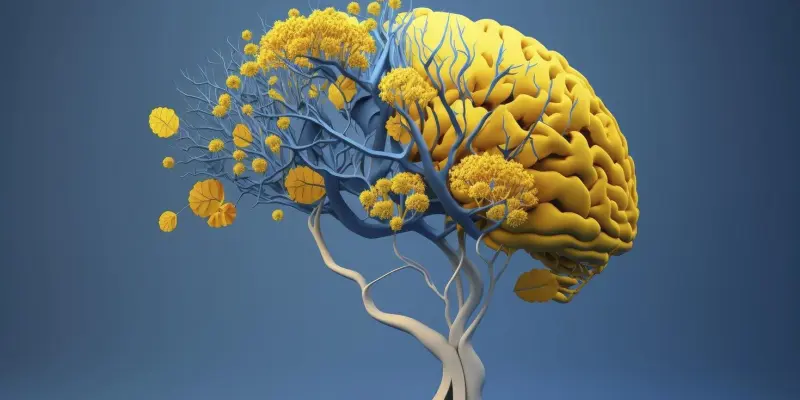
In a world increasingly challenged by the rising demand for mental health care and a notable shortage of professional resources, Artificial Intelligence (AI) is revolutionizing the landscape. AI technologies are not only improving the efficiency and accuracy of mental health diagnoses but also enhancing treatment methods and accessibility. As researchers continue to harness the power of AI, a variety of sophisticated tools have emerged, offering new solutions to longstanding challenges in mental health care. These innovations are not merely enhancing how mental health issues are detected but also providing long-term benefits in treatment approaches.
Natural Language Processing (NLP) in Mental Health Diagnosis
Among the most prominent AI tools impacting mental health care is Natural Language Processing (NLP). NLP is designed to analyze speech and text, sifting through human language patterns related to various mental health disorders. This technology allows practitioners to investigate conversations, social media content, and written texts to identify signs of mental health issues. During depressive episodes, for instance, individuals may display specific speech patterns such as repetitive statements, reduced vocabulary, and excessive negative emotional expressions. By processing vast amounts of data quickly, NLP aids in the prompt detection of potential mental health problems.
AI applications like Woebot and Tess are at the forefront of using NLP for interactive assessment conversations. These tools engage users in dialogue, collecting vital patient information that can be used for early diagnosis of mental health conditions. Through this data collection, clinicians are equipped to accurately evaluate the severity of disorders such as depression, anxiety, and PTSD. The efficiency with which NLP processes data makes it a valuable asset for timely mental health intervention, enabling quicker diagnoses that lead to early treatment and improved patient outcomes.
Machine Learning (ML) for Predictive Analytics
Machine Learning (ML) is another transformative AI technology making significant strides in mental health care, especially in predictive analytics. This technology focuses on identifying patterns in extensive datasets to foresee mental health risks before they fully develop. By analyzing electronic health records (EHR), behavioral surveys, and even social media activity, ML algorithms can predict the likelihood that individuals will develop mental health disorders such as depression, bipolar disorder, or schizophrenia. These predictive models draw from diverse data sources, including family history assessments, medical diagnoses, and patient demographics.
ML-driven tools are designed to generate alerts, notifying medical professionals about patients who are at risk. This proactive approach facilitates timely interventions, preventing conditions from deteriorating and thereby enhancing long-term mental health outcomes. As these ML algorithms evolve with new data, they become increasingly precise, enabling mental health practitioners to tailor treatment plans to individual needs effectively. The continuing advancement of ML technologies promises even greater accuracy and efficiency in predictive mental health care, making personalized therapeutic strategies more achievable and impactful.
AI-Based Imaging for Brain Analysis
Another cutting-edge development in AI technology is AI-powered imaging, which has become extremely sophisticated in analyzing brain images to diagnose mental health disorders. These tools examine MRI and fMRI scans, detecting subtle changes in brain structure and activity that may signify various mental health conditions. The technology enables medical professionals to identify anomalies that are often missed during conventional medical examinations and to connect specific brain regions with mental health disorders. For example, AI analysis can pinpoint modifications in neural pathways and patterns that might go unseen in traditional scans, thus facilitating more accurate diagnoses.
AI-based imaging technologies are particularly valuable in monitoring disease progression, assessing treatment effectiveness, and driving new therapeutic research. The precision of this technology allows doctors to gain a comprehensive understanding of brain function and ensures accurate clinical diagnoses. Furthermore, its non-invasive nature makes it a patient-friendly option, allowing for regular monitoring without discomfort. As these AI-based imaging tools continue to develop, they are expected to play an increasingly crucial role in mental health care, offering insights into the biological underpinnings of mental health disorders and potential new intervention strategies.
Wearable Devices for Mental Health Tracking
The integration of AI with wearable devices represents another significant advancement in mental health care. Initially designed for monitoring physical activity, wearable devices have evolved to become essential tools for tracking mental well-being. These devices measure various physiological parameters such as heart rate, sleep patterns, physical activity, and skin temperature in real-time. AI analyzes this data to detect subtle changes that may indicate mental health issues like stress, anxiety, or depression. For instance, variations in heart rate and disruptions in sleep patterns can serve as early indicators of conditions such as depression and bipolar disorder.
AI-powered wearables continuously collect physiological data, providing users and healthcare professionals with early warnings of potential mental health concerns. This continuous monitoring allows for preventive measures to be taken before problems escalate, making it possible to intervene early and more effectively. The primary advantage of wearable technology lies in its ability to gather data outside traditional clinical settings, offering a more accurate and consistent reflection of an individual’s mental health in daily life. This data-driven approach aids in more precise diagnoses and supports individualized therapeutic strategies, enhancing overall mental health care.
AI-Powered Platforms for Cognitive Behavioral Therapy (CBT)
AI-powered platforms are revolutionizing Cognitive Behavioral Therapy (CBT) by making it more accessible and personalized for patients. These platforms utilize AI algorithms to deliver CBT techniques and exercises through apps and online services, providing immediate support to individuals struggling with mental health issues. AI systems can analyze vast amounts of data more quickly and accurately than humans, identifying patterns and predicting outcomes that can inform better care. This not only augments the professionals’ capabilities but also makes mental health care more accessible to those who might not have had access before. The integration of AI into mental health care holds promises for both immediate improvements and sustainable, long-term advancements in how we understand and treat mental wellness issues.