

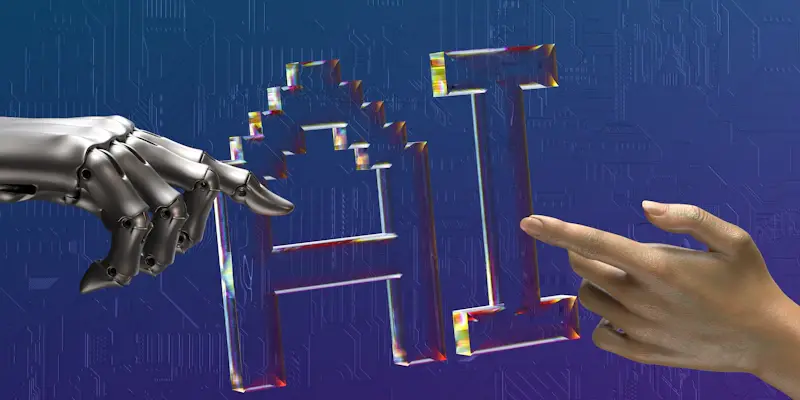
Artificial intelligence (AI) saw unprecedented growth and integration in 2024, fundamentally altering how people interact with technology. Major companies like OpenAI, Google, Apple, and Meta led the charge, introducing groundbreaking AI tools and features that became integral to daily digital activities. This article delves into the significant advancements and impacts of AI technologies throughout the year. Companies rapidly pushed the boundaries of AI capabilities, embedding these technologies deeper into their ecosystems and redefining what was possible for users globally. AI became more than a buzzword; it turned into a routine part of daily digital interactions, setting the stage for even greater innovations in the coming years.
The Rise of ChatGPT: OpenAI’s Pioneering Efforts
OpenAI’s ChatGPT continued to dominate the AI landscape in 2024, with numerous updates enhancing its versatility and power. The release of GPT-4o in May marked a significant milestone, enabling ChatGPT to handle text, images, audio, and video efficiently. This multimodal evolution made ChatGPT indispensable for a wide range of tasks, from coding challenges to creative brainstorming. Leveraging its enhanced capabilities, ChatGPT became a go-to tool not only for tech enthusiasts but also for professionals across different industries seeking advanced solutions for their unique needs. The AI evolved into an essential part of everyday digital tools, transforming how users approached problem-solving.
One of the standout features introduced by OpenAI was ChatGPT’s Advanced Voice Mode. This feature brought lifelike vocal interactions to the platform, making conversations more engaging and accessible. The introduction of a 1-800-CHATGPT toll-free hotline further expanded its reach, allowing more people to experience the benefits of AI-driven vocal interactions. By December, the GPT-4o model increased ChatGPT’s reasoning capabilities, providing sharper and more insightful answers. This made ChatGPT an essential tool for various professional and personal tasks, solidifying its place as a leader in the AI field. Its integration into daily routines signaled a shift in how users relied on AI for enhanced productivity.
Google Gemini: A Year of Transformation
Google’s AI endeavors took a significant leap forward in 2024 with the rebranding of Bard to Gemini in February. This marked the beginning of a year-long effort to surpass OpenAI by embedding AI across all its platforms. The launch of a new Gemini app for Android and a Gemini Advanced subscription initiated a competitive race with ChatGPT. Google aimed to integrate AI deeply into its ecosystem, enhancing user experience across its diverse range of digital services. The strategic move to rebrand and expand highlighted Google’s commitment to staying at the forefront of the AI industry.
In May, Google introduced Gemini 1.5, an update that enhanced processing power and expanded the context window, enabling more intelligent and complex query handling. This was followed by the integration of Gemini into Google Home devices and Google Assistant during the summer, allowing users to have real-time voice conversations with AI. September saw the release of custom chatbots, known as Gems, and the launch of an iPhone app with integrations into other Google apps on iOS. The year culminated with the release of Gemini 2.0 in December, offering faster and more accurate responses, photo analysis, and exclusive features for Google Pixel phones, further embedding AI into the Google ecosystem.
Apple’s AI Innovations: A New Era of Intelligence
Apple, known for its secrecy regarding AI endeavors, made a significant impact in 2024 with the introduction of Apple Intelligence. The reveal at WWDC in June showcased Apple’s integration of AI into its products, leveraging existing AI models while aligning with Apple’s design ethos. The revamped Siri now relied on ChatGPT for many tasks, awaiting the abilities to view, understand, and operate within applications as promised. Apple’s approach uniquely focused on performing AI processes locally on its hardware, ensuring a seamless and secure experience tailored to its user base. This integration highlighted Apple’s focus on user privacy and advanced performance.
Apple’s AI arsenal included Image Playground, a creative picture creator, and Genmoji for designing emojis. Distinctly, Apple’s approach aimed at performing AI processes locally on its hardware or through its ultra-secure Private Cloud Compute servers, promising speed and elevated privacy. These innovations emphasized Apple’s commitment to enhancing user experience through AI while maintaining its focus on privacy and security, setting a new standard for AI integration in consumer technology. The strategic reveal of these features underscored Apple’s dedication to leading in AI development without compromising its core values.
Meta’s AI Integration: Expanding Horizons
Meta also made significant strides in integrating AI throughout its platforms in 2024. The Meta AI virtual assistant was embedded in Facebook, Instagram, and WhatsApp, upgraded with celebrity voices to enhance functionality. This integration made AI interactions more engaging and personalized for users across Meta’s social media platforms. Meta’s approach aimed to heighten user engagement and offer more intuitive digital experiences through sophisticated AI integration, marking a noteworthy shift in user interaction dynamics on its platforms.
Meta AI was also incorporated into Meta Quest headsets and the Meta Ray-Ban Smart Glasses, with the Orion augmented reality glasses prototype promising more to come. These advancements showcased Meta’s commitment to embedding AI into its hardware, enhancing user experiences in virtual and augmented reality environments. While some AI hardware, such as the Rabbit R1 and several wearable AI devices like the Humane AI Pin, didn’t succeed as hoped, Meta’s efforts marked a critical inflection point where AI moved from nascent tech to an integral part of digital life. The attempts and subsequent learnings from these ventures underscored Meta’s relentless pursuit of innovation.
The Normalization of AI-Assisted Tasks
In 2024, artificial intelligence (AI) experienced unparalleled growth and integration, fundamentally transforming how individuals relate to technology. Leading innovators like OpenAI, Google, Apple, and Meta spearheaded this movement, rolling out revolutionary AI tools and features that soon became essential in day-to-day digital lives. This piece explores the major breakthroughs and influences of AI technologies over the year. Companies swiftly expanded the horizons of AI potential, ingraining these advancements even more deeply into their digital frameworks and reshaping user experiences on a global scale. AI transcended its status as a mere buzzword, evolving into a standard component of everyday digital interactions. This rapid integration of AI set a precedent, hinting at even more extraordinary innovations expected in the upcoming years. The remarkable progress in 2024 positioned AI not only as a pivotal part of technology but also as a driving force for future development, revolutionizing how we live and interact with the digital world.