

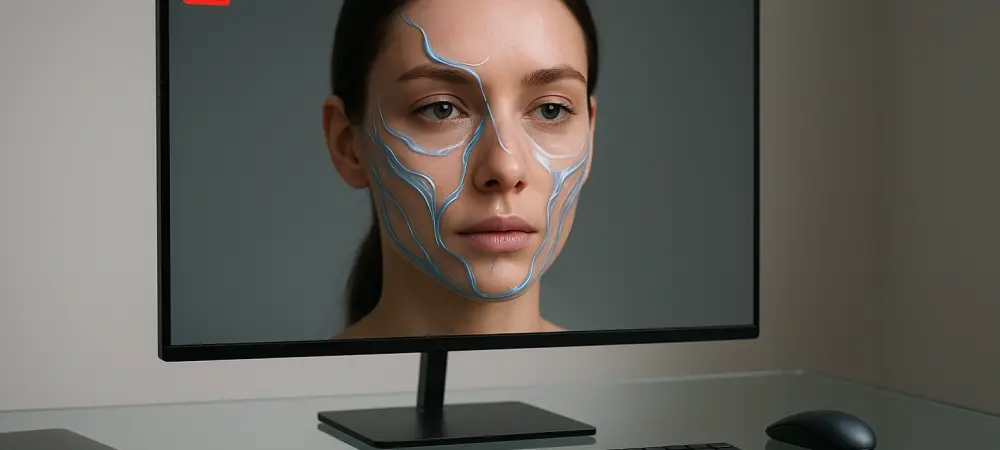
A digital creator leans toward a standard laptop camera, adjusts a single slider on a web browser, and instantly sees their reflection morph into a completely different person with terrifyingly perfect facial synchronization. This moment defines the current state of digital media in 2026, where the sluggish processing bars that once defined artificial intelligence have been replaced by the fluid, immediate reality of live interaction. For years, the promise of neural video synthesis was trapped behind “upload and wait” workflows, forcing users to endure hours of rendering for a few seconds of footage. However, the bottleneck has finally dissolved, turning AI from a cumbersome post-production tool into a living, breathing interface for human communication.
The transition from static file processing to real-time execution represents more than just a speed upgrade; it is a fundamental shift in how people perceive their digital identity. In a world where video calls and live broadcasts are the primary modes of professional and social exchange, the ability to modify one’s appearance on the fly offers a new level of agency. This shift matters today because it democratizes high-end visual effects, moving them from the specialized workstations of Hollywood editors into the hands of anyone with an internet connection. As the technology becomes instantaneous, the friction that once discouraged experimentation has vanished, fostering a culture of live digital expression that was previously impossible.
The End of the “Upload and Wait” Era in Digital Video
The long-standing tradition of queuing video files for overnight processing has officially become a historical curiosity. In the early stages of generative video, creators were forced to treat artificial intelligence as a slow-moving partner, where every creative decision required a significant time investment before the results could even be previewed. This procedural lag created a massive disconnect between the creator’s intent and the final output. Today, however, the concept of a “render bar” is fading into obscurity as the industry prioritizes the instant feedback loop, allowing for a more natural and iterative creative process.
This newfound immediacy has transformed the digital landscape into a space for live, reactive content. When a person can see their digital transformation occur in sync with their own movements, the technology ceases to be an external filter and becomes an extension of their physical self. This evolution has profound implications for live entertainers and remote workers alike, as it allows for the seamless integration of synthetic elements into environments where timing and spontaneity are critical. The era of waiting is over, replaced by an era of presence where the AI reacts as quickly as the human mind.
Why the Move to Live Transformation Matters Today
The significance of real-time transformation lies in its ability to facilitate immediate human connection through a synthetic lens. Historically, deep-learning models were high-friction tools that required a specific sequence of technical steps to yield results, making them inaccessible for casual or high-stakes live environments. By removing these barriers, the technology has moved into the “real-time sphere,” where it functions as a live interface rather than a stagnant utility. This transition is essential because it allows users to inhabit their digital personas during moments of genuine interaction, such as a live-streamed debate or a high-pressure business meeting.
Moreover, this shift represents the democratization of compute-heavy tasks. The ability to modify a video stream on the fly was once reserved for those with elite technical backgrounds and access to massive server farms. In 2026, this capability is a standard expectation for modern communication platforms. It empowers individuals to take control of their digital presence, providing a layer of creative expression that can be adjusted in response to audience feedback or personal mood. As people spend more time in virtual environments, the demand for technology that matches the speed of human thought continues to drive innovation toward total immediacy.
The Technical Foundations of Real-Time AI
Overcoming the Latency Barrier and Technical Debt
The journey toward real-time interaction was primarily a battle against latency, the “lag” that breaks the illusion of reality when a digital reflection moves slower than its physical counterpart. Previous frameworks like DeepFaceLab served as the bedrock for neural face replacement, but they were hindered by technical debt and a heavy reliance on local NVIDIA GPUs. Achieving a delay of less than 30 milliseconds—the threshold at which the human eye perceives movement as instantaneous—required a complete overhaul of how data moves through a neural network. Developers had to strip away redundant layers and optimize the “inference” phase to ensure that every frame is processed and displayed before the next one arrives.
The Convergence of Cloud Compute and Efficient Models
One of the most significant breakthroughs in 2026 is the synergy between specialized models like XMAX and distributed cloud infrastructure. Rather than forcing a local machine to handle the billions of matrix multiplications required every second, the “heavy lifting” is offloaded to high-performance data centers. These centers utilize massive GPU clusters to process incoming video streams with surgical precision, returning the transformed data to the user’s device in a fraction of a second. This move from local hardware to “liquid” cloud compute ensures that even a basic tablet can project a high-fidelity AI persona without overheating or stuttering.
Browsers and Virtual Cameras as the New Interface
The modern web browser has emerged as the unlikely hero of this technical evolution, providing a standardized environment for complex AI tasks. Through the use of WebRTC and advanced media APIs, browsers can now capture, transform, and output high-definition video with minimal overhead. Furthermore, the development of “virtual camera” technology has allowed these AI-generated feeds to bypass the constraints of a single website. By piping the processed video into a virtual driver, users can use their real-time face swap in any application, from Zoom to OBS. This integration has turned the technology from a standalone novelty into a versatile tool that lives inside the communication software people already use daily.
Expert Perspectives on the Economic and Social Shift
Industry analysts have noted that the transition to cloud-based real-time AI represents a fundamental shift in the economics of creative technology. The move away from upfront capital expenditure—buying expensive hardware—toward a flexible subscription model has opened the gates for a new generation of creators. Experts suggest that this creates a “feedback loop of immediacy,” where the psychological experience of seeing an instant transformation encourages more daring and frequent experimentation. This economic shift allows small-scale creators to compete with major studios, as the cost of “elite-level” processing power is now distributed across a global network of users.
However, the rapid collapse of technical barriers also brings significant social and ethical considerations to the forefront. Researchers warn that as real-time impersonation becomes accessible to anyone with a stable internet connection, the responsibility for ethical use grows exponentially. The potential for misuse in live environments, where there is no time for traditional fact-checking or forensic analysis, presents a new challenge for digital platforms. In response, many developers are beginning to implement invisible watermarks and robust authentication protocols to ensure that while the technology is accessible, it remains transparent and accountable in a society that increasingly relies on digital trust.
Practical Strategies for Integrating Real-Time AI
Utilizing Cloud-First Platforms for Immediate Access
To take advantage of these advancements, many creators are moving toward cloud-first implementations like LiveFaceSwap AI. These platforms eliminate the need for complex local installations, offering a streamlined experience that works directly through a browser. This approach is particularly effective for those who travel or use multiple devices, as the processing power remains consistent regardless of the local hardware’s capabilities. By logging into a web-based portal, a user can select a target identity and begin a live broadcast in minutes, bypassing the technical hurdles that once defined the industry.
Setting Up a Professional Live Workflow
The most effective way to utilize real-time face swapping is by integrating it into a professional streaming setup through a virtual camera. By selecting the AI-processed video feed as the input for software like OBS, creators can add overlays, background music, and interactive elements to their transformed persona. This allows for a complete “in-character” performance on platforms such as Twitch or YouTube, where the AI-generated face reacts to the creator’s expressions and the audience’s chat in real-time. Maintaining a high-quality lighting setup and a neutral background can further enhance the accuracy of the neural mapping, ensuring a seamless visual experience.
Optimizing Network Stability for Minimal Jitter
Because the heavy computation occurs in the cloud, the new bottleneck for real-time AI is no longer the GPU, but the user’s internet connection. Ensuring a stable, high-bandwidth connection is essential for preventing “glitches” or “jitter” that can break the immersion of a live transformation. Utilizing modern encoding standards like H.265 or AV1 helps to compress the video data without losing the fine details that the AI needs to map facial features accurately. For serious practitioners, using a wired Ethernet connection instead of Wi-Fi is a common strategy to maintain the consistent data flow required for elite-level real-time performance.
The transition toward real-time face swapping represented a significant milestone in the history of human-computer interaction. As users moved toward these tools, the industry adapted by prioritizing speed and accessibility over the raw, isolated complexity of the past. This shift confirmed that in a digital world, immediacy became the most valuable commodity for creators and professionals alike. Developers discovered that by moving the computation to the cloud, they could bridge the gap between high-end hardware and the average consumer. Ultimately, the adoption of these live interfaces transformed the way digital identity functioned, moving it from a static image to a dynamic, interactive experience that flourished in the present moment. Moving forward, the focus likely shifted to refining the emotional resonance and ethical safeguards of these synthetic expressions to ensure they served as a positive force for creative agency.