

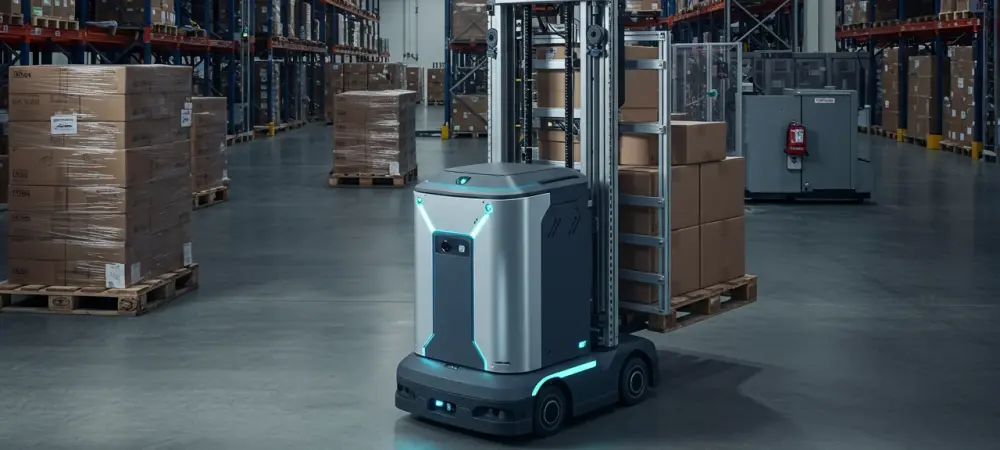
In the fast-evolving world of automation, few companies have made strides as significant as Siemens in incorporating artificial intelligence into autonomous transport systems. Recently, at the Automatica trade show, Siemens unveiled advanced upgrades to their Automated Mobile Robots (AMRs) and Automated Guided Vehicles (AGVs), featuring innovative AI-driven safety and navigation enhancements. Dominic Jainy, an expert in artificial intelligence and machine learning, shares his insights into these groundbreaking developments and their broader implications for the industry.
What are some key AI enhancements Siemens is incorporating into their AMRs and AGVs?
Siemens is integrating AI-driven capabilities through their Operations Copilot, allowing AMRs and AGVs to better understand and navigate their environments. This involves using data from cameras and sensors for real-time decision-making, optimizing the paths these vehicles take to ensure safety and efficiency. The AI ties together information from both Information Technology (IT) and Operational Technology (OT), creating a cohesive system for autonomous navigation.
How does the Operations Copilot utilize AI for AMR and AGV navigation?
Operations Copilot employs AI to gather and process data from the surroundings of the AMR or AGV. It achieves this by using cameras and sensors to map out the environment and decide the safest routes to take. This AI-driven system facilitates a seamless interaction between the vehicle and its environment, allowing for smart navigation without constant human supervision.
What role do cameras and sensors play in the AI integration for autonomous transport systems?
Cameras and sensors are crucial for the AI to perform real-time environmental mapping. They provide the necessary data inputs that enable the AI to detect obstacles, assess the optimal paths, and make decisions on navigation. This sensory input ensures that AMRs and AGVs operate efficiently while maintaining high safety standards by avoiding collisions and navigating complex environments accurately.
How will Operations Copilot improve the safety and efficiency of AMRs and AGVs?
Operations Copilot enhances safety and efficiency by delivering precise navigation capabilities and real-time adjustments. By continuously monitoring and interpreting environmental data, it can predict potential hazards and respond promptly. This reduces risk, accelerates deployment, and optimizes time management–key factors in manufacturing settings where safety and productivity are paramount.
Can you explain how Safe Velocity software functions within these autonomous systems?
Safe Velocity software is designed to control and adjust the speed of an AMR or AGV based on surrounding activity and conditions. It automatically modulates speed to mitigate risk and ensure operational safety without human intervention. The software detects nearby obstacles or changes in the terrain, promptly altering the vehicle’s speed to accommodate these factors.
How does Safe Velocity software adjust AMR and AGV speeds in response to external factors?
Safe Velocity uses data from sensors to constantly monitor surroundings. When a potential hazard is detected—for example, a technician in the vehicle’s path—the software adjusts the vehicle’s speed or route in real-time. This dynamic adjustment process is core to the software’s functionality, providing an extra layer of safety by preventing accidents and ensuring smooth operation.
Could you provide an example of a real-time scenario where Safe Velocity would be beneficial?
Imagine an AGV transporting heavy machinery across a factory floor. If a worker inadvertently steps into its path, Safe Velocity will detect this movement and either slow down, stop, or reroute the AGV, allowing the worker to pass safely and then resuming its task. This real-time responsiveness helps prevent workplace accidents effectively.
What are some of the major benefits of using AMRs and AGVs in a manufacturing setting?
The adoption of AMRs and AGVs leads to reduced manual labor requirements, minimizing ergonomic injuries that come from repetitive tasks like lifting or carrying. These systems can also lower the occurrence of accidents associated with traditional manual transportation methods like forklifts. Additionally, the shift to automated transport enhances overall efficiency, reducing operational delays and costs.
How does Siemens’ integration of AI technology address ergonomic injury concerns in the workplace?
By automating routine material transport tasks, Siemens’ AI-integrated systems reduce the physical strain on workers. This addresses ergonomic injury issues, particularly in industries with aging workforces. The AI ensures these vehicles operate safely and smoothly, minimizing human intervention and the associated risk of physical injury from repetitive movements.
Why is there a growing demand for automated material handling solutions in the industry?
There is a growing demand due to the need for increased efficiency, safety, and cost-effectiveness in manufacturing processes. Automated material handling systems like AMRs and AGVs eliminate the need for extensive manual labor, reducing the potential for injuries and associated costs. They also streamline operations, which is critical as industries strive to enhance productivity and stay competitive.
What challenges might companies face in deploying AMRs and AGVs, and how does Siemens aim to address these?
Deploying AMRs and AGVs can present challenges such as high initial costs, integration with existing systems, and workforce adaptation. Siemens addresses these issues by providing scalable solutions, incorporating AI for seamless integration, and offering training and support to facilitate the transition, ensuring companies can adopt the technology smoothly and effectively.
How does the combination of IT and OT enhance the functionality of AMRs and AGVs with Siemens’ new upgrades?
The convergence of IT and OT creates a comprehensive framework for data sharing and decision-making. Siemens’ upgrades leverage this integration to enable AMRs and AGVs to efficiently interpret and react to their environments, leading to improved operational efficiency and safety. This synthesis ensures real-time responsiveness and streamlined processes.
In what ways can AMRs and AGVs help reduce workplace injuries compared to traditional methods of transportation, like forklifts?
By automating the transport of materials, AMRs and AGVs minimize the need for employee involvement in risky tasks. Compared to forklifts, they require no manual operation and are equipped with advanced safety features that reduce collision risks. This automation significantly lowers the likelihood of workplace injuries that commonly arise from human-operated machinery.
How do Siemens’ advancements align with the current trends in workplace automation?
Siemens’ advancements reflect current trends by emphasizing increased automation, integration of AI, and safety enhancements in the workplace. As industries move towards smart manufacturing and automation to achieve greater efficiency, Siemens’ innovations support these goals by providing reliable, intelligent systems designed for the modern factory floor.
What future developments does Siemens anticipate in the AMR and AGV markets?
Siemens foresees continuous growth in these markets as demand for automation rises. Future developments may include enhanced AI capabilities for even smarter navigation, improved safety protocols, and more robust integration with wider industrial processes. As technology evolves, these autonomous systems will become further entrenched in manufacturing and supply chain operations.