

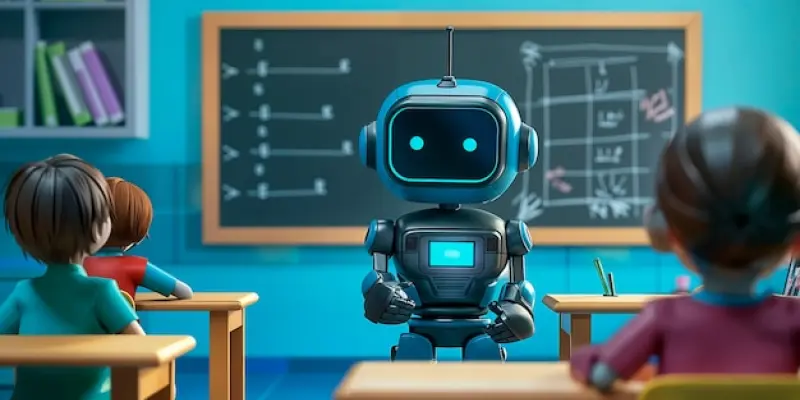
The education sector is on the brink of a transformation of monumental proportions, driven by rapid advancements in artificial intelligence technologies. With the recent approval of Unbound Academy’s application to operate an AI-driven online school, the potential for AI to fundamentally revolutionize education is becoming increasingly apparent. By promising significantly improved academic outcomes and personalized learning experiences, AI is poised to address long-standing issues in education, such as resource constraints and varying student needs. This article explores the historical context of technology in education, the impact of generative AI technologies, and several AI-driven initiatives. Finally, it addresses concerns about balancing AI efficiency with human connection and potential disparities.
Historical Context of Technology in Education
The concept of using technology to enhance education is not new; it dates back to the 1950s with the inception of Programmed Logic for Automatic Teaching Operations (PLATO) in 1961. PLATO aimed to provide interactive lessons and feedback through a computer system. Despite its innovative approach, it ultimately failed due to high costs. The early 2000s saw another attempt to leverage technology in education with Second Life, a virtual learning environment that allowed universities to conduct courses online. However, Second Life faltered due to its poor user interface, high technical requirements, and scalability issues, proving to be another example of an ambitious idea that couldn’t fully deliver.
A significant turning point came in 2017 with the rise of generative AI technologies, which began to show real promise in terms of practical application in education. Tools such as Writable and Photomath emerged, enhancing both teaching and learning processes by providing AI-generated feedback for student assignments. These tools serve as an answer to traditional resource constraints, particularly in school districts with large class sizes where individual feedback can be a challenge. By generating comments and feedback that only need final review and adjustments by teachers, these technologies allow educators to manage large workloads more efficiently. This has opened up a new realm of possibilities for how education can be delivered, potentially leveling the playing field for students across various demographics.
The Rise of Generative AI Technologies
Generative AI technologies marked a pivotal development in the educational sector. By 2017, tools like Writable and Photomath began to transform the teaching and learning experience fundamentally. Writable, for instance, provides students with AI-generated feedback on their writing assignments, allowing teachers to focus their efforts on additional instructional tasks. Similarly, Photomath offers step-by-step solutions to math problems, helping students understand complex concepts more effectively. These tools address long-standing challenges in the classroom, such as the immense time constraints teachers face when trying to provide individualized feedback.
The integration of these technologies into everyday classroom activities has showcased their potential to alleviate the burdens faced by educators while enhancing the educational experience for students. In environments with large class sizes, these AI tools have proven particularly beneficial. Teachers can manage their workloads more efficiently by relying on AI-generated comments and feedback that require only a final review and slight adjustments before being conveyed to students. This approach enables educators to allocate more time and attention to personalized instruction, ultimately fostering a more supportive and productive learning environment. In essence, the rise of generative AI technologies is setting the stage for a profound shift in how education is delivered and experienced.
Khan Academy and the Introduction of Khanmigo
One of the most notable, and arguably successful, initiatives in AI-led education comes from the efforts of Khan Academy. Since its inception in 2008, Khan Academy has been offering free online educational tutorials to millions of students worldwide. By 2023, Khan Academy took a significant step forward by introducing Khanmigo, an interactive AI tutor that incorporates ChatGPT. During a widely viewed TED Talk, founder Sal Khan referenced the groundbreaking 1984 paper “The 2 Sigma Problem” by Professor Benjamin Bloom. Bloom’s research indicated that students who received individualized tutoring performed two standard deviations better than their peers who received only traditional instruction.
The introduction of Khanmigo seeks to replicate the benefits of individualized tutoring on a scalable level, making it accessible to a broader range of students. Khan posits that AI, as implemented in Khanmigo, could provide scalable, personalized tutoring that mimics the benefits of human tutoring. This innovative approach has the potential to significantly improve academic outcomes by offering tailored support to students, helping them achieve their full potential. The combination of Khan Academy’s extensive library of educational resources with the advanced capabilities of Khanmigo positions this initiative as a game-changing force in the field of education.
Balancing AI Efficiency with Human Connection
Despite the promising potential of AI tools to improve education, there is a critical concern regarding the balance between the efficiency gained through AI and the intrinsic value of human connections in the learning process. This issue is evident in Unbound Academy’s model, where AI handles the bulk of academic instruction while human guides focus on providing emotional support, mentoring, and life skills workshops. This hybrid approach aims to leverage the strengths of AI in delivering tailored academic content while ensuring that students still benefit from the essential human elements of education.
Critics argue that while AI tools can substantially enhance educational outcomes, they cannot fully replicate the nuances and emotional intelligence inherent in human interactions. The importance of building strong, supportive relationships between students and educators cannot be overstated, as these connections play a vital role in fostering a positive and conducive learning environment. Ensuring that AI technologies complement rather than replace human educators is crucial in maintaining the holistic nature of education. Balancing AI efficiency with human connection requires a thoughtful integration of both elements, recognizing their unique contributions to the overall learning experience.
Pilot Programs and Real-World Applications
The application of AI in education is currently being actively tested through various pilot programs and real-world applications. For instance, Khanmigo is presently being piloted in 266 U.S. school districts, targeting students from grades three to twelve. This pilot program highlights the potential utility of AI in lesson planning, real-time student progress assessment, and personalized instruction. Both teachers and students stand to benefit from the integration of AI, as it supports educators in their efforts to deliver high-quality education while catering to the diverse needs of their students.
Historically, Computer Assisted Instruction (CAI) has seen various iterations and growth over the last 60 years. The integration of AI promises to democratize access to quality education, making it more accessible and personalized for individuals from different backgrounds. By providing tailored support and resources, AI-driven tools can help bridge the educational gap and offer students opportunities to thrive academically. The ongoing exploration of AI applications in education is paving the way for innovative approaches that have the potential to reshape the educational landscape, fostering a more inclusive and effective learning environment.
Addressing Potential Disparities
While AI has the potential to bring quality education to underserved communities, it is crucial to acknowledge that it might exacerbate existing disparities if not carefully managed. At its best, AI can make learning more accessible, personalized, and tailored to individual student needs. However, the debate on the adoption of AI in education raises questions about the future roles of human educators, the ability of students to form human connections in an AI-dominated learning environment, and the broader impact of such shifts on traditional educational settings.
Ensuring that AI-driven educational tools are implemented thoughtfully and equitably is vital in addressing potential disparities. By considering the diverse needs of students and the contexts in which they learn, educators and policymakers can work together to create an inclusive and supportive educational ecosystem. This approach can help mitigate the risk of deepening existing inequalities and ensure that AI technologies are leveraged to enhance, rather than hinder, educational opportunities for all students.
Challenging Traditional Educational Models
Generative AI technologies have brought a major shift in the educational field. By 2017, tools like Writable and Photomath started fundamentally changing teaching and learning. Writable gives students AI-generated feedback on their writing tasks, freeing up teachers to focus on additional instructional activities. Photomath, on the other hand, offers step-by-step solutions to math problems, enabling students to grasp complex concepts better. These tools tackle longstanding issues like the significant time constraints that teachers face in providing personalized feedback.
Incorporating these technologies into everyday classroom routines has highlighted their potential to ease educators’ burdens while enhancing students’ educational experiences. They have been especially beneficial in settings with large class sizes, enabling teachers to handle their workloads more effectively. AI-generated comments and feedback, which need only minor adjustments, allow teachers to dedicate more time to personalized instruction. This creates a supportive and productive learning environment. Ultimately, the emergence of generative AI technologies is paving the way for a transformative shift in how education is both delivered and experienced.