

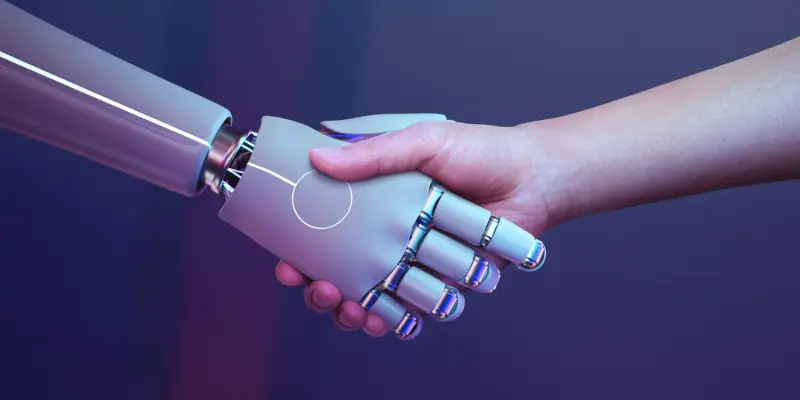
The surge in artificial intelligence’s role within software development represents a transformative shift in the industry, reshaping the landscape of code writing. Recent advances in AI have led to large language models generating a considerable portion of all new code. In fact, AI now contributes up to 41% of code outputs, with expectations that this figure will reach 256 billion lines this year. Industry giants like Google illustrate this trend, with AI already responsible for generating 25% of their codebase. However, while AI’s potential to accelerate development is undeniable, the enthusiasm surrounding its use masks inherent complexities. Though AI can produce code swiftly, the arduous journey of refining it for deployment presents numerous challenges, requiring thorough human intervention. Thus, the dialogue surrounding AI in software increasingly focuses on the human role in quality assurance, debugging, and error management.
Challenges of AI-Generated Code
While AI-generated code holds promise for increasing efficiency, it is not without significant challenges. One of the primary hurdles developers face is the introduction of errors and security vulnerabilities within AI-created code. A survey of engineering leaders found that a substantial number of them encounter defects frequently when utilizing AI-generated code. More than half of these leaders reported encountering code errors over 50% of the time. Additionally, over two-thirds indicated they spent more time debugging AI-written code compared to manually crafted code. These statistics underscore the misconception that AI-generated code is flawless or self-sufficient. The behavioral drift observed between testing and production environments further complicates matters, as discrepancies often emerge, necessitating human expertise to address and rectify them. The process of transitioning AI-generated code from a mere draft to production-ready status is fraught with complexity, underscoring the necessity of human involvement. Engineers play an invaluable role in resolving subtle errors that AI cannot easily detect, such as incorrect usage of libraries or build constraint violations. Developers must invest considerable effort into cleaning and hardening AI-produced code to ensure it integrates seamlessly within existing systems. =Despite AI’s ability to generate code rapidly, its practical implementation remains labor-intensive, requiring thorough examination and manual adjustments to bridge the gap between generation and deployment. Consequently, the role of developers evolves toward ensuring reliability and functionality, cultivating a workflow where oversight is paramount to leveraging AI’s potential. This shift in focus highlights the irreplaceable value of human intervention in navigating the nuances of AI-driven innovation.
Evolving Roles for Developers
The rise of AI in code generation has not diminished the significance of standard human roles within software development. Instead, these roles are undergoing a significant evolution to encompass new responsibilities. Human developers are crucial in mentoring AI, validating generated outputs, and ensuring their integration into projects. As developers transition their focus from writing code to reviewing and refining AI-generated material, their skills play a pivotal role in maintaining quality and integrity. Their expertise ensures AI code aligns with project requirements, adding value through strategic oversight rather than direct coding.
Moreover, developers are assuming more supervisory roles, guiding the AI’s output and safeguarding against potential pitfalls. As AI becomes part of the development team, developers’ expertise in coding is matched by their capacity to mentor AI systems. By focusing on the oversight of code quality and security, developers reinforce their indispensable position in a landscape increasingly shaped by AI-driven processes. This evolution signifies a harmonious coexistence where human creativity complements algorithmic precision in advancing software development.
Tools Addressing AI’s Deficiencies
The challenges posed by AI-generated code have spurred the development of specialized tools aimed at mitigating these issues. These tools, often employing AI to address the deficiencies of AI-generated code, have become integral in refining the output quality and ensuring reliability. Tools like SonarQube and Snyk are designed to enhance code quality by identifying and rectifying common issues that arise in AI-generated code. They provide automated scanning solutions, offering developers insights into code vulnerabilities and facilitating rapid adjustments, thereby minimizing potential risks. Diffblue Cover exemplifies the evolution within this domain by utilizing AI to automate test generation. By automating the creation of tests, it significantly streamlines the testing process, expediting a traditionally time-consuming phase in development.
GitHub Copilot is also making strides in addressing code issues by conducting automated reviews prior to human analysis. Additionally, secure runtime testing environments, such as E2B, have been established to isolate AI-generated code. This separation ensures thorough evaluation for compile-time and runtime issues, safeguarding against unforeseen complications. Collectively, these tools are reshaping the development workflow by introducing AI-focused solutions tailored to enhance code quality and reliability. Through a combination of human expertise and advanced technology, they provide a robust framework within which AI-generated code can achieve a higher standard of excellence. This collaborative approach signifies a balanced integration of tradition and innovation, reinforcing the indispensable role of human oversight.
Strategies for Maximizing AI’s Benefits
To harness the full potential of AI-generated code, development teams are encouraged to adopt strategic practices that integrate human oversight with AI’s capabilities. Viewing AI output as a preliminary draft, demanding comprehensive human reviews before production, is essential. This mindset ensures that AI-generated code is thoroughly assessed for quality and security compliance early in the development process. Implementing robust quality checks, including static analysis, linting, and security scanning, further safeguards against potential pitfalls. Moreover, employing AI tools not only for coding but also for testing significantly strengthens verification efforts. A clear policy governing AI tool usage is instrumental in guiding developers’ interaction with this technology. It delineates the boundaries of AI’s application, safeguarding sensitive components while delineating best practices. Upskilling the team in reading and debugging AI-generated code becomes crucial, as developers must anticipate and address potential AI missteps. Training is essential for equipping developers with the skills needed to navigate complex AI outputs. Additionally, initiating pilot projects with AI-augmented tools offers valuable insights into optimizing workflows. By gradually unfolding what reduces workload and what introduces additional complexity, teams can tailor their approach to maximize efficiency and effectiveness. This structured strategy ensures a seamless transition, with developers continuing to play a pivotal role in advancing AI capabilities within the software industry.
Future Implications and Considerations
AI-generated code offers potential boosts in efficiency but is not free of challenges. Developers frequently confront errors and security issues in AI-created code, demanding substantial debugging and oversight. A survey of engineering leaders revealed that a large percentage experience defects often with AI-generated code, with over half noting code errors in more than 50% of their usage. Furthermore, two-thirds claimed they spent more time debugging AI-produced code versus manually crafted code, dispelling the notion of flawless AI-generated code. Issues arise between testing and production, needing human expertise to resolve them. Transitioning AI code from draft to production is complex, emphasizing the necessity of human engagement. Engineers are crucial for spotting errors like incorrect library use. Despite AI’s quick code generation, actual application requires significant human effort. Developers focus on ensuring reliability, underscoring human intervention in navigating AI innovation’s intricacies. Human oversight remains vital in leveraging AI’s potential.