

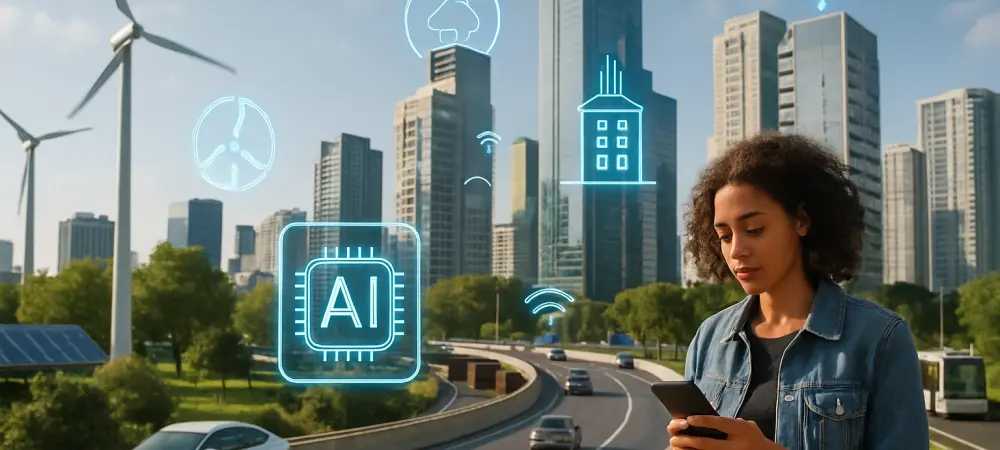
What if cities could predict traffic jams before they happen, or design buildings that save energy without sacrificing comfort? In 2025, this isn’t a distant dream but a tangible reality taking shape through the power of Artificial Intelligence (AI). Across the globe, urban centers grapple with overcrowding, pollution, and crumbling infrastructure, yet AI offers a beacon of hope. This technology is transforming how cities are planned and built, promising smarter, more sustainable environments for millions. Dive into this exploration of how AI is not just a tool, but a revolutionary force redefining urban life.
How AI Can Redefine the Cities of Today
The potential of AI to transform urban landscapes is staggering. Picture a city that anticipates rush-hour bottlenecks and reroutes traffic in real time, or one that designs parks to protect local wildlife while accommodating growth. AI is stepping in as a game-changer, tackling persistent issues like gridlock and environmental degradation with precision. This technology analyzes vast amounts of data to create solutions that were once unimaginable, setting a foundation for cities that prioritize both human needs and planetary health.
This shift sparks curiosity about what urban living could become. Beyond mere convenience, AI-driven innovations aim to enhance quality of life by addressing challenges before they escalate. From reducing commute times to ensuring cleaner air, the promise of smarter cities is capturing the attention of planners and residents alike. This section lays the groundwork for understanding how such advancements are not just possible, but already underway.
Why AI in Urban Planning Is Crucial Today
With over half of the world’s population living in urban areas, the strain on resources has never been greater. Cities face mounting pressures from pollution, overpopulation, and aging systems, making the integration of AI into planning more urgent than ever. This technology emerges as a critical ally in combating climate change and managing rapid urbanization, offering tools to optimize limited space and energy in ways traditional methods cannot match.
The everyday impact of these challenges is undeniable. Long commutes sap productivity, while rising energy costs burden households. AI steps in with solutions that directly address these pain points, such as optimizing public transit routes or designing buildings that cut utility expenses. By connecting to the immediate needs of city dwellers, the relevance of AI in urban development becomes clear, underscoring the stakes for future generations.
Moreover, global trends amplify the need for action. As urban populations are projected to grow by 2.5 billion by 2050, according to United Nations estimates, the demand for innovative approaches intensifies. AI’s ability to forecast and adapt to these shifts positions it as an indispensable asset, ensuring cities remain livable amidst unprecedented growth. This urgency drives the conversation forward, highlighting why attention to AI’s role is non-negotiable.
Key Ways AI Is Revolutionizing Smart City Design
AI’s influence on urban development unfolds across several pivotal areas, starting with data-driven planning. By processing massive datasets, AI simulates countless scenarios to refine traffic flow and energy-efficient architecture. For instance, virtual models allow planners to “test-drive” city layouts, identifying optimal designs before a single brick is laid, saving both time and resources.
Sustainability forms another cornerstone of AI’s impact. Through advanced algorithms, cities can balance growth with environmental stewardship, as seen in projects where AI identifies habitats of endangered species to inform protective zoning. Such initiatives demonstrate a commitment to biodiversity, ensuring urban expansion doesn’t come at nature’s expense. This harmony between progress and preservation marks a significant leap in thoughtful design.
Lastly, predictive efficiency and automation redefine infrastructure management. AI tools anticipate maintenance needs, spotting potential failures before they disrupt daily life, with studies from firms like Sweco showing cost reductions of up to 30% in pilot projects. Enhanced safety and minimized downtime are direct benefits, proving that AI’s foresight translates into tangible improvements. Together, these dimensions illustrate the breadth of AI’s transformative power in crafting smarter urban spaces.
Insights from Leaders in AI Urban Innovation
Voices from the forefront of AI innovation add depth to this narrative, particularly through perspectives shared by Shah Muhammad, who spearheads AI efforts at Sweco, a leading design and engineering firm. == “AI allows us to ask complex questions about urban futures and get actionable answers through data,” Muhammad notes, emphasizing how simulations can predict outcomes like traffic reduction or energy savings.== His insights reveal a technology poised to overhaul traditional planning with precision.
Real-world applications bring these ideas to life. Sweco’s projects, such as using AI to map biodiversity risks during urban development, showcase the practical side of innovation. These efforts highlight a human-centric approach, ensuring technology serves not just efficiency but also ecological balance. Muhammad’s work bridges the gap between abstract potential and concrete results, offering a glimpse into AI’s immediate relevance.
Yet, challenges remain, as Muhammad candidly acknowledges. “The real world is unpredictable—weather shifts and human behavior don’t always align with models,” he admits. This honesty underscores the need for robust systems to handle such variables, reinforcing trust in AI while recognizing its limits. These expert reflections provide a balanced view, grounding optimism in the realities of implementation.
Practical Steps for Building AI-Driven Urban Futures
For cities eager to harness AI, actionable strategies are essential, beginning with strong data governance. Reliable inputs and standardized formats ensure AI outputs are trustworthy, a principle Sweco champions in its workflows. Without this foundation, even the most advanced algorithms risk producing flawed recommendations, making data integrity a non-negotiable starting point for any urban project.
Collaboration stands as another critical pillar. Effective integration of AI requires teamwork among engineers, planners, and policymakers to align tools with community priorities. Frameworks that encourage dialogue ensure technology addresses local needs rather than imposing one-size-fits-all solutions. This cooperative spirit transforms AI from a standalone innovation into a shared mission for better cities.
Finally, adaptability must guide implementation. Flexible models that account for real-world variables, like sudden population spikes or climate events, prevent over-reliance on untested systems. Cities can start small, piloting AI in specific sectors like transit before scaling up, ensuring resilience in dynamic environments. These steps offer a clear roadmap, empowering urban leaders to navigate the transition to AI-enhanced planning with confidence.
Reflecting on AI’s Urban Legacy
Looking back, the journey of AI in reshaping cities reveals a profound shift in how urban challenges are tackled. From easing traffic woes to safeguarding natural habitats, the technology proves its worth as a partner in building sustainable environments. Each innovation, grounded in data and collaboration, marks a step toward cities that prioritize both efficiency and humanity.
The path forward demands continued focus on practical measures. Urban planners and policymakers need to invest in data quality and foster partnerships across sectors to sustain AI’s impact. Pilot programs, starting in 2025 and extending to 2027, could serve as testing grounds for broader adoption, ensuring lessons learned are applied at scale.
Beyond immediate actions, a broader vision emerges for cities to evolve as living systems, responsive to both people and planet. Embracing AI means not just solving today’s problems but anticipating tomorrow’s needs with foresight and care. This commitment to innovation, balanced with adaptability, holds the key to urban futures where technology and well-being walk hand in hand.