

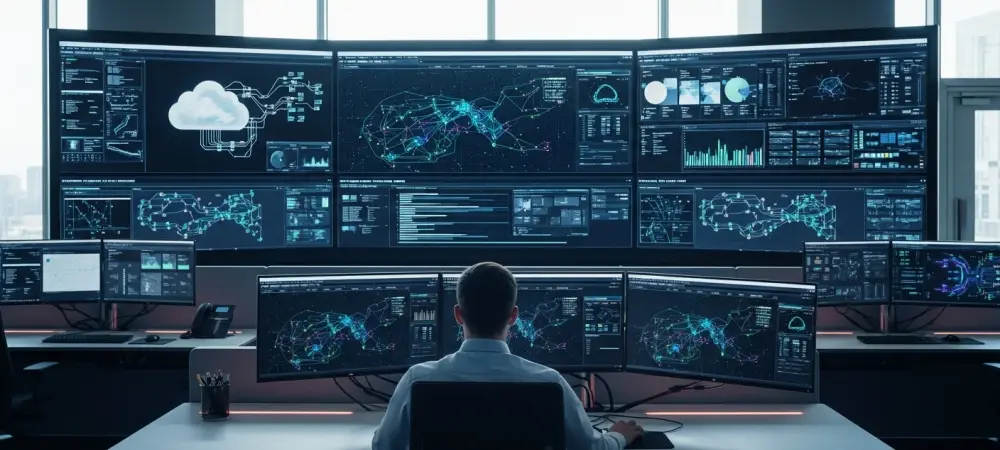
The traditional model of human-led infrastructure oversight is currently fracturing under the architectural weight of hyper-complex microservices and the sheer volume of code generated by autonomous development tools. As organizations transition toward decentralized cloud environments, the manual labor required to maintain system uptime has reached a tipping point, necessitating a shift from reactive monitoring to proactive, AI-driven management. This transition is not merely a technical upgrade but a fundamental reimagining of the Site Reliability Engineering (SRE) discipline, where the focus moves from simple troubleshooting to the holistic orchestration of performance, cost, and reliability.
The Evolution of AI-Driven Reliability Management
Modern infrastructure management has evolved from the static server rooms of the past into the dynamic, often volatile, world of Kubernetes and cloud-native clusters. In this context, the emergence of AI-powered SRE platforms represents a strategic response to the “observability gap,” where teams have plenty of data but lack the actionable intelligence to process it. Platforms like Komodor have gained significant traction by positioning themselves as an intelligent intermediary, capable of interpreting the vast streams of telemetry data that human engineers find increasingly overwhelming. This evolution is driven by the realization that decentralized systems are too sprawling for manual oversight. While traditional DevOps focused on automation, the new era of AI-driven reliability emphasizes “intelligence” over “instruction.” Instead of following pre-defined scripts, these modern systems use machine learning to understand the normal behavioral patterns of a cluster, allowing them to identify anomalies before they escalate into full-scale outages. This shift is particularly critical within the Kubernetes ecosystem, where the ephemeral nature of containers makes manual root-cause analysis nearly impossible.
Core Technical Components and Performance Metrics
Automated Triage and Intelligent Remediation
The primary function of an AI-powered SRE platform is to close the loop between detecting an issue and fixing it. Automated triage involves the system scanning the entire stack—from code changes to infrastructure configurations—to identify the exact moment and cause of a failure. By utilizing purpose-built tools like Klaudia AI, organizations have seen a dramatic reduction in mean time to resolution (MTTR). The significance of this lies in its ability to strip away the “toil” of operations, allowing engineers to focus on architectural improvements rather than repetitive firefighting.
Furthermore, intelligent remediation moves beyond just identifying problems; it suggests or automatically implements the necessary fixes. This capability distinguishes modern AI platforms from legacy monitoring tools that only offer alerts. When an AI can correlate a deployment error with a specific resource exhaustion event and then automatically roll back the change or adjust the configuration, it maintains system uptime with a precision that human teams cannot match during high-stress incidents.
Infrastructure Economics and Resource Optimization
Beyond pure technical reliability, the integration of FinOps into the SRE workflow has become a defining characteristic of advanced AI platforms. AI-powered tools now balance the inherent tension between performance requirements and cost efficiency through automated autoscaler tuning. By analyzing historical usage patterns, these systems can adjust resources in real-time, ensuring that clusters scale up to meet demand without triggering the unpredictable cost spikes that often plague unmanaged cloud environments.
This focus on infrastructure economics is exemplified by the optimization of tools like Karpenter, where AI manages the granular details of node provisioning. The economic impact is measurable, as organizations can maintain high availability while simultaneously slashing overspending on idle resources. This convergence of engineering and finance ensures that reliability is achieved in a fiscally sustainable manner, making SRE a department that contributes to the bottom line rather than just being a cost center.
Emerging Trends in Cloud-Native Operations
The landscape of cloud-native operations is currently being reshaped by the “infrastructure economics” movement, where the cost of a system is treated as a first-class performance metric. As code velocity increases due to AI-assisted development, the sheer volume of changes entering production is staggering. This has led to a rise in “complexity sprawl,” where microservices environments become so interconnected that a single change can have unforeseen ripple effects across the entire ecosystem. Moreover, the industry is witnessing a transition toward self-healing architectures. These environments are designed to be resilient by default, utilizing AI to manage the volatility of modern workloads. The increasing reliance on distributed systems means that the definition of “reliability” is expanding to include not just uptime, but also the speed at which a system can adapt to changing demands and resource constraints without human intervention.
Real-World Applications and Industry Impact
Fortune 500 enterprises are increasingly deploying AI-powered SRE platforms to manage their decentralized global infrastructures. In these large-scale environments, the platforms serve as a centralized brain, coordinating across various departments to ensure consistency in troubleshooting and cost control. For instance, a major financial institution might use such a platform to manage thousands of clusters across multiple regions, ensuring that a fix applied in one area is automatically reflected across the entire network.
Unique use cases have also emerged in the management of large-scale Large Language Model (LLM) production workloads. These AI-specific infrastructures are notoriously difficult to manage due to their massive resource requirements and volatile processing needs. By applying AI-driven SRE principles, companies are able to stabilize these machine learning environments, treating the AI models themselves as just another component in a highly reliable, automated production pipeline.
Technical Barriers and Market Challenges
Despite the rapid advancement, significant technical barriers remain, particularly regarding the “troubleshooting pain” inherent in microservices. As systems grow more complex, the data synthesis required to provide accurate root-cause analysis becomes more difficult. There is also the challenge of managing the volatility of the AI/ML workloads themselves; these systems can be unpredictable, and current SRE tools must evolve to better handle the specialized resource needs of GPU-intensive tasks.
Furthermore, market challenges include the integration of these AI platforms into existing legacy workflows. While the technology is ready for autonomous operation, many organizations still struggle with the cultural shift required to trust an AI with automated policy enforcement. Ongoing development efforts are focused on improving the transparency of AI decision-making, providing engineers with the confidence to transition from manual “check-offs” to fully automated, self-healing systems.
The Future Trajectory of Autonomous Operations
The trajectory of the industry points toward a future of fully autonomous operations where the human role is shifted from operator to overseer. We are moving toward a reality where the system not only fixes itself but also anticipates future needs based on predictive analytics. Breakthroughs in automated remediation will likely allow systems to preemptively reconfigure themselves to avoid failures entirely, rather than just reacting to them after they occur.
In the long term, AI will serve as a massive force multiplier for engineering teams. Instead of hiring more SREs to manage growing infrastructure, companies will use AI to scale their existing talent. This will enable teams to manage exponentially larger and more complex systems without a corresponding increase in overhead, fundamentally changing the economics of software delivery and operational maintenance.
Final Assessment of AI-Powered SRE
The convergence of reliability, scalability, and financial accountability signaled a major turning point for the DevOps community. It was observed that organizations utilizing AI-driven platforms managed to navigate the transition to complex microservices with significantly fewer service interruptions than those relying on traditional methods. The evidence suggested that the integration of FinOps principles into the SRE workflow provided a necessary layer of fiscal discipline to the rapid expansion of cloud-native assets. The shift toward autonomous remediation proved to be a transformative force, effectively decoupling the growth of infrastructure from the growth of operational headcounts. While technical hurdles remained regarding the volatility of AI workloads, the general trajectory favored a self-healing model that prioritized proactive intelligence over reactive manual intervention. Ultimately, the adoption of these platforms redefined the standard for modern enterprise operations, establishing a new baseline where reliability was treated as an automated, rather than a human-led, constant.