

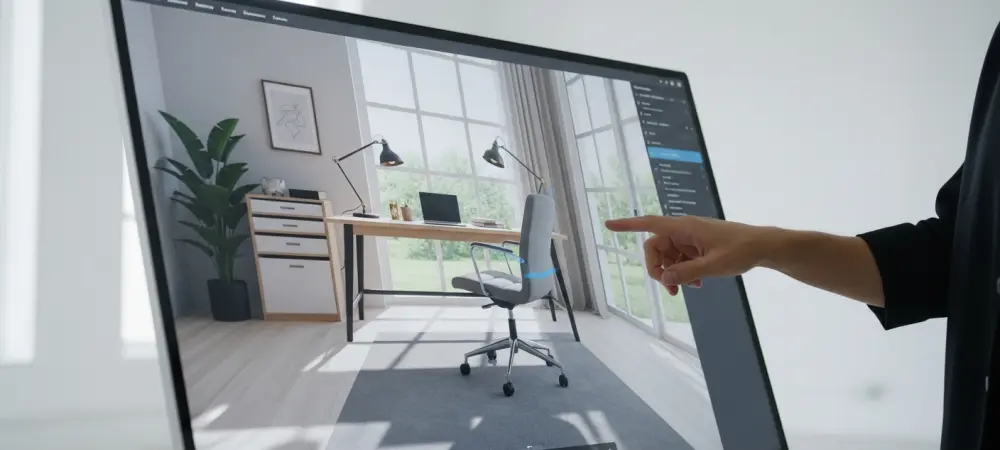
The persistent gap between digital inspiration and physical execution in home furnishing has long been a source of consumer friction, yet the arrival of high-fidelity spatial computing is finally closing that divide. As online shopping continues to dominate the consumer landscape, the ability to accurately visualize a product within a personal environment has transitioned from a futuristic novelty to a functional necessity. This review examines the AI-powered design systems pioneered by industry leaders like the Ingka Group, analyzing how these technologies leverage machine learning and 3D modeling to redefine the retail experience. By transforming static images into interactive digital twins, the technology offers a robust solution to the spatial uncertainty that has historically plagued the furniture sector.
Evolution of Spatial Computing in Modern Retail
The shift from two-dimensional catalogs to interactive spatial environments represents a fundamental change in how consumers interact with brand inventory. In the early stages of e-commerce, shoppers were forced to rely on mental visualization and physical tape measures, a process that frequently resulted in logistical errors and high return rates. However, the maturation of spatial computing has allowed for the creation of digital twins—hyper-realistic virtual representations of physical spaces and products. This evolution is driven by the integration of machine learning algorithms that can interpret the complex geometry of a room from a simple smartphone camera feed.
This technological leap bridges the gap between digital browsing and the physical reality of a home, providing a sense of scale and presence that traditional photography cannot achieve. Unlike the primitive augmented reality of previous years, which often produced floating, disconnected 3D objects, modern spatial computing ensures that virtual furniture interacts naturally with its surroundings. This shift is part of a broader landscape where artificial intelligence is used to personalize the shopping journey, making the transition from inspiration to purchase more fluid and data-driven than ever before.
Technical Components of the AI Design Ecosystem
Scene Scanner and Spatial Modeling Technology
At the heart of this ecosystem is the mobile-integrated scene scanner, a tool that utilizes advanced computer vision to generate realistic 3D models of personal living spaces. By capturing multiple angles of a room, the AI calculates depth, identifies boundaries, and builds a comprehensive spatial mesh. This process is significant because it accounts for accurate scaling, ensuring that a virtual sofa occupies the same footprint as its real-world counterpart. Furthermore, the technology incorporates sophisticated lighting analysis, allowing the virtual models to cast realistic shadows and reflect the specific ambient light of the user’s room, which is crucial for aesthetic cohesion.
Interactive 3D Showrooms and Virtual Manipulation
For users who are not yet ready to scan their own spaces, the platform provides professionally curated digital showrooms that serve as high-fidelity sandboxes for design. These environments allow for deep performance-based interaction where users can swap, rotate, and rearrange products in real-time. The performance of these environments relies on low-latency rendering, ensuring that as a user moves a piece of furniture, the visual feedback is instantaneous and smooth. This capability allows shoppers to test various textures and color palettes against one another, facilitating a level of creative experimentation that was previously restricted to professional interior designers.
Intelligent Object Eradication and Canvas Preparation
One of the most technically impressive features of the modern design suite is the ability to digitally delete existing furniture from a room scan. This process uses generative AI to fill in the “void” left behind with realistic flooring and wall textures based on the surrounding pixels. This digital eradication provides a clean-slate experience without the physical labor of moving furniture. By removing existing clutter, the technology enables a more accurate assessment of how new pieces will transform a space. This capability differentiates the platform from standard AR tools, which merely overlay images, by creating a truly interactive and editable version of the user’s home.
Natural Language Processing in Automated Support
Beyond visual design, the integration of AI-driven assistants like the Billie chatbot has revolutionized the logistical side of the retail journey. These assistants utilize advanced natural language processing to manage high-volume queries regarding order status, assembly instructions, and return policies. The performance of these systems is measured by their ability to resolve complex customer workflows without human intervention, which significantly reduces wait times. By automating routine interactions, the AI allows human staff to focus on specialized design consultancy, creating a more efficient and layered support structure that enhances the overall user experience.
Emergent Trends in Experiential E-Commerce
The industry is currently witnessing a decisive move toward collaborative and creative shopping experiences that prioritize consumer confidence. Modern retail is no longer just about the transaction; it is about providing the tools necessary to minimize buyer’s remorse through high-fidelity visualization. This trend is driven by the realization that if a customer can see a product in their home with 99% accuracy, the likelihood of a return drops significantly. Moreover, the role of the human advisor is changing from a generalist who answers basic questions to a specialized consultant who uses AI data to offer tailored design advice.
Real-World Applications and Sector Deployment
The deployment of these tools by the Ingka Group across its global markets has set a new standard for the furniture industry. By integrating virtual designs directly into the e-commerce checkout system, the platform ensures a seamless transition from a creative session to a completed purchase. Furthermore, unique use cases such as cloud-based design sharing allow users to send their virtual rooms to family or friends for feedback, mirroring the social nature of traditional shopping. This large-scale rollout demonstrates that AI-powered design is a scalable solution that can handle diverse architectural styles and consumer preferences across different regions.
Technical Limitations and Implementation Hurdles
Despite the impressive progress, several challenges remain regarding the consistent maintenance of spatial accuracy across diverse hardware profiles. Devices without specialized depth sensors, such as LiDAR, may struggle to produce perfectly scaled models in low-light conditions. Additionally, replicating complex indoor lighting—such as the interaction between sunlight and artificial lamps—remains a computationally intensive task that can tax older mobile processors. There is also an ongoing effort to improve the resolution rates of AI support systems, as complex logistical anomalies still require human intervention to ensure customer satisfaction.
Future Trajectory of Intelligent Retail Environments
Looking ahead from 2026, the potential for more immersive augmented reality breakthroughs suggests that the line between digital and physical retail will continue to blur. Future developments will likely include deeper personalization through predictive design algorithms that suggest products based on the existing color schemes and styles of a scanned room. As digital visualization becomes the primary driver for purchase confidence, the traditional brick-and-mortar layout may shift toward smaller, high-tech experience centers rather than massive warehouses. This long-term evolution will prioritize the digital-first customer who expects instant, accurate, and interactive design tools.
Final Assessment of AI-Driven Design Integration
The integration of AI-powered tools within the furniture sector proved to be more than a mere marketing gimmick; it functioned as a fundamental shift in the retail paradigm. By prioritizing realistic visualization and seamless automation, the technology successfully addressed the most significant hurdles of online furniture shopping. The objective results, including millions of resolved queries and a more interactive design process, indicated that AI was the key to reducing purchase uncertainty. Ultimately, the strategy demonstrated that when AI was applied to solve specific consumer problems, it created a more practical, engaging, and confident shopping experience for the global market.