

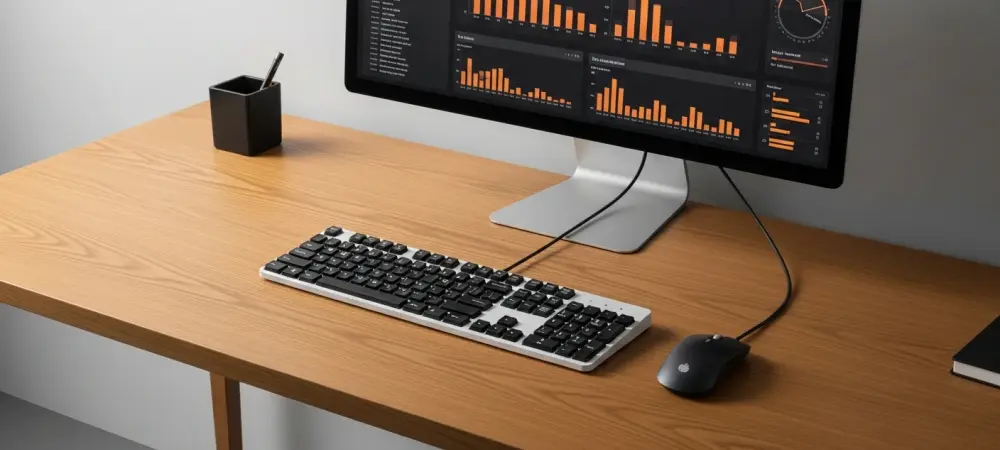
The long-held distinction between peripheral and processor is rapidly dissolving as a new category of all-in-one devices redefines the landscape of personal computing. The AI-integrated Keyboard PC represents a significant advancement in this sector, promising to merge power and portability in a novel form factor. This review explores the HP EliteBoard G1a, a device pioneering this concept, by examining its key features, performance capabilities, and the impact it aims to have on modern work environments. The purpose is to provide a thorough understanding of this emerging technology, its current capabilities, and its potential for future development.
An Introduction to the All in One AI PC
The HP EliteBoard G1a, showcased at CES 2026, is a high-performance computer system fully integrated into a standard membrane keyboard. It stands as a prime example of the “Copilot+ PC” wave, a major trend focused on embedding powerful AI hardware directly into user peripherals. This approach aims to deliver more intelligent and responsive computing experiences by processing AI tasks locally.
Unlike hobbyist devices that have explored this form factor before, the EliteBoard G1a is a full-featured x86 computer engineered for professional use. It is designed to deliver desktop-level performance and sophisticated AI acceleration in an ultra-portable package, signaling a clear departure from niche experiments and a confident step toward mainstream enterprise adoption.
Core Features and Technical Specifications
Integrated AI Processing and Performance
At the heart of the EliteBoard G1a is the AMD Ryzen AI 300 series processor, a chipset designed specifically for the new era of artificial intelligence. This processor is the engine driving the device’s claim as a next-generation AI PC, providing the raw power needed for demanding business applications and complex computational tasks.
The system’s capabilities are further enhanced by an integrated Radeon 800M GPU for graphics-intensive workloads and, most notably, a 50 TOPS Neural Processing Unit (NPU). This specialized NPU is engineered to accelerate on-device AI inference, allowing the machine to handle tasks like real-time translation, predictive text, and advanced analytics without relying on cloud servers. This local processing ensures lower latency and greater data privacy.
Design Portability and Build Quality
The physical design of the EliteBoard G1a is central to its appeal. Its compact, all-in-one form factor weighs less than half of a traditional notebook, making it exceptionally easy to transport between home, office, or any other workspace. This design philosophy strips computing down to its essentials, eliminating clutter and streamlining the user’s physical setup.
HP has also prioritized durability and user comfort. The device features a spill-resistant membrane keyboard built for heavy daily use, along with integrated speakers and microphones for seamless communication. The package is completed by a pre-paired wireless mouse, ensuring that users have a complete, ready-to-go workstation right out of the box.
Enterprise Focused Functionality
The EliteBoard G1a is clearly tailored for business and professional environments, with several features reinforcing this positioning. Among the most significant are optional upgrades that enhance its utility, including a 32W internal battery. This addition transforms the device into a truly wireless workstation, offering hours of operation without being tethered to a power outlet.
Security, a paramount concern for any enterprise, is addressed through an optional integrated fingerprint sensor. This feature provides a fast and secure method for user authentication, aligning with modern corporate security standards. These thoughtful additions underscore the device’s role as a purpose-built tool for the modern professional.
The Copilot+ PC Trend and Market Shift
The EliteBoard G1a is not an isolated innovation but rather part of a broader technological movement. The industry is rapidly shifting toward “Copilot+ PCs,” where AI capabilities are no longer just software additions but are deeply integrated into the hardware foundation of the machine.
This market shift is driven by the goal of creating more streamlined, responsive, and intelligent user experiences. By embedding AI processing directly into the silicon, manufacturers aim to build computers that can anticipate user needs and automate complex tasks more effectively, all without the inherent latency and privacy concerns of constant cloud connectivity.
Real World Applications in the Modern Workplace
The intended use cases for the AI Keyboard PC are firmly planted in enterprise environments. The device aims to eliminate the complexity and physical footprint of traditional desktop setups, which often involve a cumbersome tower, multiple cables, and a dedicated desk space.
This simplified approach makes it an ideal solution for modern work practices like hot-desking, where employees no longer have assigned desks. An employee can simply carry the EliteBoard G1a, connect it to any available display, and have their entire personalized workstation up and running in moments, radically simplifying relocation and promoting a more flexible work environment.
Challenges and Market Considerations
Despite its innovative design, the technology faces potential obstacles. A primary technical hurdle is thermal management. Packing a high-performance processor and NPU into a slim keyboard chassis generates significant heat, and effectively dissipating it without compromising performance or user comfort is a critical engineering challenge.
Beyond the technical aspects, market challenges remain. The novel form factor requires a shift in user behavior, and widespread adoption will depend on its perceived benefits over traditional laptops and desktops. Furthermore, with pricing yet to be announced, the device’s cost will be a key factor in determining whether it becomes a mainstream business tool or remains a niche product.
The Future of Integrated AI Computing
The EliteBoard G1a provides a compelling glimpse into where personal computing may be heading. If this form factor gains traction, it could significantly influence the future of office design, encouraging more fluid and adaptable workspaces built around shared displays rather than individual desktop setups.
Ultimately, the long-term impact of this technology hinges on its ability to transform AI from a novel concept into a tangible, seamlessly integrated business advantage. As on-device AI becomes more powerful and accessible, devices like the Keyboard PC could become the standard for professionals who require both high performance and maximum mobility.
Conclusion and Final Assessment
The review of the HP EliteBoard G1a found it to be a pioneering device that successfully blended portability, desktop-level performance, and powerful on-device AI into a single, cohesive package. It stood as a compelling proof-of-concept for the future of enterprise computing, where hardware is designed to be as flexible as the modern workforce.
However, the product’s potential to redefine professional workflows was weighed against the significant challenges it had to overcome. Its ultimate success depended not only on its innovative technology but also on its ability to navigate the practical hurdles of thermal design, market adoption, and competitive pricing to achieve mainstream success.