

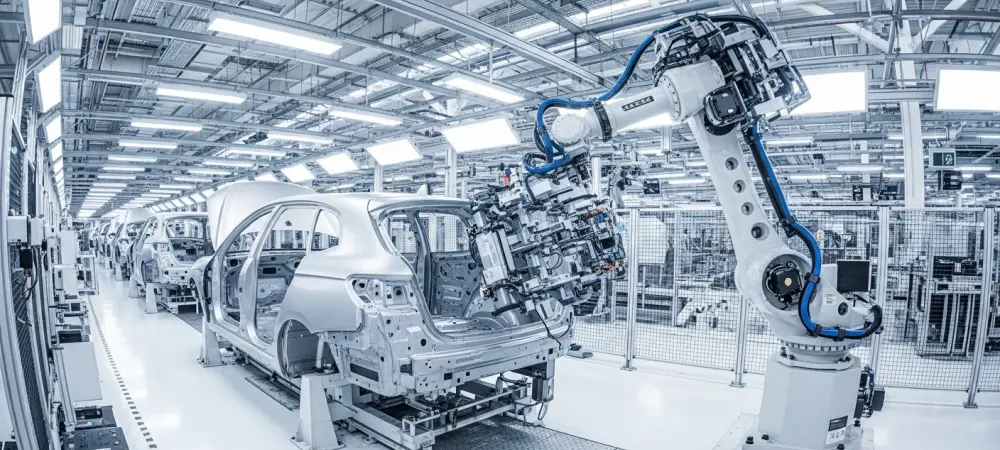
A quiet but monumental shift is reconfiguring the global economy as machines, now infused with advanced artificial intelligence, begin to perceive, reason, and interact with the physical world in ways previously confined to science fiction. This convergence of sophisticated AI models with robotics and physical systems, termed Physical AI, marks a definitive break from the past century of industrial automation. No longer are machines limited to rigid, pre-programmed tasks within the pristine confines of a factory assembly line. Instead, a new generation of smart machines is emerging, capable of adapting to the dynamic, unstructured, and often unpredictable environments of warehouses, construction sites, and city streets. This report details the technological drivers, market momentum, and strategic imperatives defining this new era of embodied intelligence. From humanoid robots handling logistics for major retailers to autonomous trucks hauling freight across national highways, the commercialization of Physical AI is not a future prospect; it is a present and accelerating reality, fundamentally reshaping industries and redefining the relationship between human labor and intelligent machines.
The Dawn of Embodied Intelligence Redefining the Robotic Landscape
From Rigid Automation to Intelligent Interaction
Physical AI represents a paradigm shift from deterministic automation to probabilistic intelligence. Traditional robotic systems operate based on a fixed set of instructions, executing the same motion repeatedly with high precision but with zero capacity to handle unexpected deviations. Physical AI, in contrast, endows machines with the ability to learn and reason. By integrating advanced AI models with a suite of sensors gathering real-time data from their surroundings, these systems can analyze complex situations, make decisions, and act dynamically. This capability transforms a machine from a simple tool into an autonomous agent that can navigate cluttered spaces, manipulate unfamiliar objects, and collaborate safely alongside human workers.
This evolution is fundamentally changing the scope of what automation can achieve. Where older systems required the environment to be engineered for the robot, Physical AI allows the robot to adapt to the human environment. This adaptability is the key that unlocks automation for a vast range of tasks previously considered too complex or variable for machines. The result is a move away from single-purpose, caged-off industrial arms toward versatile, mobile platforms that can perform a variety of functions across different settings. This transition is not merely an incremental improvement; it is a foundational change in the nature of robotics itself.
Key Industry Segments in Focus
The impact of Physical AI is being felt across several critical sectors of the global economy, each presenting unique challenges and opportunities. In logistics and warehousing, companies are deploying autonomous mobile robots (AMRs) and, increasingly, humanoid robots to manage the physically demanding and repetitive tasks of picking, sorting, and transporting goods. This technology addresses persistent labor shortages and increases operational efficiency in a sector defined by tight margins and high demand.
Advanced manufacturing is another primary frontier, where intelligent robots are being used for complex assembly, quality inspection, and material handling tasks that require a degree of dexterity and judgment beyond the reach of traditional automation. In transportation, the development of autonomous vehicles, particularly long-haul trucks, promises to revolutionize supply chains by increasing asset utilization and improving safety. Beyond these industrial applications, Physical AI is also the enabling technology for smart infrastructure, powering systems that can optimize energy consumption in buildings, manage traffic flow in cities, and enable precision agriculture on farms, demonstrating its broad and transformative potential.
The Commercial Reality
The transition of Physical AI from laboratory concepts to commercially viable solutions marks a critical inflection point for the industry. This is no longer an era of speculative demonstrations but one of tangible, revenue-generating deployments. For instance, humanoid robots from Agility Robotics are now operational in GXO Logistics distribution centers, handling real customer orders, while Figure AI’s humanoids are integrated into BMW’s manufacturing process, reportedly boosting the speed of certain tasks by 400%. These examples underscore a growing market confidence, where early adopters are moving past pilot programs and are beginning to scale these technologies across their operations.
This shift is driven by a convergence of technical maturity and clear market demand. As Tye Brady, Chief Technologist for Amazon Robotics, notes, the industry has become adept at building the physical “body” of a robot; the current revolution lies in “bringing the mind to the body through generative AI.” Experts like James Davidson, Chief Artificial Intelligence Officer at Teradyne Robotics, characterize the current market as entering the “early-majority phase of adoption.” The period of widespread skepticism has given way to a phase of proof, where tangible returns on investment are catalyzing a rapid expansion of the technology into mainstream industrial and commercial use.
Pioneering Players and Their Platforms
A dynamic ecosystem of companies is driving the Physical AI revolution, from established technology giants to highly capitalized startups. Nvidia Corp. has positioned itself as a core enabler with platforms like GR00T, a general-purpose foundation model for humanoid robots, and Drive Thor for autonomous vehicles. These platforms provide the computational “brains” that power a wide range of intelligent machines.
On the hardware front, startups like Agility Robotics and Figure AI are at the forefront of developing commercially viable humanoid robots designed for logistics and manufacturing environments. Simultaneously, companies such as Physical Intelligence are developing the general-purpose AI models, like its π0 model, that allow these robots to perform a wide variety of tasks. The field also includes established players like Amazon.com Inc., which operates a fleet of over 750,000 robots in its fulfillment centers, constantly pushing the boundaries of warehouse automation. This competitive landscape, fueled by significant investment and rapid technological advancement, is accelerating the development and deployment of increasingly capable physical AI systems.
Unpacking the Momentum Core Trends and Market Projections
The Engines of Change Foundation Models for the Real World
The Rise of Robotics Foundation Models
At the heart of the Physical AI boom are Robotics Foundation Models (RFMs), the sophisticated software brains that enable machines to interpret and act upon the world. These are large-scale AI models, often built upon vision-language architectures, that are trained on vast datasets of multimodal information, including video, text, and physical action data. RFMs allow a robot to process sensory input, reason about the state of its environment, and generate the precise motor commands needed to execute a task. Models like Nvidia’s GR00T and Physical Intelligence’s π0 are designed to be general-purpose, meaning they can be adapted to control different types of robots and perform a wide range of functions without requiring extensive task-specific programming.
The development of RFMs marks a departure from the brittle, hard-coded logic that governed previous generations of robots. Instead of being programmed for a single function, a robot powered by an RFM can learn from experience, understand abstract commands, and apply its knowledge to new situations. This capability for generalization is what allows a single robotic platform to potentially perform dozens of different jobs within a warehouse or factory, dramatically increasing its value proposition and flexibility. These models are the core technology translating the breakthroughs of generative AI into the physical domain.
Breakthroughs in Vision Language Action Models
The critical innovation that underpins RFMs is the Vision-Language-Action (VLA) model. This architecture was pioneered by systems like Google DeepMind’s Robotics Transformer 2 (RT-2), which demonstrated that an AI model could learn to connect natural language commands and visual input directly to robotic actions. VLAs are trained on immense datasets that pair images and text with corresponding robot movements, allowing the model to build an intrinsic understanding of how language concepts relate to physical interactions. This is the mechanism that allows a user to issue a high-level command like, “Please find a healthy snack and bring it to me,” and have a robot execute the entire sequence of actions required.
The VLA-powered robot can visually scan its environment, identify objects that fit its learned concept of a “healthy snack,” determine the appropriate way to grasp the chosen item, navigate to the user’s location, and complete the delivery. None of these steps are explicitly pre-programmed; they are generated dynamically by the model based on its generalized understanding of the world. This ability to translate abstract human intent into concrete physical action is the most profound breakthrough enabling the current generation of intelligent machines, moving them beyond simple automation and toward genuine problem-solving.
The Power of World Foundation Models
A new and powerful class of AI, known as World Foundation Models (WFMs), has emerged to accelerate the training and validation of physical AI systems. WFMs address one of the biggest bottlenecks in robotics: the immense cost, time, and danger associated with collecting real-world training data. These models create highly realistic, physics-accurate simulations, or “digital twins,” of real-world environments. Within these virtual worlds, robots can be trained on millions of scenarios in a fraction of the time and at a fraction of the cost of physical training, allowing them to learn how to handle a vast array of situations safely.
WFMs serve a dual purpose. First, they are powerful generators of synthetic data, which is used to train RFMs before they ever encounter the physical world. Platforms like Waabi Innovation Inc.’s Waabi World, which has achieved 99.7% realism for autonomous truck simulation, allow for exhaustive training that would be impossible in reality. Second, these digital twins serve as critical validation platforms to test and refine a robot’s behavior, helping to bridge the challenging “sim-to-real” gap. The strategic importance of this technology is highlighted by the fact that leading AI researchers are now focusing their efforts on WFMs, believing them to be a key catalyst for the next wave of AI advancement, extending beyond robotics to optimize complex systems like smart grids and urban infrastructure.
Capital in Motion Quantifying the Physical AI Boom
The Venture Capital Pivot
The financial landscape has undergone a seismic shift, with investment capital flowing overwhelmingly toward artificial intelligence. A recent analysis revealed that an astounding 93% of all venture capital in Silicon Valley is now directed at AI-related companies, signaling a near-total realignment of investment theses. The Physical AI space has been a prime beneficiary of this trend, attracting over $7.5 billion in funding in 2024 alone. This influx of capital has fueled massive funding rounds for key players, including $675 million for Figure AI and $400 million for the Jeff Bezos-backed Physical Intelligence.
The momentum has only intensified, with 2025 seeing even larger investments. Figure AI raised an additional $1 billion, Physical Intelligence secured another $600 million, and Project Prometheus, a venture aimed at developing “AI for the physical economy,” raised a colossal $6.2 billion. This flood of capital is not just speculative; it reflects a strong conviction from investors that Physical AI has crossed the threshold of commercial viability and is poised for exponential growth. The sustained high level of investment is providing the fuel necessary for companies to scale production, refine their technologies, and expand their market penetration.
Market Size and Growth Forecasts
Financial projections for the Physical AI market paint a picture of explosive growth over the coming decade. According to Grand View Research, the global AI in robotics market is forecast to expand from $12.8 billion in 2023 to $124.8 billion by 2030, a compound annual growth rate that reflects rapid and widespread adoption. While industrial robots currently constitute the largest share of this market, the fastest-growing segment is projected to be in medical and healthcare applications, indicating the technology’s expansion into new, high-value domains.
Specific sectors are also expected to become massive markets in their own right. A McKinsey & Co. analysis projects that the market for autonomous trucks will reach $600 billion by 2035, driven by profound improvements in efficiency and asset utilization. An autonomous truck can operate nearly 24 hours a day, compared to the 6.5-hour average for a human driver, creating a compelling economic case for adoption. This growth is further accelerated by enabling platforms like Nvidia’s Drive Thor, which is being integrated into the 2025 production vehicles of major automakers like Mercedes-Benz and Volvo, cementing the technology’s path into the mainstream.
Key Performance Indicators
Beyond market forecasts, early adopters of Physical AI are reporting significant and quantifiable improvements in their operations. These key performance indicators (KPIs) provide concrete evidence of the technology’s value and are a major driver of its accelerating adoption. At BMW’s Spartanburg plant, the integration of Figure AI’s humanoid robots for specific manufacturing tasks has resulted in a reported 400% improvement in speed, a dramatic gain in production efficiency.
In the logistics sector, the economic impact is equally compelling. Morgan Stanley analysts project that Amazon’s extensive robotics initiatives, which include a vast fleet of AMRs and sophisticated robotic arms, could generate up to $10 billion in annual cost savings for the company by 2030. These figures demonstrate that Physical AI is not just a technological marvel but a powerful tool for optimizing operations, reducing costs, and creating a significant competitive advantage. The success stories from these early deployments are creating a powerful feedback loop, encouraging further investment and wider adoption across industries.
Bridging the Gap From Demonstration to Dependable Deployment
The Reliability and Judgment Hurdle
Despite the impressive progress and viral demonstrations, a significant gap remains between what Physical AI can do in a controlled setting and what it can reliably perform in the messy, unpredictable real world. Many of the videos showcasing humanoid robot capabilities also capture frequent failures, a reality that underscores the technology’s current limitations. Industry experts caution that the bulk of real-world commercial demand remains with proven industrial robots, which offer the high degree of reliability required for mission-critical production environments. A core challenge is the lack of nuanced, human-like judgment. While a robot can be trained to pick up an object, it still struggles with the subtle reasoning required for tasks like carefully packing a box with items of varying fragility or making a judgment call when faced with an unexpected obstacle. According to Amazon’s robotics unit, this lack of sophisticated judgment is precisely why specialized robotic arms, rather than general-purpose humanoids, remain the state of the art for complex tasks within their fulfillment centers. Overcoming this hurdle will require further breakthroughs in AI reasoning and a much deeper understanding of real-world context.
Closing the Data Gap
One of the most significant constraints on the advancement of Physical AI is the relative scarcity of high-quality training data compared to its counterparts in the digital realm. Large language models (LLMs) were trained on the vast and readily available text and image corpus of the internet. In contrast, training data for robotics—which consists of synchronized video, sensor readings, and motor control data—is incredibly difficult, expensive, and time-consuming to collect. This data gap is a primary reason why Physical AI models are estimated to be two to three years behind LLMs in terms of analogous capabilities.
This challenge places a premium on data-efficient learning techniques and the use of high-fidelity simulations to generate synthetic data. However, even the best synthetic data cannot fully capture the infinite complexities and subtle physical nuances of the real world. As a result, companies in the space must invest heavily in both simulation infrastructure and real-world data collection fleets. This reality has led to pragmatic advice from industry veterans: focus on deploying the reliable technologies that are available today, while methodically working to solve the data challenges that will unlock the more advanced capabilities of tomorrow.
The Sim to Real Challenge
Transferring a robot’s learned behaviors from a simulated environment to the physical world is one of the most persistent and complex challenges in robotics. This “sim-to-real” gap arises because even the most advanced simulations cannot perfectly replicate every aspect of physical reality. Subtle differences in factors like friction, lighting, object textures, and the flexibility of materials can cause a robot that performs flawlessly in a digital twin to fail unexpectedly when deployed in the real world. A robot arm that has learned to grasp a virtual object may find that its real-world counterpart is slightly more slippery or heavier than the simulation accounted for.
Closing this gap requires a combination of increasingly realistic simulations and techniques that allow the AI models to be robust to these minor variations. This often involves a final stage of fine-tuning with a smaller amount of real-world data, allowing the model to adapt its simulated knowledge to physical reality. World Foundation Models are making significant strides in minimizing this gap, but it remains a critical area of research and engineering. Successfully managing the sim-to-real transfer is essential for ensuring that robots are not just capable but also safe and reliable when they leave the lab and enter human environments.
Navigating New Frontiers The Emerging Regulatory and Ethical Framework
The Evolving Legal Landscape
As Physical AI systems become more prevalent, they are beginning to operate in a legal and regulatory vacuum. The laws and standards that govern product liability, workplace safety, and public infrastructure were not designed for autonomous, learning systems. Consequently, lawmakers and regulatory bodies are now scrambling to catch up with the pace of technological development. The central questions revolve around accountability: if an autonomous vehicle causes an accident or a factory robot injures a worker, who is legally responsible—the owner, the manufacturer, or the developer of the AI model?
The development of a clear legal framework is essential for the long-term growth and public acceptance of Physical AI. Industries will require well-defined standards for the testing, validation, and certification of autonomous systems to ensure they can be deployed safely and predictably. This process will likely involve a combination of new legislation, updated industry standards, and evolving case law. The trajectory of these legal developments will be a critical factor in shaping the future of the Physical AI market, influencing everything from insurance costs to design requirements.
Prioritizing Safety and Compliance
In high-stakes environments like manufacturing plants, public highways, and hospitals, the safety and security of Physical AI systems are paramount. A software bug in a digital application is an inconvenience; a similar failure in a multi-ton autonomous truck or a surgical robot can have catastrophic consequences. This reality places an immense burden on developers to build systems that are not only capable but also exceptionally reliable and robust. This includes implementing redundant safety mechanisms, rigorous testing protocols, and failsafe systems that can handle unexpected sensor failures or environmental conditions.
Beyond operational safety, cybersecurity is another critical concern. As these machines become more connected, they also become potential targets for malicious actors who could seek to disrupt operations or cause physical harm. Ensuring that these systems are secure from hacking is a non-negotiable requirement for their deployment in critical infrastructure and industrial settings. Consequently, a strong focus on safety engineering, security protocols, and compliance with emerging industry standards will be a key differentiator for companies seeking to build trust and achieve long-term success in the Physical AI space.
Addressing Ethical and Societal Impacts
The widespread deployment of Physical AI raises profound ethical and societal questions that extend beyond legal and safety considerations. The constant data collection by sensors on robots and in smart infrastructure creates significant privacy concerns, requiring clear policies on how this data is used, stored, and protected. Issues of bias in AI models, which could lead to discriminatory or unfair outcomes in the physical world, must also be proactively addressed. For example, an autonomous vehicle’s perception system must be trained to recognize people of all appearances with equal accuracy. Building and maintaining public trust will be essential for the successful integration of these technologies into society. This requires transparency from developers about the capabilities and limitations of their systems, as well as a public dialogue about the societal impacts of automation. Addressing questions of accountability, ensuring equitable outcomes, and establishing clear ethical guidelines will be just as important as solving the technical challenges. Failure to do so could lead to a public backlash that slows adoption and limits the potential benefits of this transformative technology.
The Collaborative Horizon Charting the Future of Work and Automation
From Human Replacement to Augmented Operations
The prevailing narrative surrounding automation has often been one of human replacement. However, the emerging consensus among industry experts is that the future will be defined by collaboration, not substitution. The near-term trajectory for Physical AI is one of “augmented operations,” where intelligent machines act as powerful tools that enhance the capabilities of human workers. Robots will take over the most physically demanding, repetitive, and dangerous tasks, freeing up human labor to focus on higher-value activities that require creativity, critical thinking, and complex problem-solving.
In this model, the role of the human worker evolves from manual laborer to that of a robot fleet manager, technician, or process supervisor. A factory worker might oversee a team of collaborative robots, programming their tasks, troubleshooting issues, and optimizing their workflow. This collaborative approach leverages the respective strengths of humans and machines: the robot’s precision, endurance, and strength combined with the human’s adaptability, intuition, and judgment. The key competitive advantage for businesses will not be how many workers they can replace, but how effectively they can integrate intelligent machines to augment and empower their human workforce.
The Labor Market Transformation
The integration of Physical AI into the economy will undoubtedly trigger a significant transformation of the labor market. While concerns about widespread job displacement are valid, historical precedents and economic projections suggest a more nuanced outcome. The World Economic Forum forecasts that while some roles will be displaced, technological advancement will also create new jobs, resulting in a net gain of 78 million jobs globally by 2030. However, other estimates, such as one from Goldman Sachs, suggest a “transitory” displacement risk for a significant portion of the workforce, highlighting the potential for short-term disruption.
The central challenge will be managing this transition. The jobs that are created will require different skills than the ones that are displaced, necessitating a massive effort in workforce retraining and upskilling. Past waves of automation have shown that technological displacement often happens faster than workers can adapt without institutional support. Therefore, proactive investment in education, vocational training programs, and social safety nets will be crucial for ensuring that the benefits of Physical AI are shared broadly and that the transition to a more automated economy is as smooth and equitable as possible.
A Roadmap for Value Creation
The commercial evolution of the Physical AI industry is expected to follow a clear trajectory. In the short term, over the next two to three years, the greatest value will be captured by companies that develop and deploy targeted applications for high-value, well-defined use cases. This includes providers of robotic systems for warehouse logistics, assembly line automation, and other industrial tasks where the return on investment is clear and immediate. These application-focused companies will drive the initial wave of adoption by solving specific, pressing problems for their customers.
In the longer term, looking five or more years ahead, the center of gravity for value creation is likely to shift. As the hardware becomes more commoditized, the primary value will migrate to the companies that build the underlying platforms and dominant foundation models that power these intelligent machines. Just as operating systems and cloud platforms became the foundational layers of the digital economy, the providers of the core AI “brains,” simulation environments, and robot management platforms will likely command the largest share of the market. This long-term view suggests a strategic shift from building individual robots to creating the ecosystem that enables an entire generation of smart machines.
The Blueprint for Success Key Imperatives for the New Machine Age
A Summary of Key Findings
This report detailed the rapid commercialization of Physical AI, a transformative trend driven by profound breakthroughs in foundation models and a corresponding surge in venture capital investment. It was shown that this technology has moved beyond the experimental phase and is now being deployed in key industrial sectors, including logistics, manufacturing, and transportation, delivering measurable gains in efficiency and productivity. However, the analysis also highlighted the significant hurdles of reliability, data scarcity, and the sim-to-real challenge that must be overcome for widespread adoption. The report further examined the emerging legal, ethical, and societal frameworks that will shape the industry’s future and explored the likely evolution of the labor market toward a collaborative model of human-robot augmentation.
Core Principles for a New Era
The long-term success and adoption of Physical AI will depend on the industry’s ability to deliver on four critical principles. First is ease-of-use; systems must be intuitive for non-experts to deploy, manage, and repurpose, lowering the barrier to entry for businesses of all sizes. Second is reliability, as machines operating in the physical world must perform their tasks consistently and safely, day after day, to be commercially viable. Third is versatility, where a single robotic platform can be adapted to perform multiple tasks, maximizing its utility and return on investment. Finally, all of this must be built on a foundation of performance, where the systems deliver a clear and significant improvement over existing processes. Adherence to these core principles will separate the enduring platforms from the fleeting demonstrations.
Strategic Recommendations and Investment Outlook
The most promising opportunities for growth and innovation in the physical economy lie not just in building better robotic hardware, but in developing the software and intelligence that make these systems truly smart. Strategic focus should be directed toward advancing the core enabling technologies: Robotics Foundation Models that provide generalizable intelligence, World Foundation Models that accelerate training and validation through high-fidelity simulation, and the software platforms that manage and orchestrate fleets of intelligent machines. The future of Physical AI will be defined by the seamless integration of these intelligent systems into the fabric of our physical world. The companies that successfully master the interplay of ease-of-use, reliability, versatility, and performance will be the ones that lead this new machine age.