

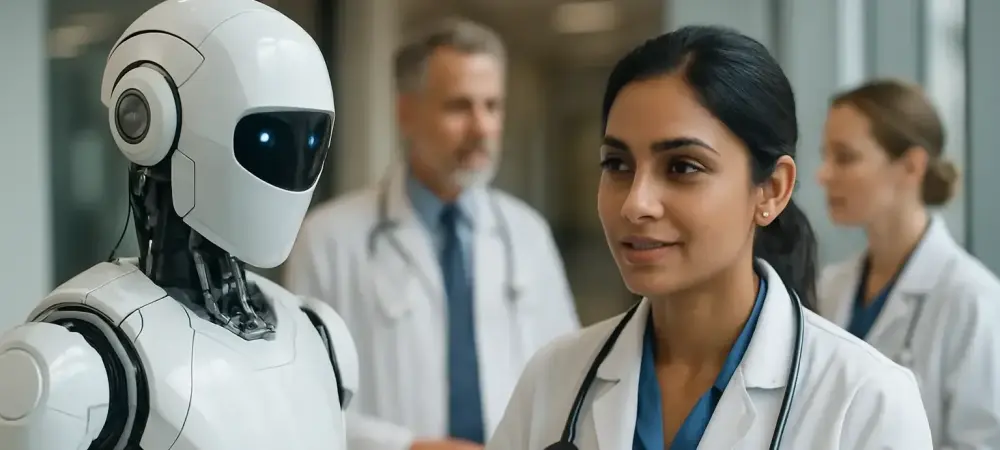
Step into a futuristic doctor’s office and immediately notice the seamless integration of technological advancements. Here, artificial intelligence takes center stage, efficiently managing patient data, recounting symptoms, and even suggesting potential diagnoses. As robotic voices fill the air, greeting patients and confirming appointments, one question arises: Will a human doctor step in only for a friendly handshake, or is their role irreplaceable in this high-tech environment?
The Emerging Wave of AI in Healthcare
In recent years, artificial intelligence has seen rapid integration into healthcare systems around the world. The trend of AI-driven tools complements an industry eager for efficient data handling and improved patient care. With the rise of telemedicine and data-driven diagnostics, AI ensures quick, accurate patient interactions. Algorithms can analyze imaging results faster than ever before, and predictions of health trends optimize preventive care, yet society remains in a state of curiosity, anxious about technology encroaching on the traditional responsibilities of healthcare professionals.
AI’s Vast Yet Finite Potential in Medicine
Artificial intelligence represents an analytical titan within medicine—capable of sifting through immense data reservoirs to uncover patterns that enhance diagnostic precision, particularly in specialties such as radiology or pathology. Despite AI’s prowess in delivering critical insights, it falls short in essential human attributes like empathy and developing rapport, both imperative for compassionate healthcare. Real-world evidence showcases AI refining workflows; for example, AI tools streamline administrative tasks, allowing doctors more time for direct patient care, highlighting the complementary relationship rather than competition.
Perspectives from Experts
Expert opinions underscore AI as an enhancer rather than a substitute for medical practitioners. Dr. Thomas Hughes, a leader in medical AI research, asserts, “ AI is our most powerful tool, but it can’t replace the empathy and nuanced judgment physicians bring.” Supporting research consistently points towards the significance of human interaction, with extensive studies indicating enhanced patient satisfaction when facilitated by personal doctor involvement. These insights reinforce the crucial blend of technology and the irreplaceable human touch in advancing medical care.
Integrating AI Seamlessly with Traditional Healthcare
Effective AI integration mandates strategies ensuring technologies augment rather than overshadow human elements in medical practice. Healthcare facilities that value collaboration adapt by fostering environments where AI enhances, not replaces, professional tasks. Training programs equip practitioners to navigate and exploit AI tools, thus maximizing benefits in patient pathways. Successful integration results in AI serving as a supportive partner, ready to elevate healthcare outcomes through joint efforts.
Looking Forward: Balancing Innovation and Humanity
In navigating AI’s progression, healthcare realizes promising avenues without disregarding foundational human care. Continuous education and adaptability are key to ensuring AI complements rather than competes with human expertise. A proactive approach shapes policies balancing the most technologically advanced care with compassionate, empathetic human interaction, maintaining trust within patient communities. Through strategic collaboration, AI remains central to innovation without overshadowing human elements vital to comprehensive healthcare solutions.