

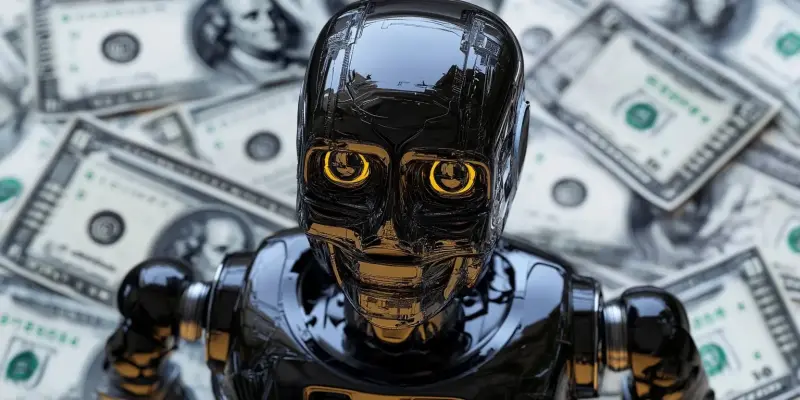
The financial landscape is undergoing a significant transformation as artificial intelligence (AI) becomes increasingly integrated into decentralized finance (DeFi).The integration of AI technologies into DeFi wallets and the tokenization of real business assets are set to usher in a new era of financial innovation. By improving operational efficiency, elevating service quality, and enhancing risk management, AI-driven solutions are poised to reshape the financial sector fundamentally.
AI-Integrated Wallets Transform User Experience
AI-integrated wallets are emerging as a cornerstone of this transformative shift, promising a superior user experience characterized by heightened accessibility, enhanced security, and expanded functionality.These wallets leverage advanced AI algorithms to streamline various processes, ensuring that users can navigate the DeFi landscape with ease and confidence. Through the use of machine learning and predictive analytics, AI-integrated wallets can offer personalized services that adapt to individual user needs, making financial management more intuitive and responsive.One notable development in this field is the launch of the first AI-enhanced wallet by DeFi-AI. This milestone represents a significant leap forward, as the wallet’s AI capabilities enable it to provide real-time financial insights, automated transaction processing, and intelligent investment advice.Users can benefit from a more tailored and efficient financial experience, as the wallet dynamically adjusts to market conditions and user behavior. Enhanced security measures, such as biometric authentication and anomaly detection, further ensure that users’ assets are protected from potential threats.As AI technology continues to evolve, the potential applications of AI-integrated wallets are vast. From predictive financial planning to automated portfolio management, these wallets are set to become indispensable tools for both novice and experienced users. By bridging the gap between traditional finance and the emerging DeFi ecosystem, AI-integrated wallets are paving the way for a more inclusive and accessible financial future.
Real Business Asset Tokenization: A New Frontier
The concept of Real Business Asset Tokenization (RBA) is another pivotal advancement in the DeFi space, facilitating the digital representation of tangible assets such as properties, stocks, and artworks on the blockchain. This innovation not only enhances liquidity and global accessibility but also opens up unprecedented opportunities for portfolio diversification. By converting real-world assets into digital tokens, RBA tokenization allows for fractional ownership, enabling investors to access a wider range of assets with smaller capital outlays.RBA tokenization is particularly noteworthy for its potential to democratize investment opportunities. By lowering the barriers to entry, it enables a broader audience to participate in asset markets that were previously reserved for institutional investors and high-net-worth individuals. This democratization fosters greater financial inclusion, as individuals from diverse economic backgrounds can now invest in a variety of asset classes and benefit from their potential returns.
Furthermore, RBA tokenization brings transparency and efficiency to asset transactions.Utilizing blockchain technology ensures that all transactions are recorded on an immutable ledger, reducing the risk of fraud and enhancing trust among participants. Additionally, the automation of smart contracts streamlines the execution of complex financial agreements, minimizing the need for intermediaries and reducing transaction costs. As the adoption of RBA tokenization continues to expand, it is poised to revolutionize industries ranging from real estate to fine arts, creating a more dynamic and interconnected global economy.
Future Prospects and Implications
The financial world is experiencing a profound transformation due to the growing integration of artificial intelligence (AI) into decentralized finance (DeFi). AI technologies are making their way into DeFi wallets, influencing the way we manage and interact with financial resources. Additionally, the tokenization of real-world business assets is becoming a significant trend, pushing the boundaries of financial innovation.These advancements are not just buzzwords; they are promising substantial improvements in operational efficiency, elevating the quality of financial services, and bolstering risk management strategies. As AI-driven solutions become more entrenched in the financial sector, they are set to fundamentally reshape it.The impact of AI on DeFi is far-reaching, affecting not only individual transactions but also the broader financial landscape, from everyday banking to large-scale investments. Ultimately, this convergence of AI and DeFi has the potential to disrupt traditional financial models, leading to a more efficient, secure, and inclusive financial ecosystem.