

Global manufacturing landscapes have shifted from predictable linear models to volatile ecosystems where a single delay in a specialized semiconductor shipment can halt production lines across multiple continents. Recent disruptions have exposed the critical vulnerabilities of legacy Enterprise Resource Planning (ERP) systems that rely on static data and reactive processing. In response, modern industrial leaders are rapidly migrating to cloud-based ERP solutions integrated with sophisticated artificial intelligence to ensure operational continuity. These systems allow for a level of agility that was previously unattainable, processing millions of data points from IoT sensors, market trends, and logistics partners in real time. By moving away from on-premise hardware, manufacturers have gained the ability to scale their computational power during peak demand without the heavy capital expenditure associated with traditional infrastructure. This transition represents a fundamental change in how value is created, moving from simple assembly to data-driven intelligence that anticipates market needs.
Synchronizing Supply Networks Through Predictive Intelligence
Building on these foundational shifts, predictive algorithms within cloud environments have transformed inventory management from an exercise in historical guessing to a precise science of foresight. Leading automotive and aerospace firms have implemented AI-driven ERP modules that analyze geopolitical events, weather patterns, and supplier financial health to anticipate bottlenecks weeks before they manifest. For instance, when a major port in Southeast Asia faced unexpected congestion, manufacturers utilizing neural network-based forecasting redirected shipments to alternative hubs automatically, bypassing delays that crippled less sophisticated competitors. Furthermore, the integration of generative AI within these platforms has enabled procurement teams to draft complex contracts and negotiate terms with suppliers using real-time market benchmarking data. This proactive stance ensures that raw material buffers are optimized, reducing carrying costs while simultaneously protecting the production schedule against external shocks. The scalability of cloud-native platforms like SAP S/4HANA Cloud and Microsoft Dynamics 365 allows for this level of deep analysis without compromising the performance of core business functions. Because the data resides in a centralized cloud repository, suppliers and distributors can be granted controlled access to specific modules, creating a transparent and collaborative value chain. This interconnectedness reduces the “bullwhip effect,” where small fluctuations in consumer demand lead to massive inefficiencies further up the supply line. Machine learning models continuously refine their understanding of lead times and transit risks, providing logistics managers with a ranked list of the most reliable shipping routes based on current conditions. Consequently, the transition to AI-enabled ERP systems has allowed organizations to maintain high service levels even during periods of extreme market instability. This structural resilience has become a primary competitive advantage, enabling firms to capture market share from rivals who remain tethered to slower, siloed systems.
Transforming Factory Operations With Cognitive Automation
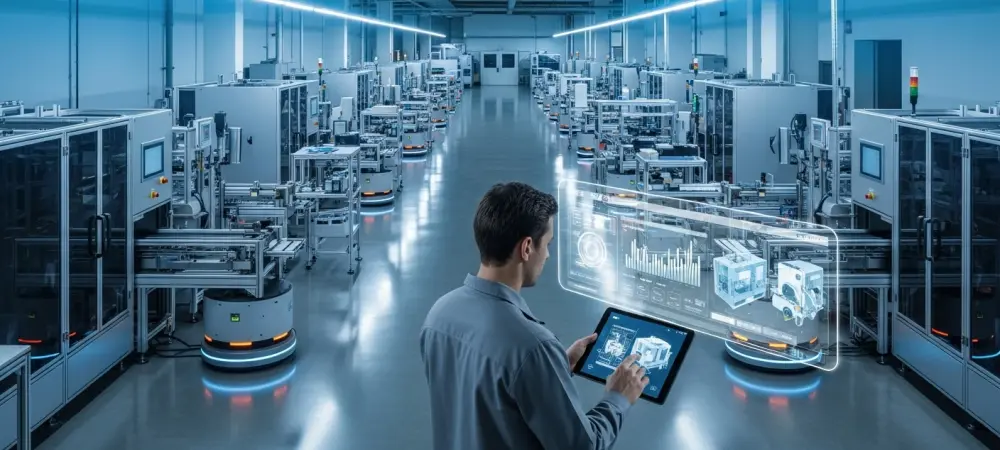
In tandem with these logistical advancements, the convergence of cloud ERP and edge computing has facilitated a new level of synchronization between high-level business strategy and physical execution. Modern fabrication facilities now utilize digital twins—virtual replicas of their entire production lines—that are hosted in the cloud and constantly updated with live sensor data. When the ERP system receives a rush order for a customized medical device, the AI automatically reconfigures the production schedule and communicates specific instructions to robotic arms and automated guided vehicles. This eliminates the manual overhead previously required for line changeovers and reduces the risk of human error during complex assembly tasks. Moreover, the implementation of computer vision systems linked to the ERP allows for real-quality control, where defects are identified and logged immediately, triggering an automated request for a replacement part. This flow of information ensures the smart factory remains flexible. Beyond automation, the human element of manufacturing has been significantly enhanced by AI-integrated cloud platforms that provide workers with real-time insights and decision support. Augmented reality interfaces, fed by data from the ERP, guide technicians through complex maintenance procedures, reducing downtime and extending the lifespan of critical machinery. These systems also analyze workforce performance and skill sets to optimize shift scheduling, ensuring that the right expertise is available for specific high-stakes production runs. As the cloud handles the heavy data processing, local edge devices ensure that these insights are delivered with low latency, which is essential for safety-critical environments. By democratizing access to data, manufacturers have empowered employees at every level to contribute to process improvement initiatives. This bottom-up innovation, combined with top-down strategic AI oversight, has created a highly responsive production environment that can pivot between different product lines with minimal friction.
Strategic Implementation: Navigating the Path Toward Operational Excellence
To achieve these results, organizations prioritized the standardization of data across all departments to eliminate silos that hindered decision-making. Successful implementations focused on establishing a clean data foundation before layering advanced AI capabilities, ensuring that the insights generated were both accurate and actionable. Executives recognized that the transition to an AI-enabled cloud ERP was not merely a technical upgrade but a cultural shift that required extensive training for the workforce. By involving shop floor operators in the initial design phases of the software rollout, companies ensured that the tools actually solved the day-to-day challenges faced by the staff. This collaborative approach led to higher adoption rates and a more resilient organizational structure that was prepared for any market shift. Leaders also established clear key performance indicators that measured the impact of AI on lead times and resource utilization, providing a transparent view of the return on investment.
The final stages of this industrial evolution involved the integration of ethical AI frameworks to ensure that automated decisions remained aligned with safety standards and corporate responsibility. Companies that flourished were those that moved away from general-purpose software in favor of specialized cloud ERP instances tailored to their specific niche in the manufacturing sector. These targeted solutions provided pre-built machine learning models for industry-specific challenges, such as chemical composition tracking or complex multi-stage assembly. Looking ahead, the focus remained on the continuous refinement of these systems through recursive learning loops, where the ERP learned from every successful delivery and every production delay. This iterative improvement created a compounding advantage for early adopters, who found themselves operating at a level of efficiency that latecomers struggled to match. By treating the ERP as a living brain, manufacturers secured their place in a competitive and rapidly changing global market.