

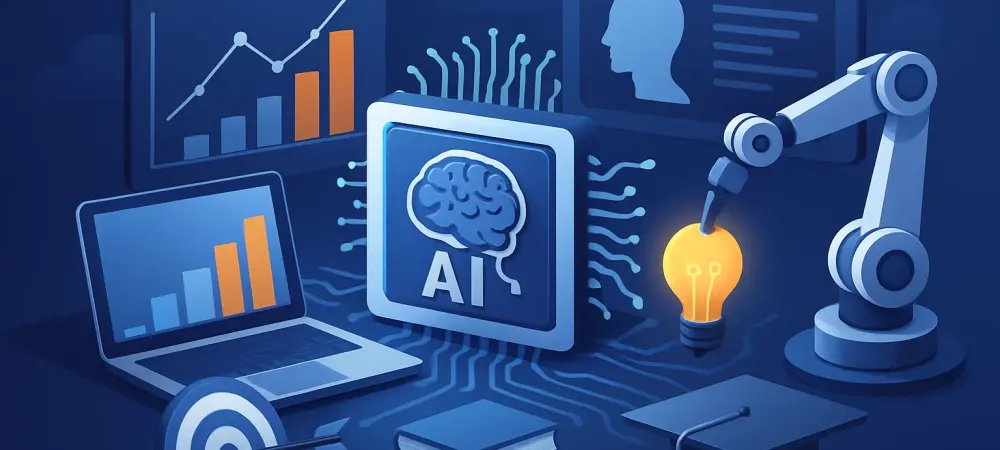
Imagine a world where every employee’s learning journey is as unique as their fingerprint, tailored precisely to their needs and the goals of their organization, all powered by cutting-edge technology. This isn’t a far-off dream but a reality taking shape through the integration of Artificial Intelligence (AI) in skills development. In the fast-paced landscape of modern business, where adaptability is the currency of survival, AI is revolutionizing how organizations approach learning and development (L&D). This review dives deep into the transformative power of AI-driven skills development, exploring its core components, real-world impact, and the challenges that temper its promise, while casting an eye toward its potential to redefine workforce agility.
Introduction to AI in Skills Development
The emergence of AI in skills development marks a seismic shift in how learning is conceptualized and delivered within organizations. At its core, this technology harnesses machine learning, data analytics, and predictive modeling to create learning experiences that are not only personalized but also strategically aligned with business objectives. Unlike traditional L&D methods, which often relied on one-size-fits-all training programs, AI introduces a dynamic approach that adapts in real time to individual and organizational needs.
This transformation is unfolding against a backdrop of rapid technological change and increasing demand for specialized skills. As industries grapple with digital disruption, AI steps in as a tool to bridge the gap between current workforce capabilities and future requirements. Its relevance extends beyond mere training, positioning L&D as a critical driver of business outcomes like productivity and innovation.
Moreover, the adoption of AI in this sphere reflects a broader trend of technology becoming integral to organizational strategy. It’s not just about learning faster; it’s about learning smarter, ensuring that every skill acquired translates into measurable impact. This review aims to unpack how AI is reshaping the skills landscape, setting the stage for a detailed examination of its key components and applications.
Core Components of AI-Driven Skills Development
AI-Powered Content Mapping and Personalization
One of the standout features of AI in skills development is its ability to map learning content to specific needs with surgical precision. By analyzing data from employee performance, job roles, and business goals, AI crafts personalized learning paths that resonate with each individual. This isn’t just about recommending a course; it’s about curating an entire development journey that evolves as the learner progresses.
This personalization extends to upskilling and reskilling initiatives, where AI identifies which skills are most relevant and delivers targeted content accordingly. The result is a marked increase in learner engagement—employees are more likely to invest time in training that feels directly applicable to their roles. Studies have shown that tailored learning experiences can boost retention of information significantly, making this a game-changer for L&D effectiveness.
Equally important is the alignment with business goals. AI ensures that individual development ties into broader organizational strategies, whether that’s preparing for a digital transformation or addressing specific performance gaps. This strategic focus transforms learning from an isolated activity into a core component of business success, amplifying its overall impact.
Data-Driven Capability Gap Analysis
Another critical strength of AI lies in its ability to perform data-driven capability gap analysis. By sifting through vast amounts of workforce data, AI pinpoints exactly where skills deficiencies exist and highlights areas for improvement. This isn’t guesswork; it’s a methodical process that uses historical performance metrics and predictive analytics to forecast future needs.
Such analysis empowers organizations to make informed talent decisions. For instance, if a company identifies a lack of data literacy among its staff, AI can not only flag this gap but also recommend specific interventions to address it. Real-world examples include tech firms using AI to prepare employees for emerging roles in cybersecurity, ensuring they stay ahead of industry trends.
Beyond immediate fixes, this capability supports long-term strategic planning. AI provides insights into how skills requirements might shift over the next few years, allowing companies to proactively build the competencies they’ll need. This forward-thinking approach is invaluable in a market where agility often determines competitiveness, making AI a cornerstone of modern workforce planning.
Recent Innovations in AI for Skills Development
The pace of innovation in AI-driven skills development is nothing short of staggering. New tools are emerging that leverage advanced machine learning algorithms to create even more nuanced learning experiences. For example, platforms now exist that can assess emotional cues during training sessions, adjusting content delivery to match a learner’s mood or stress level.
Additionally, there’s a noticeable shift in organizational behavior toward embracing technology-enabled learning. Companies are increasingly integrating AI into their broader digital ecosystems, linking learning platforms with performance management systems for a seamless flow of data. This interconnectedness ensures that skills development isn’t a standalone effort but part of a holistic strategy to drive growth.
These advancements are reshaping L&D trajectories in profound ways. As AI becomes more sophisticated, it’s not just enhancing existing processes but also inspiring entirely new approaches to talent development. The ripple effects of these innovations are felt across industries, pushing organizations to rethink how they prepare their workforces for an unpredictable future.
Real-World Applications of AI in Skills Development
Across sectors like technology, healthcare, and finance, AI-driven skills development is proving its worth in tangible ways. In technology firms, for instance, AI is used to rapidly upskill employees in areas like cloud computing, ensuring they keep pace with relentless innovation cycles. This agility translates directly into faster product rollouts and stronger market positioning.
In healthcare, AI helps tailor training for medical professionals, focusing on emerging areas like telemedicine or robotic surgery. Hospitals deploying these solutions report improved patient outcomes as staff become proficient in cutting-edge practices. Meanwhile, financial institutions leverage AI to train employees on regulatory compliance and fraud detection, enhancing both efficiency and trust in their operations.
Unique use cases also abound, such as retail giants using AI to simulate customer interactions for sales training, or manufacturing companies preparing workers for automation technologies. These implementations underscore AI’s versatility, demonstrating how it can drive productivity and innovation in diverse contexts. The common thread is clear: organizations that harness AI for skills development gain a competitive edge through a more capable, responsive workforce.
Challenges and Limitations of AI in Skills Development
Despite its promise, AI in skills development isn’t without hurdles. Technical complexities often pose a barrier, as implementing sophisticated systems requires robust infrastructure and expertise that not all organizations possess. Smaller companies, in particular, may find the initial investment daunting, slowing adoption rates.
Ethical concerns also loom large. Issues around data privacy and algorithmic bias raise questions about how AI handles sensitive employee information. If not addressed, these risks can erode trust in the technology, undermining its effectiveness. Transparency in how AI decisions are made remains a critical area for improvement.
Furthermore, organizational readiness often lags behind technological capability. Resistance to change, lack of leadership buy-in, or an unprepared culture can stymie even the best AI solutions. Efforts to mitigate these challenges are underway, with many firms partnering with L&D providers to ensure responsible implementation. Balancing innovation with practicality is key to overcoming these limitations and unlocking AI’s full potential.
Future Outlook for AI-Driven Skills Development
Looking ahead, the trajectory of AI in skills development appears poised for breakthroughs that could further redefine workforce preparation. Advances in natural language processing and adaptive learning algorithms may soon enable even more granular personalization, tailoring content not just to skills but to learning styles and preferences over the coming years.
The integration of ethical frameworks is also gaining traction, as stakeholders recognize the need to govern AI responsibly. This focus on accountability will likely shape how the technology evolves, ensuring it remains a force for good rather than a source of unintended harm. Collaboration between tech developers and industry leaders will be crucial in this endeavor.
Over the long term, AI’s impact on workforce agility and business resilience seems destined to grow. As markets continue to shift at breakneck speed, organizations equipped with AI-driven learning tools will be better positioned to adapt. This technology could become the backbone of sustainable growth, turning skills development into a strategic asset for navigating uncertainty.
Conclusion and Key Takeaways
Reflecting on this exploration, it became evident that AI had carved out a pivotal role in skills development, offering tools that transformed how organizations approached learning. Its capacity to personalize content and analyze capability gaps had already delivered measurable benefits across industries. Yet, the journey was not without its struggles, as technical and ethical challenges demanded careful navigation.
Looking back, the real strength of AI lay in its ability to align learning with business impact, a feat that traditional methods often failed to achieve. For organizations that had embraced it, the rewards were clear in enhanced productivity and innovation. However, success hinged on readiness and strategic integration, lessons that shaped early adopters’ experiences.
Moving forward, the focus should have shifted to fostering partnerships that ensured ethical implementation while scaling AI’s reach. Companies needed to invest in cultural transformation alongside technology, preparing their teams for a future where learning was continuous. By doing so, they could have turned AI into a lasting driver of resilience, ready to tackle whatever challenges emerged next.