

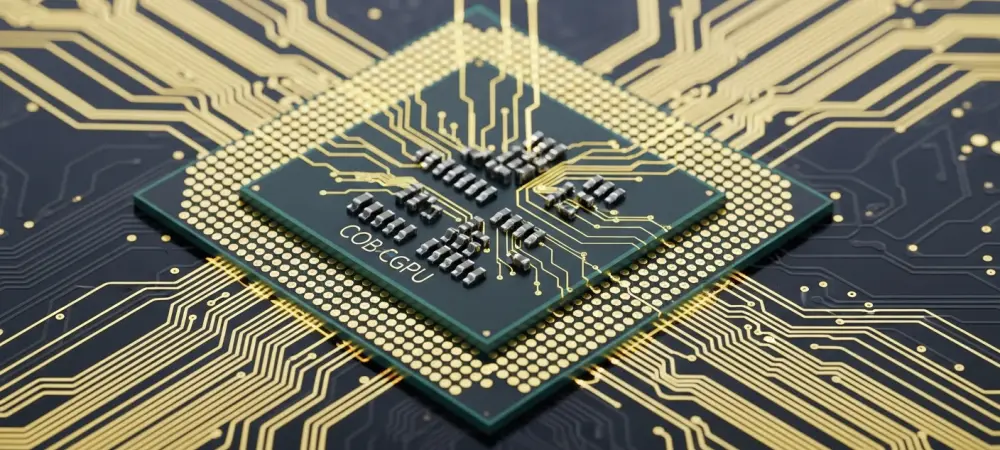
The sheer velocity of data exchange required to sustain modern machine learning has effectively turned the fiber-optic cable from a passive pipe into a critical component of the silicon substrate itself. As training models swell into trillions of parameters, the traditional networking paradigm—once focused on connecting human users to centralized applications—has been rendered obsolete. In its place, a specialized optical fabric has emerged, specifically designed to handle the rigorous synchronization demands of interconnected Graphics Processing Units. This shift identifies the transition of the optical layer from a peripheral utility to a foundational pillar of the modern compute engine, ensuring that light can keep pace with the exponential growth of artificial intelligence.
Foundations of AI-Enhanced Optical Infrastructure
Traditional cloud infrastructure was built on north-south traffic patterns where data flowed primarily between servers and end-users. The rise of generative AI has shifted this focus toward east-west traffic, requiring massive, high-speed synchronization between distributed nodes. In this landscape, the performance of the optical network directly dictates the efficiency of the GPU cluster. If the network experiences jitter or insufficient throughput, expensive compute cycles are wasted while chips wait for data packets. This necessity has driven the move toward AI-optimized optical fabrics that prioritize ultra-low latency and deterministic performance over simple connectivity. By moving optical connectivity to the core of the compute engine, infrastructure providers can treat thousands of independent chips as a single, coherent brain. This shift is unique because it forces a convergence between the world of telecommunications and the world of high-performance computing. Rather than treating the network as a separate entity, engineers now view the optical path as an extension of the GPU memory bus. This deep integration is what allows the current generation of AI models to scale beyond the limits of a single server rack.
Architectural Innovations: Performance Drivers
The rapid evolution of training requirements has led to a significant overhaul in how networks are physically and logically organized. It is no longer enough to simply increase the speed of a single link; the entire architecture must evolve to accommodate the sheer volume of data moving between processors. These innovations are focused on creating a network that is both invisible and omnipresent, providing the high-speed backbone necessary for the next generation of machine learning.
The Scale-Across Model for Distributed AI Training
Physical limitations such as power density and cooling have necessitated a move toward “scale-across” architectures. As individual data center buildings reach their thermal and electrical limits, training workloads must be distributed across multiple campuses or even geographical regions. The optical network must now act as a seamless extension of the internal data center fabric, allowing these geographically separated clusters to function as a single logical unit. This requirement is distinct from traditional long-haul networking, as it demands the same level of latency and reliability found inside a single room.
In a scale-across implementation, regional fiber routes are treated as high-speed lanes within a massive, virtualized processor. This approach unique because it relies on the network to maintain microsecond-level synchronization between clusters that may be miles apart. The ability to bridge these distances without sacrificing performance is the primary differentiator for modern AI infrastructure. Without this capability, the growth of the largest models would be capped by the physical capacity of individual power grids.
High-Capacity Coherent Optical Technologies
To support these distributed systems, the industry is aggressively deploying 800G and 1.6T coherent optical technologies. These advancements allow operators to squeeze up to 50% more capacity out of existing fiber assets by utilizing sophisticated modulation schemes. This is crucial for maximizing fiber density without the immediate need for costly new trenching. By packing more data into the existing spectrum, coherent optics provide a scalable path for the massive data bursts typical of AI training cycles.
Furthermore, these technologies are designed with a focus on reducing power consumption per bit. In an environment where power availability is the scarcest resource, the thermal efficiency of the optical transponder becomes a primary competitive advantage. The implementation of high-capacity coherent optics allows for a more sustainable expansion of the network, ensuring that the energy footprint does not grow as fast as the traffic volume. This balance is essential for maintaining the economic viability of large-scale AI operations.
Emerging Trends in Modern Photonic Systems
The transition from text-based large language models to multimodal AI—which processes video, audio, and images simultaneously—has triggered a bandwidth explosion. This trend has birthed “neoscalers,” specialized providers who build infrastructure solely for high-performance computing tasks. These entities are now deploying parallel fiber routes containing hundreds of fiber pairs. Unlike traditional routes that might hold a few dozen pairs, these modern corridors are designed for a future where petabit-per-second throughput is the baseline requirement for any serious research facility.
Parallel fiber deployment is becoming the new standard for interconnecting major AI hubs. By utilizing massive counts of fiber pairs, operators can achieve unprecedented levels of throughput while maintaining the redundancy required for mission-critical training tasks. This shift represents a fundamental change in how global data capacity is planned, moving away from sparse, high-efficiency links toward dense, high-volume fiber highways.
Real-World Implementation: Metro and DCI Environments
Metro-area networks and Data Center Interconnect points are currently experiencing the most intense pressure from AI workloads. As hyperscalers expand their clusters, the fiber connecting these sites must handle traffic volumes previously reserved for transcontinental backbones. Use cases now involve maintaining synchronization between GPU clusters that are physically separated but logically adjacent. This requires optical systems to prioritize the shortest possible paths to minimize the time light spends traveling through glass.
In dense urban environments, optical switching has become a vital tool for rerouting traffic dynamically. This ensures that a sudden surge in one training job does not disrupt the inference services running elsewhere in the metro mesh. The deployment of AI-driven networking in these environments is focused on achieving maximum agility, allowing the network to adapt to the shifting needs of distributed GPU clusters in real-time.
Technical Hurdles and Market Constraints
Despite these innovations, a widening gap persists between hardware progress and actual traffic demand. While 1.6T optics provide meaningful improvements, they often struggle to match the 100x traffic growth seen on certain AI training routes. Physical limitations such as the Shannon Limit and power density constraints also force workloads to migrate across different regions, introducing unavoidable latency. The logistical challenge of balancing network speed with available power remains a significant hurdle for the entire industry.
Moreover, the physical migration of data creates a paradox where moving the workload to find power increases the latency that degrades the workload itself. The logistical challenge of balancing network speed with available power remains a significant hurdle for the entire industry. Operators must find ways to increase capacity without exponentially increasing the energy footprint of the optical shelf. This technical bottleneck is currently the primary constraint on the speed at which new, larger models can be brought to market.
Future Directions in Optical Transmission Research
Research is currently focusing on breakthroughs like hollow-core fiber and co-packaged optics to bypass existing physical limits. Hollow-core fiber allows light to travel through air instead of solid glass, reducing latency by roughly 30%. This margin is critical for the synchronization of massive clusters. Additionally, co-packaged optics aim to move the optical engine directly onto the processor package, eliminating the energy loss associated with traditional copper traces and improving overall system efficiency.
These technologies represent a future of fully autonomous, self-optimizing optical networks. Such systems will eventually adjust their parameters in real-time to accommodate the fluctuating demands of global AI training clusters. By integrating photonics more deeply into the silicon stack, the industry aims to create a scalable, low-latency environment that can sustain the growth of intelligence for years to come.
Final Assessment and Strategic Summary
The transition to AI-centric networking fundamentally restructured the priorities of the optical industry during this period. It was clear that the era of incremental upgrades ended once petabit-scale requirements became the norm for distributed GPU synchronization. Success in this landscape depended on the ability to treat the network as a dynamic part of the compute stack rather than a static utility. The review established that while coherent technologies provided a temporary bridge, the long-term solution required a massive expansion of fiber density and the adoption of integrated photonics. Moving forward, the focus shifted toward mitigating physical constraints through air-core mediums and co-packaged optics to sustain the next generation of multimodal digital intelligence.