

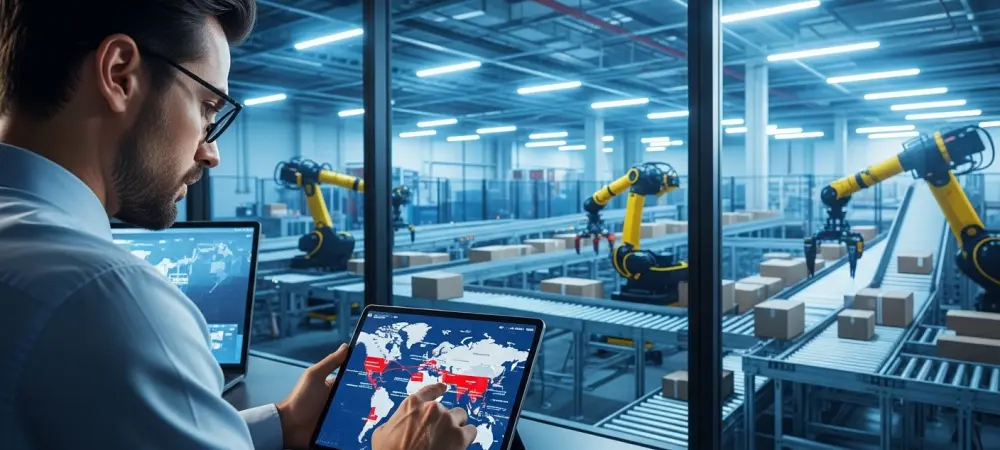
The long-held perception of Enterprise Resource Planning systems as rigid, labyrinthine platforms requiring specialized knowledge and significant patience is rapidly dissolving into a relic of a bygone business era. The integration of Artificial Intelligence into these core business systems represents not just an incremental upgrade but a fundamental re-imagining of how humans and software collaborate. This review will explore the evolution of the ERP user experience, dissecting its key AI-driven features, their performance impact, and the tangible effects observed across various business functions. The purpose of this analysis is to provide a thorough understanding of this technology, its current capabilities, and its trajectory for future development.
The Dawn of Intelligent ERP
The emergence of the intelligent ERP marks a pivotal transition from systems of record to systems of intelligence. At its core, this evolution is driven by the embedding of sophisticated AI components, such as machine learning and natural language processing, directly into the ERP framework. This technology arose from a growing demand to resolve the inherent friction of traditional interfaces, which often acted as a barrier between users and the valuable data contained within. In a business landscape that prizes agility and data-driven decisions, the cumbersome, multi-step processes of legacy systems became an operational bottleneck.
AI-driven ERP addresses these modern demands by prioritizing a user-centric design that democratizes data access and operational control. Instead of forcing users to learn the system’s language, the system now learns to understand the user’s intent. This shift is not merely about aesthetic improvements; it is a strategic response to the need for greater efficiency, deeper insights, and a more intuitive partnership between employees and their primary business management tools. The result is a system that feels less like a database and more like an active, supportive colleague.
Key Features Redefining the User Experience
Conversational Interfaces and Natural Language
One of the most transformative features of the modern ERP is the ability to interact with it through natural, conversational language. Powered by advanced Natural Language Processing (NLP), systems like Microsoft Dynamics 365 with its integrated Copilot can interpret user requests posed in plain English. This completely upends the traditional interaction model, which relied on navigating complex menus and knowing precise command sequences. A user can now simply ask, “What were our top-selling products in the Northeast region last quarter?” and receive an immediate, contextualized answer.
This capability extends beyond simple data retrieval to command execution. An instruction like, “Draft a purchase order for 100 units from our primary supplier and flag it for approval,” can trigger a multi-step workflow automatically. By translating human intent directly into system actions, conversational interfaces dramatically lower the learning curve, reduce the need for extensive training, and empower a broader range of employees to leverage the full power of the ERP without becoming technical experts.
Predictive Analytics and Proactive Insights
Intelligent ERP systems are fundamentally changing the nature of business reporting by shifting the focus from historical review to future-oriented guidance. AI models embedded within the platform continuously analyze vast datasets, identifying patterns and correlations that are invisible to the human eye. This allows the system to generate predictive analytics that forecast trends, anticipate operational requirements, and surface proactive recommendations directly within a user’s workflow.
For example, the system can predict potential supply chain disruptions based on logistical data and market signals, or it can identify customers at risk of churn by analyzing their engagement patterns. This move from reactive reporting to predictive decision-making is a significant performance leap. Instead of merely being informed that inventory is low, a manager is now alerted that inventory is projected to be low next month, providing crucial lead time to act. This proactive stance equips organizations with the foresight to mitigate risks and seize opportunities before they fully materialize.
Intelligent Automation of Business Workflows
Beyond conversational interaction and prediction, AI is a powerful engine for automating routine and repetitive tasks that consume valuable employee time. This intelligent automation, which often combines Robotic Process Automation (RPA) and machine learning, targets high-volume, rules-based processes such as data entry, invoice reconciliation, and the generation of standardized reports. The AI can learn to perform these tasks with greater speed and accuracy than a human counterpart.
This automation has a direct and measurable impact on user productivity and focus. When tedious administrative duties are handled by the system, employees are liberated to concentrate on higher-value strategic work, such as analysis, creative problem-solving, and customer relationship management. Approval routings, for instance, become more intelligent, as the system can automatically direct requests to the appropriate stakeholder based on the context of the transaction, eliminating manual handoffs and reducing process cycle times.
Emerging Trends in Human ERP Interaction
The evolution of the AI-driven ERP experience continues to accelerate, with several key trends shaping its future. One of the most significant is the move toward hyper-personalization, where the user interface dynamically adapts to the specific role, behaviors, and immediate needs of each individual user. Instead of a one-size-fits-all dashboard, the system proactively surfaces the tools, data, and insights most relevant to the user’s current task, creating a frictionless and highly contextual experience. Furthermore, the relationship between human and machine is shifting from a simple user-and-tool dynamic to a more collaborative human-AI partnership. In this model, the AI acts as a co-pilot for complex problem-solving and strategic planning. It can run sophisticated simulations, model the potential outcomes of different business decisions, and present data-backed arguments for various courses of action. This enables teams to engage in more robust strategic dialogues, leveraging the AI’s computational power to augment human intuition and expertise.
Applications Across Core Business Functions
Transforming Finance and Accounting
Within finance and accounting departments, AI-driven ERP has become an indispensable tool for enhancing accuracy and strategic oversight. Its applications range from AI-powered anomaly detection, which automatically flags unusual transactions that could indicate fraud or error, to the complete automation of the accounts payable process through intelligent invoice scanning and processing. These systems simplify complex tasks like cash flow forecasting by analyzing historical trends and market variables to provide more reliable projections. This allows finance teams to shift their focus from manual data reconciliation to strategic financial management and advisory roles.
Optimizing the Supply Chain and Inventory
The impact of AI on supply chain and inventory management has been profound, driving new levels of efficiency and resilience. Predictive maintenance scheduling for manufacturing equipment, for instance, uses sensor data and historical performance to anticipate failures before they occur, minimizing costly downtime. In inventory management, AI algorithms create dynamic optimization models that adjust stock levels in real time based on demand forecasts, seasonality, and logistical constraints, preventing both stockouts and costly overstock situations. Moreover, automated logistics planning optimizes shipping routes and carrier selection to reduce transportation costs and improve delivery times.
Empowering Sales and Customer Service
For customer-facing teams, AI tools integrated into the ERP serve as powerful performance accelerators. Sales professionals receive AI-generated insights that highlight the most promising leads, suggest next-best-actions for active opportunities, and analyze customer sentiment from emails and call logs to tailor their communication strategy. In customer service, intelligent chatbots provide instant, 24/7 support for common inquiries, freeing human agents to handle more complex issues. The system can also generate concise case summaries and recommend relevant solutions, enabling agents to resolve customer problems faster and more effectively, which in turn boosts customer satisfaction and loyalty.
Implementation Challenges and Strategic Considerations
Navigating Data and Integration Challenges
Despite its transformative potential, the successful implementation of an AI-driven ERP is not without its technical challenges. The axiom “garbage in, garbage out” is especially true for AI; the performance of machine learning models is entirely dependent on the quality, cleanliness, and volume of the data they are trained on. Consequently, organizations must first address fundamental issues of data governance, ensuring that their data is accurate, standardized, and accessible. Seamless integration with legacy systems and other enterprise applications is another critical hurdle, requiring robust data pipelines and APIs to create a unified data ecosystem.
Cultivating Change and Driving User Adoption
Beyond technical considerations, the most significant obstacles are often organizational. Employee resistance to new technology, born from a fear of obsolescence or a reluctance to abandon familiar workflows, can hinder adoption. Overcoming this requires a concerted change management strategy that includes transparent communication about the benefits of the new system and comprehensive training programs. Building trust in AI-driven recommendations is paramount. This is often achieved by starting with smaller, low-risk automation projects and clearly demonstrating the value and reliability of the AI’s insights, gradually fostering a culture that views the intelligent ERP as a trusted partner rather than a replacement.
The Future Outlook for Artificial Intelligence in ERP
The trajectory of AI in ERP points toward a future defined by even deeper integration and greater autonomy. The continued advancement of generative AI promises to unlock new capabilities for creative problem-solving, allowing the ERP to not only analyze data but also generate novel business strategies, marketing copy, or product design concepts based on market analysis. The prospect of fully autonomous business processes, where the ERP can manage entire functions like procurement or financial closing with minimal human oversight, is moving from theoretical to plausible.
This evolution will likely have a long-term impact on organizational structures and the very nature of work. As transactional and analytical tasks become increasingly automated, human roles will continue to shift toward strategic oversight, creativity, and interpersonal relationship management. The ERP system of the future will not be a tool that employees simply use; it will be an intelligent, central nervous system for the entire enterprise, orchestrating operations and driving strategic initiatives in a seamless human-machine partnership.
Final Assessment
The integration of artificial intelligence fundamentally reshaped the Enterprise Resource Planning user experience, transforming it from a rigid tool of record into an intuitive, intelligent business partner. The introduction of features like conversational interfaces, predictive analytics, and automated workflows addressed long-standing pain points related to complexity and accessibility, making these powerful systems more approachable for a wider range of users. Across functions from finance to sales, these capabilities delivered measurable improvements in efficiency, accuracy, and strategic foresight. While implementation presented challenges related to data quality and user adoption, the strategic benefits realized by organizations that successfully navigated these hurdles were substantial. Ultimately, the AI-driven ERP marked a definitive paradigm shift, laying the groundwork for a future where business operations are more agile, data-informed, and collaboratively managed between humans and their digital counterparts.