

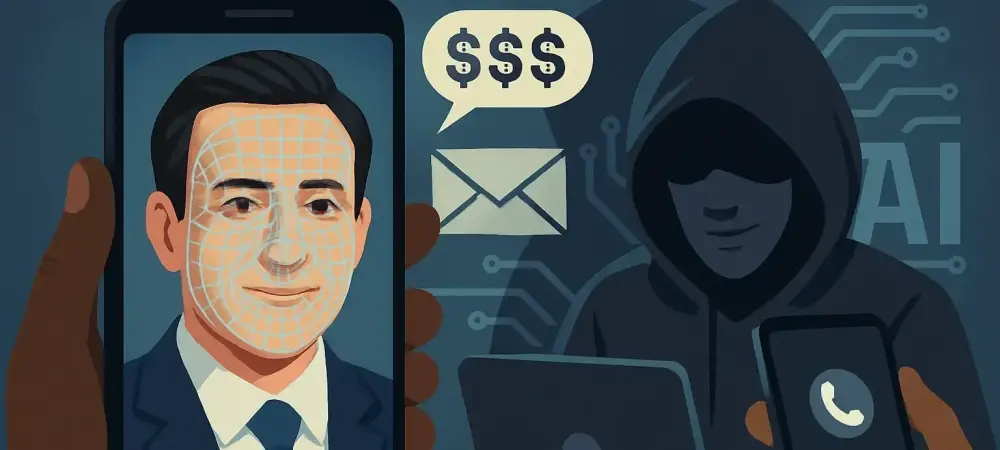
Imagine receiving a distressing video call from a loved one, their face and voice perfectly replicated, pleading for urgent financial help due to a fabricated emergency, a scenario that was once the stuff of science fiction but is now a chilling reality with the rise of deepfake technology. Powered by artificial intelligence, deepfakes create hyper-realistic but entirely false audio, video, and images, posing a significant threat to personal security and digital trust. As losses from scams leveraging this technology surpass $50 billion in the United States, understanding its mechanisms and implications has never been more critical.
Core Features of Deepfake Technology
How AI Crafts Convincing Illusions
At the heart of deepfake technology lie sophisticated AI algorithms that manipulate existing media with alarming precision. Techniques such as facial mapping and voice synthesis allow for the seamless blending of one person’s likeness onto another’s body or the replication of a voice with uncanny accuracy. These tools analyze vast datasets to mimic subtle facial expressions and speech patterns, producing content that often deceives even the most discerning eye. The realism of these fakes is particularly striking when viewed on smaller screens like smartphones, where minor imperfections—such as unnatural lip movements or inconsistent lighting—are less noticeable. This accessibility amplifies the potential for misuse, as scammers can deploy such content widely through social media or messaging platforms with minimal scrutiny.
Emotional Manipulation as a Key Tactic
Beyond technical prowess, deepfake technology excels at exploiting human emotions to achieve malicious ends. Scammers often impersonate trusted figures—be it a family member, a celebrity, or a government official—to evoke feelings of fear, urgency, or blind trust. This psychological manipulation makes victims more likely to act without hesitation, transferring money or sharing sensitive information. A notable instance involved a fabricated live stream featuring a deepfake of a high-profile tech executive promoting a cryptocurrency scheme during a product launch. Such incidents highlight how emotional triggers, paired with realistic visuals, create a potent recipe for deception, catching even cautious individuals off guard.
Performance and Impact in Real-World Scenarios
Escalating Sophistication of Fraud Tactics
The rapid advancement of AI has fueled an unprecedented evolution in scam tactics, with deepfake content becoming more refined and accessible. From 2025 onward, the scale of these attacks has grown, targeting not just public figures but also private individuals through personalized schemes. This shift toward tailored attacks increases their effectiveness, as victims are less likely to question content featuring familiar but less prominent faces. Financial repercussions are staggering, with losses reported at over $50.5 billion across various sectors in the U.S. alone. The banking industry, cryptocurrency markets, and personal communications stand out as particularly vulnerable, where trust is easily weaponized through falsified media.
Sectors Under Siege and Notable Cases
Specific industries bear the brunt of deepfake-driven fraud, with scammers exploiting the inherent trust in digital interactions. In banking, fake videos of executives authorizing transactions have misled employees into wiring funds to fraudulent accounts. Similarly, the cryptocurrency space has seen fabricated endorsements leading to massive investment losses. Beyond financial sectors, personal communications are increasingly targeted, with scammers using deepfake audio to mimic loved ones in distress. These real-world applications underscore the technology’s devastating potential to disrupt lives and erode confidence in digital platforms.
Challenges in Countering Deepfake Threats
Detection Difficulties Amidst Advancing Realism
One of the most formidable barriers in combating deepfake scams is the sheer difficulty of detecting them. As AI-generated content grows more polished, distinguishing between authentic and fabricated media requires advanced tools that are not yet widely available to the average user. Subtle cues that once betrayed fakes are now often absent, complicating efforts to identify fraud. This technical challenge is compounded by the rapid pace of AI innovation, which consistently outstrips detection methods. Without accessible solutions, individuals and organizations remain at a disadvantage, struggling to keep pace with scammers’ evolving tactics.
Role of Personal Data in Fueling Scams
A critical enabler of deepfake scams is the abundance of personal data readily available online. Images, videos, and audio snippets shared on social media provide raw material for training AI models, allowing scammers to craft highly convincing fakes. This trend reveals a troubling link between oversharing and vulnerability to fraud. Despite growing awareness, many users continue to post personal content without considering its potential misuse. This gap in digital hygiene exacerbates the problem, as scammers exploit publicly accessible information to refine their deceptive content.
Verdict and Path Forward
Reflecting on the review, it becomes evident that deepfake technology stands as both a marvel of innovation and a profound risk to societal trust. Its ability to create hyper-realistic content has transformed the landscape of fraud, with devastating financial and emotional consequences for countless victims. The staggering $50 billion loss figure serves as a grim reminder of the scale of this challenge during the analysis period.
Looking ahead, actionable steps emerge as vital for mitigating these threats. Investing in AI-based detection systems offers a promising avenue for identifying fakes before they cause harm. Simultaneously, public awareness campaigns need to prioritize education on recognizing scam warning signs, empowering individuals to question suspicious content. Finally, stricter data privacy measures could curb the raw material available to scammers, reducing the ease of creating personalized deepfakes. These combined efforts represent a necessary evolution in how society navigates an increasingly deceptive digital world.