

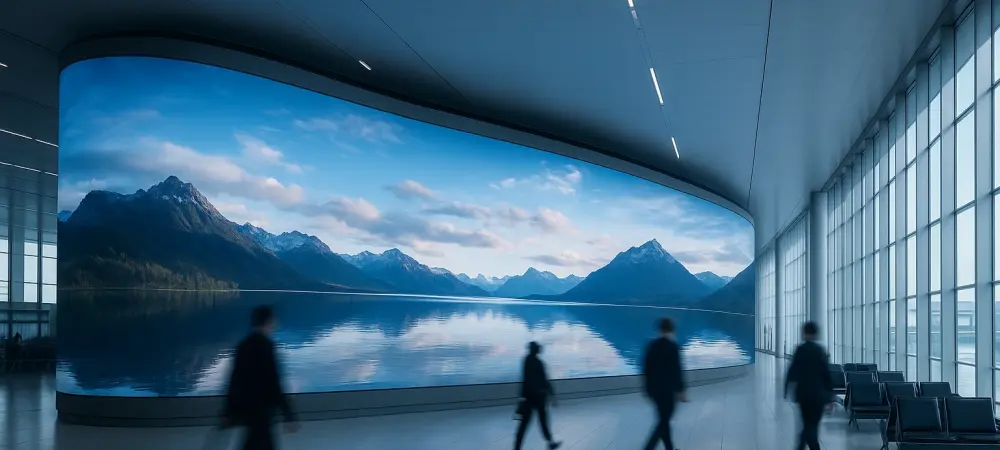
Modern commercial spaces are rapidly transforming into reactive digital environments where static images no longer suffice to capture the fleeting attention of a tech-savvy public. This evolution marks a fundamental shift toward dynamic, AI-driven storytelling. By merging cloud-based Content Management Systems with advanced AI agents, businesses now move beyond simple loops of pre-recorded footage to create truly responsive media ecosystems.
The Evolution of Intelligent Visual Communication
The transition from static displays to AI-driven content represents a major industry pivot. Modern signage integrates hardware giants like Samsung with AI innovators like Idomoo to streamline the user experience.
This collaboration ensures that the technical gap between professional video production and daily operations is effectively closed. The relevance of this technology grows as hardware and software merge into a single, cohesive unit for global messaging.
Technical Framework and Core Functional Components
Modern signage relies on a robust technical foundation where cloud-based platforms interact with integrated AI video agents. This framework allows for a seamless flow from simple data input to complex visual output.
Automated Video Generation: The Lucas AI Agent
Lucas AI functions as a production tool that transforms text prompts into studio-quality content. It handles scriptwriting and animation natively, allowing users to bypass external editing software for faster turnarounds.
This capability streamlines the creative workflow by managing voiceovers and transitions automatically. The agent ensures that the final product maintains a high standard of cinematic quality without the need for manual fine-tuning by human designers.
Integration: The Samsung VXT Ecosystem
Embedding AI directly into the Samsung VXT CMS allows for seamless deployment across global networks. This integration facilitates the conversion of static brand assets into cinematic motion graphics with minimal effort. The performance of this system is defined by its ability to push updates across thousands of screens instantly. This eliminates the friction of manual content uploads, ensuring brand consistency across various display formats and geographic regions.
Innovations: Content Streamlining and Automation
The elimination of the “content bottleneck” is achieved through real-time video rendering. This allows for a “strategy-first” approach where the technical execution is handled entirely by the AI agent rather than a creative team. Autonomous creation reduces the need for specialized production staff, democratizing high-end advertising for smaller businesses. Industry behavior is shifting toward instantaneous deployment, allowing brands to react to market changes or local events in minutes.
Real-World Applications: Enterprise Deployment
Retailers and corporate hubs utilize hyper-personalization to deliver localized messages in high-traffic zones. This ensures that every display remains relevant to its specific surroundings and current audience demographics.
Enterprise implementations rely on ISO-certified security to maintain network integrity during large-scale rollouts. Performance analytics allow businesses to measure the impact of their AI-generated content across global networks with high precision.
Market Challenges: Barriers to Widespread Adoption
Adopters face a learning curve regarding prompt-based creation and long-term brand consistency. It remains difficult to ensure that AI outputs perfectly mirror established corporate identities without at least some manual oversight and quality control. The cost of upgrading legacy hardware to support advanced AI platforms is another significant barrier for many firms. Ongoing development is required to refine AI accuracy and mitigate the creative limitations inherent in early-stage algorithmic design.
Future Outlook: The Path to Autonomous Advertising
The trajectory points toward self-optimizing signage networks that react to audience interactions via deep sensor integration. This will allow displays to adjust content based on real-time environmental data like weather or foot traffic. Deeper integration with generative AI will foster immersive, real-time audience interaction in public spaces. This suggests a future where advertisements are living responses to their environments rather than scheduled static files on a loop.
Summary and Conclusion
The partnership between Samsung VXT and Lucas AI demonstrated how automation bridged the gap between complex production and efficient deployment. This review established that the integration significantly enhanced efficiency while lowering entry barriers for dynamic advertising.
Businesses that adopted these systems successfully prepared for an era of intelligent, instantaneous communication. The move toward autonomous advertising represented a major step in the democratization of high-quality digital media for the global enterprise market.