

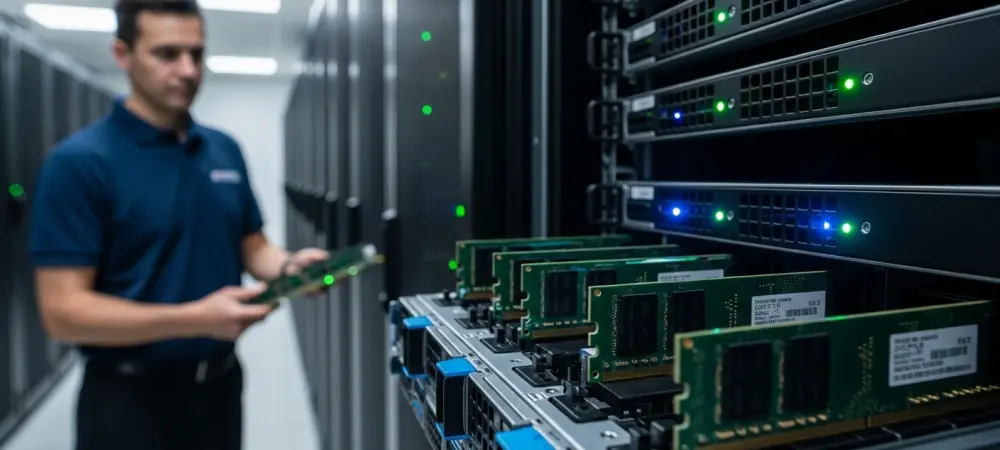
The silent hum of a modern data center is no longer just the sound of processing power; it is the sound of a global financial race where silicon has become more volatile than traditional currency. In 2026, the once-predictable world of hardware procurement has vanished, replaced by a high-stakes digital battlefield where human procurement officers are consistently outpaced by automated algorithms. These sophisticated bots have moved beyond the simple realm of snagging limited-edition sneakers or concert tickets, instead setting their sights on the very components that sustain the global artificial intelligence infrastructure. This evolution marks a transition from simple retail hoarding to a deep-tier exploitation of the components that power the modern data center. This shift represents a fundamental transformation in how supply chains are exploited across the technological landscape. As hyperscale providers move to secure nearly 70% of the global Dynamic Random Access Memory (DRAM) output, the remaining supply has become a playground for professional scalpers. These operators leverage information asymmetry and technical speed to drain inventory before it ever reaches a legitimate industrial or consumer buyer. The result is a fractured ecosystem where essential DDR5 modules are held hostage by middle-men who use the scarcity of AI-focused resources as a weapon for profit.
The High-Stakes Battle: Why DDR5 Became the Prime Target
The pivot toward massive AI workloads has created a structural imbalance that manufacturing plants simply cannot fix overnight. While the tech industry previously focused on individual component sales, the sheer scale of current data center expansion means that manufacturers now prioritize high-density enterprise modules over standard consumer kits. This “crowding out” effect has left the secondary market starving for stock, creating a vacuum that automated scalping operations are eager to fill. The scarcity is not a temporary glitch; it is the byproduct of an infrastructure boom that has outpaced the physical limitations of silicon fabrication.
Furthermore, the lead times required to bring new memory facilities online—often referred to as “greenfield” projects—mean that relief is often years away. In the interim, every fluctuation in production becomes an opportunity for exploitation. Unlike the software world, where scaling can happen with the click of a button, hardware remains tethered to the physical world of logistics and chemistry. This lag between demand spikes and supply responses ensures that the volatility of the DDR5 market remains a lucrative target for those with the tools to monitor it in real-time.
Anatomy of the Raid: The Technical Sophistication of Modern Bots
Modern investigations into these operations reveal a level of engineering that rivals the security systems they aim to bypass. Operators no longer rely on primitive “refresh” scripts that are easily flagged by basic firewall protections. Instead, they employ “day/night” request rhythms that mimic the browsing habits of a human user living in specific time zones. By staying just under the radar of volumetric security thresholds, these bots can maintain a persistent presence on distributor sites without ever triggering a lockout, effectively becoming invisible guests in the digital storefront. The scale of this surveillance is staggering, with some entities making over 10 million requests across a single ecosystem just to track price changes. These operations utilize advanced “cache-busting” techniques, appending unique parameters to every HTTP request to force servers to provide live, unbuffered data. This ensures the bot sees a restock the exact millisecond it happens, long before a human refreshing a browser could ever hope to react. The goal is total information dominance, allowing scalpers to buy out entire batches of memory modules before they are even visible to the general public.
Upstream Exploitation: Monitoring the Building Blocks of Hardware
Perhaps the most alarming evolution in this space is the shift from monitoring finished products to tracking upstream components. Scalpers are no longer just watching for packaged RAM kits; they are now scraping data on the availability of physical DIMM and CAMM2 sockets. By analyzing the inventory of these connectors, which are essential for manufacturing motherboards and laptops, they can predict future shortages of the memory modules themselves. This predictive approach allows them to corner the market on specific hardware configurations weeks before the actual supply crunch hits the retail level.
This strategy has widened the impact of scalping to include B2B markets and industrial sectors. Essential infrastructure, such as networking equipment and industrial PCs, now faces the same price volatility once reserved for gaming hardware. When a scalper identifies a bottleneck in the supply of CAMM2 connectors, they immediately move to hoard the compatible memory modules, effectively paralyzing small-scale industrial manufacturers who rely on those parts for their own production lines. It is a deep-tier exploitation that threatens the stability of more than just the consumer electronics market.
The Economic Fallout: From Arbitrage to Industrial Disruption
The financial consequences of this automated intervention are extreme, with some DDR5 kits seeing price markups that defy traditional market logic. A module originally intended to retail for approximately $118 has been seen listed on secondary markets for upwards of $830—a staggering seven-fold increase. This mirrors the volatility previously seen in the high-end GPU market, where flagship cards like the RTX 5090 faced similar markups. However, while a GPU shortage affects entertainment and creative work, a memory shortage impacts every facet of modern computing, from server stability to automotive safety systems.
Professional arbitrage has turned what was once a nuisance into a systematic drain on corporate budgets. Small to medium-sized enterprises are frequently forced to turn to these secondary markets when traditional distributors run dry, paying “scalper premiums” just to keep their operations running. This creates a cycle where the profits from one successful scalping run fund the development of even more sophisticated bots, leading to an escalating arms race between hardware buyers and digital hoarders. The infiltration of these bots into business-to-business catalogs signals a new era of supply chain insecurity.
Strategic Mitigation: How Organizations Can Secure Their Supply
Addressing this crisis required a departure from traditional procurement methods toward a more proactive defense strategy. Organizations discovered that simple bot-blocking software was insufficient; instead, they turned to advanced behavioral analysis to identify the “step-function” traffic patterns characteristic of mechanical browsing. Security teams shifted their focus toward closing the information gaps in their B2B catalogs, ensuring that predictive data regarding upstream components remained hidden from public-facing scrapers. These technical adjustments became the first line of defense in reclaiming the integrity of the hardware market.
Furthermore, diversifying the vendor base and establishing direct “die-level” relationships with major producers like Samsung or Micron proved essential for long-term stability. By bypassing the traditional retail and distribution layers where scalpers thrive, industrial buyers were able to insulate themselves from the artificial price spikes of the secondary market. Moving forward, the industry realized that the only way to combat automated exploitation was to integrate security directly into the supply chain itself. This transition toward a more transparent and secured procurement model offered a clear path to stabilizing the memory ecosystem against the relentless pressure of AI-driven demand.