

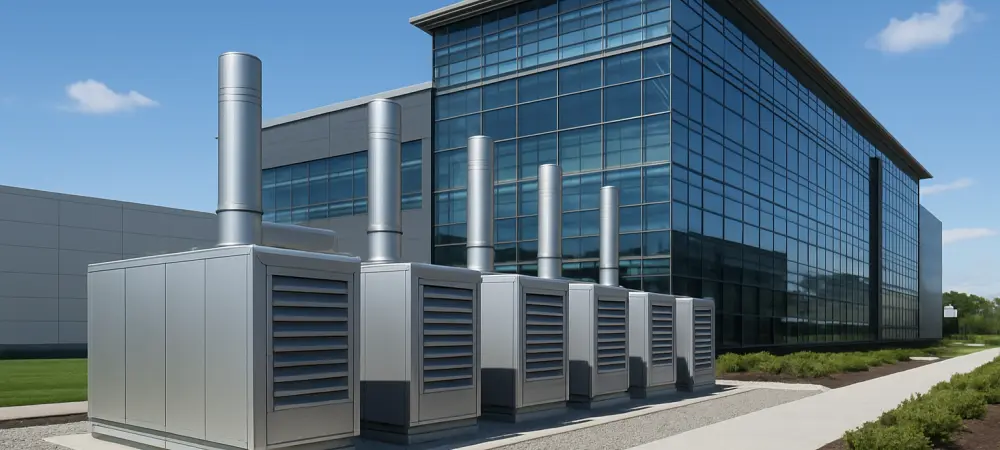
The massive hum of server racks at the world’s newest artificial intelligence hubs no longer echoes from the heart of the municipal electrical grid but from private, gas-fired power stations humming quietly just a few hundred yards away. This shift marks a fundamental departure from the traditional data center model, where facilities acted as passive consumers of utility-provided electricity. Today, the sheer scale of the power required for generative AI training and inference has outstripped the physical capacity of the nation’s aging energy infrastructure. As a result, the industry is entering a new era of radical energy independence, prioritizing “speed to power” above nearly all other logistical considerations.
This transition is not merely a matter of convenience; it is a defensive response to a systemic failure. The rapid deployment of AI software has moved at a pace that physical utility upgrades simply cannot match, creating a friction point that threatens to stall the largest technological expansion of the century. When software cycles are measured in months and grid upgrades are measured in years, the only viable solution for developers is to bring the power plant to the computer, rather than trying to bring the computer to the power plant. This reality has forced a pragmatic embrace of natural gas as the primary catalyst for the next generation of digital growth.
The Four-Year Wait: Why the AI Boom Is Bypassing the Traditional Grid
The collision of unprecedented AI power demand and a stagnant national electrical infrastructure has created a landscape where traditional development cycles are no longer feasible. Developers are finding that while they can build a state-of-the-art data center in less than two years, the wait time to connect that facility to the grid often extends well beyond that timeframe. This widening gap between the rapid deployment of AI software and the slow pace of physical utility upgrades has turned the energy procurement process into the most significant bottleneck in the industry. In this environment, “speed to power” has emerged as the primary metric for data center developers, often outweighing tax incentives or labor availability. The competitive landscape of the AI sector is such that a six-month delay in bringing capacity online can result in the loss of billions in potential market value. Consequently, developers are increasingly looking for locations where they can generate their own electricity, bypassing the bureaucratic and physical hurdles of the regional transmission organization and the local utility.
The Grid Interconnection Bottleneck and the Rise of Energy Independence
The shift from manageable development timelines to a systemic backlog has transformed the data center sector from a consumer group into a group of active, independent power producers. Analyzing the landscape today reveals a backlog for grid connections that frequently stretches across a four-year window, a timeline that is commercially non-viable for hyperscalers racing to secure market share. This backlog is not just a regional issue but a national one, driven by a lack of high-voltage transmission capacity and a shortage of large-scale transformers.
By opting for energy independence, data centers can control their own destiny. The transition allows companies to break free from the uncertainty of utility-scale infrastructure projects that are often mired in litigation, permitting delays, and technical failures. This movement toward self-generation is not just about avoiding wait times; it is about securing a level of operational certainty that the traditional grid can no longer guarantee in an era of climate volatility and surging demand from other sectors.
Island Mode: Engineering a Self-Sustained Ecosystem
To address these challenges, the industry has adopted “Island Mode” and “Behind-the-Meter” generation as the new standard for high-density projects. These configurations involve co-locating high-performance computing clusters with on-site thermal generation, allowing the facility to operate entirely independently of the local utility grid. Market data insights indicate a massive surge in off-grid project announcements since the beginning of 2025, with developers increasingly favoring natural gas as the only dispatchable fuel source capable of meeting the strict “five nines” reliability standards required for AI operations.
Natural gas provides a unique technological synergy when integrated with modern power engineering. Developers are now pairing high-efficiency gas turbines with Battery Energy Storage Systems (BESS) and inertial compensators to mirror the frequency stability of a traditional grid connection. This combination ensures that the sensitive hardware within the data center is protected from the fluctuations common in smaller, isolated power systems. By engineering a self-sustained ecosystem, data center operators can ensure 24/7 uptime without the risk of regional blackouts or curtailments.
Expert Perspectives on the Pragmatic Bridge to the Future
There is a growing industry consensus that while wind, solar, and small modular reactors are essential for a long-term sustainable future, they currently fall short of immediate baseload requirements. Intermittent renewables cannot provide the constant, high-density energy flow needed for modern GPUs without massive, and currently expensive, storage solutions. Similarly, small modular reactors, while promising, are still years away from widespread commercial deployment. This leaves natural gas as the pragmatic bridge, providing the immediate operational capacity necessary to keep the AI sector moving forward.
The Federal Energy Regulatory Commission has responded to this shift with recent mandates aimed at increasing transparency and efficiency in the connection process, but these changes will take years to manifest on the ground. In the interim, the trade-off between long-term carbon neutrality goals and the immediate necessity of operational capacity has become a central theme in corporate boardrooms. Most major technology firms are still committed to a zero-carbon future, but they are increasingly viewing on-site gas generation as a temporary but essential tool to bridge the gap until the grid catches up.
Strategies for Implementing Off-Grid AI Infrastructure
Successfully implementing off-grid infrastructure requires navigating a complex regulatory landscape where prioritizing air permits over transmission interconnection agreements is the new rule. Because air permits are handled at a different regulatory level and often follow more predictable timelines than transmission upgrades, they have become the preferred path for rapid deployment. Furthermore, engineering teams must focus on redundancy frameworks, often over-building generation capacity to compensate for individual turbine maintenance cycles, ensuring that the facility never loses power during routine repairs.
Supply chain management has also become a critical component of the off-grid strategy. Securing long-lead items like gas turbines and specialized transformers in a high-demand market requires advanced procurement strategies and deep relationships with manufacturers. By transitioning from utility reliance to sophisticated on-site fuel procurement and power engineering, data center operators are effectively becoming their own utility companies. This shift mitigates the risk of external grid failures and places the responsibility for reliability directly in the hands of the developers, who are now as much energy experts as they are technology experts. The technology sector effectively redrew the map of industrial energy by treating power as a localized product rather than a utility service. This transition highlighted the necessity for developers to engage in early fuel-supply negotiations and to integrate thermal engineering into their core operational teams. By internalizing power generation through natural gas, the industry ensured that the computational demands of the modern era were not throttled by the limitations of a central grid that remained years behind the curve. This strategic pivot provided the resilience needed for continued innovation while the broader energy infrastructure began the slow process of modernization.