

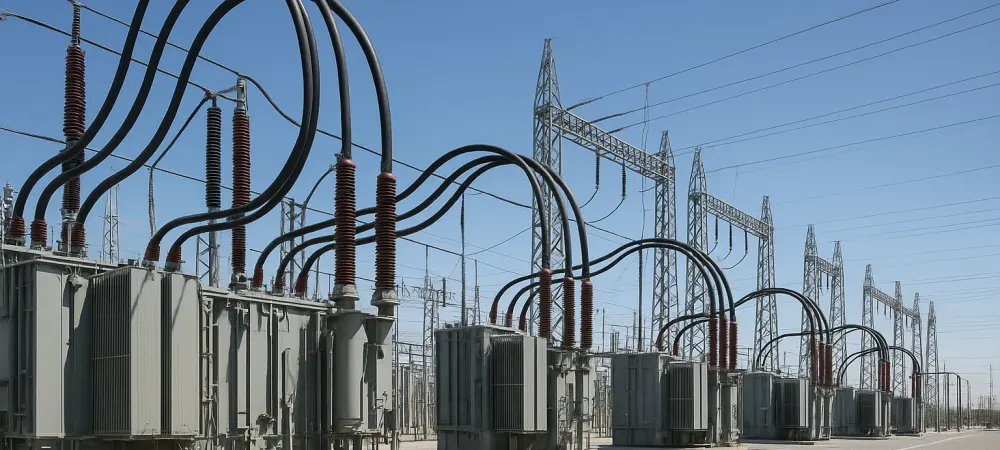
The unrelenting expansion of artificial intelligence has pushed the limits of global power systems beyond their structural breaking point, necessitating a radical shift toward autonomous energy ecosystems. As the industry moves deeper into 2026, the traditional model of relying on centralized utility grids has become a strategic liability for hyperscale operators. The transition from general-purpose cloud computing to high-density generative AI demands has fundamentally altered the thermal and electrical profiles of modern data centers. While a standard cloud rack might draw 10 to 15 kilowatts, modern AI clusters equipped with the latest liquid-cooled GPUs are pushing those requirements toward 100 kilowatts per rack or higher. This explosive growth in power density is not merely a technical challenge but a complete paradigm shift that requires a review of the entire energy value chain, from generation to point-of-load delivery.
The core principles of this new infrastructure revolve around modularity, resilience, and speed. In the current technological landscape, the emergence of AI has compressed development cycles, meaning that a facility built today must be capable of scaling its power intake by an order of magnitude within just a few years. This evolution has forced a departure from the “just-in-time” energy procurement strategies of the past toward a “power-first” development model. The context of this shift is rooted in the physical limitations of the existing electrical grid, which was never designed to handle the localized, massive, and constant loads that AI training models require. Consequently, the industry is seeing the rise of a new class of energy infrastructure that functions more like a private utility than a traditional consumer of public power.
Evolution of AI Power Requirements and Infrastructure
The shift from traditional cloud workloads to generative AI has redefined the fundamental architecture of data center power delivery. Traditional cloud computing was characterized by fluctuating demands that followed human activity cycles, allowing for a certain level of oversubscription in power and cooling. In contrast, AI training runs are characterized by a “flat-line” power profile, where thousands of processors operate at maximum capacity for weeks or months at a time. This constant, high-intensity load places extreme stress on electrical components, requiring a more robust design that prioritizes thermal management and continuous energy flow. The infrastructure has evolved from simple power distribution units to complex, AI-optimized power trains that utilize high-voltage direct current (HVDC) to minimize conversion losses and maximize efficiency.
This evolution is most visible in the broader technological landscape through the mass adoption of liquid cooling technologies. As air cooling reaches its physical limits at approximately 30 kilowatts per rack, the industry has transitioned toward rear-door heat exchangers and direct-to-chip liquid cooling. This shift does more than just manage heat; it changes the energy requirements of the facility by reducing the power overhead previously dedicated to massive fan arrays and traditional chillers. By 2026, the focus has shifted toward the integration of these cooling systems directly with the power infrastructure, creating a symbiotic relationship where heat from the chips is captured and potentially repurposed for local heating or industrial processes. This level of integration is what differentiates modern AI data centers from the sprawling, air-cooled warehouses of the previous decade.
Primary Energy Sources and Delivery Mechanisms
Natural Gas and Reciprocating Engines
Natural gas has solidified its position as the dominant baseload power source for high-scale AI campuses, primarily due to its reliability and the relative speed at which infrastructure can be deployed. While solar and wind are desirable for sustainability, their intermittency remains a significant hurdle for facilities that require 99.999% uptime. Natural gas provides a constant energy stream that can be scaled alongside the data center’s growth. The use of reciprocating internal combustion engines has become particularly significant in this context. Unlike large-scale turbines that take time to spin up, these engines can respond rapidly to the fluctuating loads of GPU clusters, providing a critical buffer during the initial stages of a training run or during sudden power surges.
The technical performance of these engines is a key differentiator in the quest for operational stability. By utilizing on-site gas generation, operators can bypass the constraints of the local electrical grid, ensuring that a facility remains operational even when the public utility is under stress. Furthermore, these systems often incorporate heat recovery units that capture the thermal energy generated during combustion, further improving the overall efficiency of the site. In the high-stakes environment of AI development, where a single power dip can ruin weeks of expensive training progress, the “firm” power provided by natural gas remains the gold standard for performance, despite the ongoing pressure to transition to greener alternatives.
Behind-the-Meter Microgrids and Interconnection
The move toward localized electricity systems, or microgrids, represents a strategic decoupling from the public utility grid. This transition is driven by the increasing frequency of grid bottlenecks, where the “time-to-power” for a new facility can stretch to five or seven years due to interconnection delays. By building “behind-the-meter,” data center operators are taking control of their own energy destiny. These microgrids integrate various power sources—including on-site generation, battery storage, and sometimes a smaller utility connection—into a single, managed ecosystem. This allows for a massive reduction in the time it takes to bring a new AI cluster online, as the facility does not have to wait for the utility to upgrade local substations or transmission lines.
Technical aspects of these microgrids involve sophisticated software controllers that can balance load and supply in real-time, switching between sources based on cost, availability, and carbon intensity. In real-world usage, this has allowed hyperscalers to deploy massive “islanded” campuses that can operate entirely independently of the local grid during peak demand periods. This capability not only protects the data center from community-wide blackouts but also alleviates the strain on public infrastructure, potentially reducing the “NIMBY” (Not In My Backyard) resistance from local residents who fear that data centers will consume all available community power. The microgrid is thus the primary tool for achieving the speed and scale required by the AI sector.
Alternative Power Technologies: Fuel Cells and SMRs
As the industry seeks to balance speed with environmental responsibility, fuel cells have emerged as a compelling “middle ground” technology. These systems offer a cleaner local profile than traditional combustion engines, as they generate electricity through an electrochemical process rather than burning fuel. While many current fuel cell deployments still rely on natural gas, they emit significantly fewer pollutants such as NOx and SOx, making them easier to permit in urban or suburban environments. Their modular nature allows for incremental scaling, where power modules can be added as more AI racks are installed, providing a flexible and relatively low-impact energy solution for the current 2026 to 2028 development window.
Looking further ahead, the technical promise of Small Modular Reactors (SMRs) has become the centerpiece of long-term energy planning. SMRs offer a high-density, carbon-free energy solution that is perfectly matched to the needs of a hyperscale AI campus. Unlike traditional large-scale nuclear plants, SMRs are designed to be manufactured in a factory and shipped to the site, theoretically reducing capital costs and construction timelines. While they are not yet in wide commercial use, the industry is moving toward a future where a single data center campus could be powered by its own dedicated nuclear reactor. This would provide the ultimate combination of high-density power, zero-carbon emissions, and complete grid independence, although the regulatory and waste-management hurdles remain substantial.
Emerging Trends in Energy Procurement and Grid Independence
A pivotal shift in the energy landscape is the evolving priority from “clean” energy toward “fast” energy. In the hyper-competitive race to achieve artificial general intelligence, the cost of a six-month delay in deploying a new GPU cluster far outweighs the premium paid for a localized, gas-powered energy solution. This pragmatism has led to a surge in projects that prioritize immediate availability over long-term sustainability goals. However, this is not a total abandonment of environmental targets; rather, it is a sequential approach where “fast” energy is used to establish a foothold, with plans to transition toward hydrogen-ready engines or SMRs as those technologies mature and become available.
Moreover, the trend toward complete decoupling from public utility grids is accelerating. Operators are increasingly viewing the utility grid as a secondary or backup source rather than the primary provider. This move toward grid independence is driven by the need for operational survival in regions where the grid is already at capacity. By becoming self-generators, data center companies are effectively transforming into energy companies. This shift has significant implications for energy procurement, as it requires operators to secure long-term fuel supplies and manage complex energy generation assets, a task that was previously left to the utilities. The result is a more resilient, but also more capital-intensive, infrastructure model.
Industrial Applications and Sector Implementation
The real-world application of this high-capacity energy infrastructure is most evident in the massive “AI factories” being deployed by tech giants and specialized cloud providers. These are not typical data centers; they are vast industrial campuses designed specifically for the rigorous demands of model training. In sectors like finance and healthcare, where AI is used for real-time market analysis and genomic sequencing, the requirement for massive, uninterrupted compute power is absolute. For instance, the deployment of facilities like “Project Jupiter” showcases the scale of this implementation, utilizing hundreds of megawatts of on-site fuel cells and reciprocating engines to sustain a global AI research hub.
Beyond the tech sector, research institutions are also adopting these localized power plants to support their own hyperscale facilities. These implementations often serve as testing grounds for new technologies, such as enhanced geothermal systems or long-duration energy storage. In these high-stakes applications, the energy infrastructure is as critical as the silicon itself. The ability to maintain stable power during a catastrophic grid failure is not just a matter of convenience; it is a matter of protecting the multi-billion-dollar investments made in the hardware and the data being processed. These campuses represent the first generation of truly energy-independent industrial facilities in the 21st century.
Strategic Challenges and Regulatory Hurdles
Despite the rapid advancement of on-site power technology, the industry faces daunting strategic and regulatory challenges. The “NIMBY” resistance remains a potent force, as local communities often oppose the construction of massive gas-powered plants or nuclear reactors in their vicinity. This social hurdle is often compounded by the environmental impact of infrastructure waste. For example, while solar and battery storage are viewed as “green,” the long-term cost and environmental footprint of recycling retired solar panels and lithium-ion batteries are significant. Operators must now navigate a complex web of local zoning laws, environmental regulations, and community concerns that can delay a project as much as any technical bottleneck.
Regulatory obstacles surrounding the next generation of energy, particularly nuclear and geothermal, are equally formidable. The permitting process for a nuclear reactor, even a small modular one, remains geared toward large-scale utility projects and can take years to navigate. Similarly, geothermal energy faces challenges related to drilling rights and potential seismic activity. The massive capital costs associated with these advanced technologies also pose a barrier to entry for smaller players, further consolidating the AI market among a few well-funded hyperscalers. To mitigate these limitations, ongoing development efforts are focused on creating more transparent community engagement models and streamlining the regulatory pathway for carbon-free, high-density power sources.
Future Outlook and Technological Trajectories
The trajectory of AI data center energy infrastructure points toward a future defined by the commercial viability of Small Modular Reactors and enhanced geothermal systems. By 2030, the first wave of SMRs is expected to enter the commercial market, offering a blueprint for the next generation of carbon-neutral, grid-independent campuses. This shift will likely be supported by breakthroughs in long-duration storage, such as iron-air batteries or thermal energy storage, which can mitigate the intermittency issues of solar and wind. These advancements will allow data centers to move away from the “bridge” fuel of natural gas and toward a truly sustainable energy profile without sacrificing the reliability required for AI training.
In the long term, the rise of energy-independent data centers may have a transformative impact on the global energy grid. As these massive consumers of power become self-sufficient, the traditional utility model may need to be restructured. Data centers could eventually transition from being a burden on the grid to being a resource, providing excess carbon-free power back to the community during times of low demand. This symbiotic relationship would represent the final stage in the evolution of AI energy infrastructure, where the search for compute power ultimately leads to a more resilient and sustainable energy future for everyone.
Summary of Findings and Industry Assessment
The review of the AI data center energy infrastructure identified a clear and pragmatic shift toward self-sufficiency and localized power generation. The transition was dictated by the immediate necessity to overcome grid bottlenecks and the high-density requirements of generative AI hardware. It was observed that natural gas and reciprocating engines served as the primary bridge technology, providing the “fast energy” required to maintain the current pace of AI development. The move toward microgrids and behind-the-meter solutions demonstrated a significant evolution in how hyperscale operators managed their energy risk, effectively transforming these entities into private utility providers to ensure their operational survival.
The industry successfully recognized that the limitations of the public grid could no longer be ignored, leading to a surge in innovation across fuel cells, SMRs, and cooling-integrated power trains. While the challenges of community resistance and regulatory hurdles remained persistent, the strategic focus on reliability and speed-to-market proved to be the decisive factor in the deployment of new AI campuses. The assessment indicated that while the sector is currently reliant on carbon-intensive sources for its immediate needs, the foundational work for a nuclear and geothermal future was firmly established. Ultimately, the adaptation of the energy landscape to the demands of artificial intelligence has set the stage for a broader redesign of the global power infrastructure, prioritizing autonomy and high-density production for the challenges of the late 21st century.