

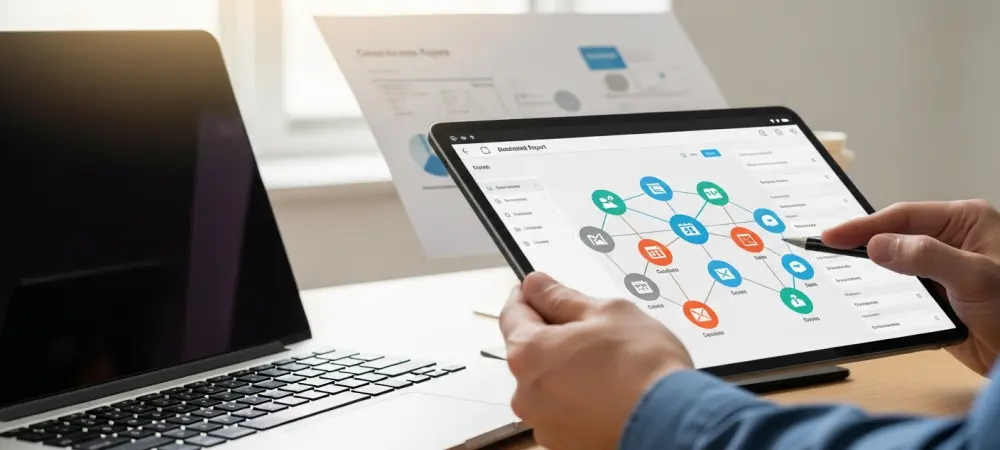
High-performance professionals currently navigate a fragmented landscape where the average knowledge worker spends more time managing software interfaces than performing the strategic tasks for which they were originally hired. This pervasive inefficiency represents a turning point in the evolution of the workplace, necessitating a shift from disparate productivity applications toward the era of the integrated AI coworker. These digital entities are no longer isolated chatbots or simple search assistants; instead, they function as proactive, persistent teammates that reside within the communication hubs of an organization. By bridging the gap between various software stacks and executing complex workflows independently, these agents are transforming the fundamental nature of professional activity. This transition marks the end of the manual request-response cycle and the beginning of a collaborative environment where humans act as directors of automated systems rather than data entry laborers.
The emergence of AI coworkers addresses a critical structural flaw in the modern office environment that has long hindered true progress. For years, the introduction of new software was intended to streamline operations, yet the result was often the opposite, creating more silos and increasing the cognitive load on employees. Modern professionals find themselves trapped in a loop of administrative maintenance, where the simple act of coordinating work takes precedence over the work itself. The arrival of digital teammates changes this dynamic by moving the intelligence into the center of the conversation, allowing for a more fluid exchange of information and a drastic reduction in the time spent on low-value coordination. This evolution signifies a move toward a workspace that is not only faster but also more intuitive, where the technology anticipates needs rather than merely reacting to commands.
As the role of the knowledge worker continues to evolve, the distinction between manual labor and strategic oversight becomes increasingly clear. Workers are moving away from the “data labor” model, which requires them to manually track down information across multiple dashboards and status trackers. Instead, they are stepping into roles as strategic directors who guide the AI coworkers to perform the heavy lifting of data synthesis and routine communication. This shift empowers employees to focus on high-impact projects that require emotional intelligence, complex problem-solving, and creative innovation. The integration of these digital counterparts represents a profound cultural change, redefining what it means to be productive in a world where the mechanical aspects of work are handled by persistent, context-aware intelligence.
The Hidden Burden of the Modern Digital Workspace
The modern digital environment often operates under the illusion of efficiency while harboring a significant amount of administrative friction that drains employee energy. Although software access has never been greater, the sheer volume of disconnected tools has led to widespread worker fatigue and a sense of being overwhelmed by the very systems designed to help. This fragmentation requires a constant mental effort to remember where specific data lives, which platform to use for a particular task, and how to keep every stakeholder informed. The solution lies in the transition from these fragmented tools to cohesive AI coworkers that act as a unifying layer across the enterprise. These entities do not just add another tab to the browser; they sit at the intersection of all existing tools to provide a seamless experience that restores focus to the primary objectives of the team.
Moving beyond the manual request-response loop is the essential first step in reclaiming the lost hours of the work week. Traditional AI tools often require a high degree of human intervention, necessitating a specific prompt for every minor action, which creates a new form of “prompt fatigue.” In contrast, proactive digital teammates monitor the flow of work and suggest actions or complete background tasks without needing constant direction. For instance, an AI coworker might recognize that a client meeting has concluded and automatically draft a summary, update the project board, and prepare follow-up emails for review. This level of integration removes the cognitive burden of remembering the “next steps,” allowing the human professional to maintain their flow state and focus on the substantive content of their professional contributions.
The evolution of the knowledge worker is currently shifting from being a manual data laborer toward a strategic director of automated processes. This change is not merely about doing things faster; it is about changing the hierarchy of tasks within a typical day. When a digital teammate handles the retrieval of data and the initial drafting of reports, the human worker is free to apply their unique context and expertise to the final output. This partnership creates a more fulfilling work experience, as employees are no longer bogged down by the mechanical aspects of their jobs. By delegating the repetitive and administrative functions to an AI coworker, the modern professional can dedicate their mental resources to the areas where they provide the most value, such as relationship management, ethical decision-making, and long-term planning.
Analyzing the Productivity Paradox: The Cost of Manual Data Bridging
The “work about work” crisis has reached a critical point, with recent studies indicating that a staggering 58% of the average work week is lost to administrative overhead. This phenomenon encompasses the time spent searching for files, providing status updates, and moving information between different departments. Instead of engaging in deep, meaningful work, employees are often relegated to the role of a human bridge between software applications. This administrative friction creates a massive gap between potential and actual output, as the mental energy required to manage the logistics of a task often exceeds the energy required to complete the task itself. The economic reality of this overhead is profound, leading to a landscape where growth is stifled by the weight of internal bureaucracy and digital clutter.
Application sprawl has become a significant liability for the modern enterprise, with the average organization now managing nearly 1,000 separate applications across its various departments. Because these tools rarely communicate with one another effectively, workers are forced to perform “manual data bridging,” which involves switching contexts and applications upwards of 1,100 times per day. This constant toggling has a devastating impact on focus and mental clarity, as the brain requires significant time to refocus after every interruption. The cumulative effect of these micro-distractions is a state of perpetual cognitive fragmentation, where high-level thinking is sacrificed in favor of the immediate demands of software management. This environment not only reduces productivity but also contributes to burnout and a lack of job satisfaction among talented professionals.
Quantifying the cost of this digital friction reveals a startling financial impact on organizations of all sizes. For a team of just ten managers, the time lost to low-value administrative tasks and manual data movement can translate to over half a million dollars in annual lost productivity. This figure represents the “hidden tax” on innovation, where funds that could be used for research, development, or employee growth are instead consumed by the inefficiency of the digital workspace. By implementing AI coworkers to handle these routine bridges, companies can reclaim this lost capital and reallocate it toward initiatives that drive competitive advantage. Addressing the productivity paradox is no longer a luxury; it is a strategic necessity for any organization looking to thrive in a highly competitive and fast-moving global market.
The Categorical Shift: From Generative Tools to Autonomous Digital Teammates
There is a fundamental difference between an external AI assistant and an internal, integrated AI coworker that is often misunderstood. Generative tools, while powerful, typically exist as separate entities that require the user to bring data to them and then manually export the results back into the work environment. An AI coworker, however, is built directly into the fabric of the organization’s communication and data systems. This integration allows the agent to understand the specific context of a company’s operations, culture, and ongoing projects. Instead of providing generic advice, the AI coworker provides specific, actionable support that is grounded in the reality of the team’s current needs, making it a true participant in the workflow rather than just a sophisticated search engine.
Slack has emerged as the de facto headquarters for modern decision-making and the primary environment for AI integration. Because the most important conversations and decisions happen within this communication hub, it is the most logical place for a digital teammate to reside. By living within Slack, an AI coworker can observe the nuances of a project’s progress and offer assistance exactly when and where it is needed. This proximity to the team allows for the democratization of information, as the agent can pull data from silos like HubSpot, Notion, or Jira and present it within the shared conversation. This transparency ensures that everyone on the team has access to the most recent data without having to navigate multiple complex software interfaces, thereby accelerating the pace of decision-making.
One of the most transformative aspects of the digital teammate is the “Guarantee of Follow-Through,” which ensures that the final stages of a project are never neglected. In many organizations, tasks often stall at the “last mile” because humans become distracted by new priorities or simply forget the administrative details required to close a file. An AI coworker maintains a persistent memory of every open thread and pending action, acting as a tireless project manager that prepares drafts and updates in the background. Whether it is ensuring a follow-up email is sent after a proposal or confirming that a status change in Jira has been communicated to the marketing team, the AI coworker provides a level of operational reliability that was previously impossible to maintain manually.
Expert Insights: The Psychology of Authorship and Human Judgment
Research from leading organizations like McKinsey and Asana has highlighted the specific hours lost to internal coordination and the relentless influx of email. These findings suggest that the traditional methods of managing communication are no longer sufficient to handle the complexity of the modern workplace. However, as organizations turn toward automated solutions, experts warn of the risk of “metacognitive laziness.” To counter this, the most effective AI coworkers are built around the “Authorship Paradigm,” which emphasizes human co-creation. This approach ensures that the human remains the primary architect of the work, using the AI to handle the legwork while maintaining full control over the creative and strategic direction.
Prioritizing the Authorship Paradigm is essential for building trust and ensuring the long-term adoption of AI systems within a professional team. When employees feel like they are collaborating with a digital teammate rather than just being replaced by a machine, they are more likely to embrace the technology. This collaborative model allows for a more nuanced output that reflects the unique voice and standards of the organization. Human co-creation ensures that the final product is not just a collection of data points but a meaningful contribution that aligns with the broader goals of the business. By focusing on authorship, organizations can leverage the speed of AI without sacrificing the quality and integrity that only human professionals can provide. The irreplaceable human element in the workplace remains centered on contextual prioritization, relationship nuance, and ethical oversight. While an AI coworker can analyze thousands of data points in seconds, it lacks the ability to understand the subtle political or personal dynamics that often influence business decisions. Human judgment is required to navigate these complexities and to make calls that go beyond what the data suggests. Moreover, ethical oversight is a critical human responsibility, ensuring that the actions of the AI align with the company’s values and social responsibilities. The synergy between AI-driven efficiency and human-driven judgment creates a robust operational framework where the mechanical and the emotional work together to achieve superior results.
Practical Strategies: Onboarding and Leveraging an AI Workforce
Successful AI integration should be treated with the same level of care and attention as onboarding a high-performing new hire. This “Recurrence Dividend” approach recognizes that the more time invested in training the AI on a team’s specific preferences and rules, the greater the return on that investment over time. Organizations should establish clear protocols for how the AI coworker interacts with existing systems and what specific tasks it is responsible for managing. By treating the AI as a growing member of the team, managers can ensure that it becomes more useful every day, eventually reaching a point where it can handle complex recurring workflows with minimal supervision. This initial investment in setup and training is the key to unlocking the full potential of a digital workforce.
Transitioning away from manual data bridging requires a strategic framework for automated workflow execution. Teams should identify the most common “bridges” they perform daily—such as moving information from a meeting note into a project management tool—and prioritize these for automation. By creating a map of the data flow within the organization, leaders can identify the bottlenecks where human intervention is currently required but not necessarily valuable. Implementing AI coworkers to handle these specific points of friction allows the entire system to move more fluidly, reducing the time from information capture to action. This methodical approach to automation ensures that the transition is smooth and that the most significant pain points are addressed first.
One of the most rewarding outcomes of leveraging an AI coworker is the ability to resurrect the “Important but Not Urgent” quadrant of the productivity matrix. Most teams have a backlog of high-leverage projects that are constantly pushed aside by the “urgent” demands of daily administrative maintenance. By delegating those urgent but mechanical tasks to an AI teammate, professionals can finally dedicate time to deep work, such as competitive analysis, long-term strategy, and professional development. This reallocation of cognitive energy from the mechanical to the innovative is what ultimately drives business growth and individual career satisfaction. The future of productivity is not about working more hours, but about ensuring that every hour spent is dedicated to the highest possible value.
The integration of autonomous digital entities into the daily workflow changed the fundamental definition of professional achievement. Organizations shifted their focus from tracking activity to measuring output and strategic impact. This evolution prioritized human intuition while delegating mechanical repetition to persistent, integrated systems. Leaders recognized that the true value of their human capital resided in judgment and creativity rather than administrative agility. The move toward a collaborative digital workforce redefined the boundaries of organizational potential, creating a landscape where innovation flourished through the reduction of cognitive friction. The successful onboarding of these digital teammates served as the final step in moving beyond the limitations of traditional software toward a more fluid and intelligent professional environment. Organizations that embraced this model moved closer to a state where work was no longer a series of hurdles to be cleared, but a continuous stream of value creation.