

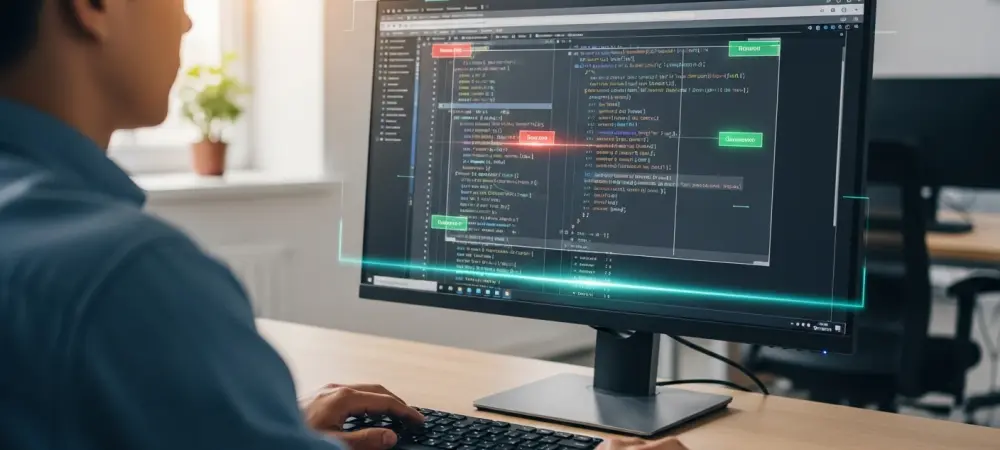
The rapid proliferation of AI coding assistants has unlocked unprecedented productivity for software developers, but this revolutionary leap forward simultaneously introduces a subtle yet systemic security risk that organizations are only now beginning to confront. AI-Generated Code represents a significant advancement in the software development sector. This review will explore the evolution of this technology, its key security implications, the emerging solutions designed to mitigate risks, and the impact it has had on DevSecOps practices. The purpose of this review is to provide a thorough understanding of the technology, its current security challenges, and its potential future development in creating more secure applications.
The Dawn of AI-Assisted Software Development
The core principle behind AI coding assistants involves their deep integration into the software development lifecycle to suggest, complete, and even generate entire blocks of code. The emergence of powerful tools like Amazon Web Services’ (AWS) Kiro has dramatically accelerated code production, allowing developers to build applications faster than ever before. These tools function as intelligent partners, working directly within the developer’s environment to streamline routine tasks and solve complex problems.
However, this acceleration comes at a cost. The very mechanism that makes these tools so effective—learning from vast datasets—also introduces a new class of security risks. As their adoption becomes mainstream, these assistants are fundamentally reshaping not only how developers write code but also how security teams must approach application security. The relevance of understanding and mitigating these risks is paramount for any organization looking to leverage AI without compromising its security posture.
A New Security Paradigm for an AI-Driven World
Real-Time Detection in the Developer’s Workspace
To address the novel security challenges posed by AI, a new model of integrated, real-time security analysis is emerging. A prime example is the integration of Checkmarx Developer Assist into AWS Kiro, which operates as a security analysis tool directly within the developer’s Integrated Development Environment (IDE). The extension actively scans source code and dependencies in the developer’s workspace at the precise moment the AI generates code, providing immediate feedback on potential vulnerabilities.
The significance of this approach lies in its ability to connect the developer’s immediate coding context with the organization’s overarching security strategy. By applying security policies from the central Checkmarx One platform at the earliest possible stage of development, the tool ensures that compliance and security standards are met from the first line of AI-generated code. This creates a continuous feedback loop that educates developers on secure coding practices as they work.
Shifting Security Left from the Pipeline to the IDE
This integrated model represents a strategic shift from traditional, post-commit security scanning to proactive, pre-commit vulnerability remediation. By surfacing security flaws the instant they are created, developers are empowered to fix issues immediately, long before the code is ever committed to a repository. This process transforms security from a downstream gate that often causes delays into an intrinsic, seamless part of the coding process itself.
The potential impact of this shift is profound. By embedding security directly into the developer’s workflow, organizations can eliminate a vast majority of vulnerabilities before they enter the DevOps pipeline. This “shift left” approach not only enhances security but also improves developer productivity by reducing the friction and rework associated with fixing bugs discovered late in the development cycle.
The Evolving Threat Landscape of AI Development
As AI coding tools become more prevalent, a consensus is forming among industry experts that while these tools accelerate development, first-generation iterations are paradoxically making applications less secure. The primary reason is that the Large Language Models (LLMs) they are built on are often trained on immense repositories of public, open-source code. These datasets frequently contain pre-existing security flaws, which the AI then learns and replicates at an unprecedented scale. This phenomenon creates a situation where vulnerabilities are introduced into new codebases faster than traditional security scanners can detect them. DevSecOps teams must now operate under the assumption that the overall state of application security is likely to degrade before it improves, as the volume of AI-generated code outpaces the evolution of legacy security tools.
Strategic Impact and Real-World Application
From Quality Gate to Development Control Plane
In practice, the integration of security tools directly into AI coding assistants is transforming the DevSecOps model. Security is no longer relegated to a “quality gate” that code must pass through late in the cycle. Instead, it becomes a “development control plane” that actively governs the code being written by both human developers and AI agents in real time.
This new model is essential for managing the high volume and velocity of AI-generated code. It provides the necessary oversight to ensure that the speed benefits of AI do not come at the expense of security. By enforcing policies at the point of creation, the control plane ensures that all code, regardless of its origin, adheres to the organization’s security standards from its inception.
Investment Trends Underscore Urgent Need
The urgency of this strategic shift is underscored by recent industry data. A Futurum Group survey indicates that 60% of organizations are already actively using AI to build software, with AI coding tools ranking as a top area for investment. This rapid and widespread adoption highlights the critical need for embedded security solutions to be deployed just as widely.
Without such integrated security measures, the systemic increase in software vulnerabilities could become a widespread crisis. The investment trends show that while businesses are eager to capitalize on the productivity gains from AI, they must also recognize the corresponding need to invest in the security infrastructure required to manage it safely.
The Challenges of Securing AI-Generated Code
Outpacing AI-Accelerated Vulnerability Introduction
A primary challenge facing security teams is that AI tools introduce vulnerabilities into codebases faster than traditional pipeline security scanners can effectively detect and manage them. This mismatch in speed and scale forces organizations to fundamentally rethink their security tooling and processes, moving away from periodic scans toward continuous, real-time analysis.
Ongoing development efforts are consequently focused on creating security solutions that can operate at the same velocity as the AI code generators they are meant to secure. The goal is to create a security ecosystem that is as agile and intelligent as the development tools it supports, ensuring that protection keeps pace with innovation.
The Dual Threat of Adversarial AI
The technology also faces a significant obstacle in the form of adversarial AI. The same AI capabilities that accelerate software development can be leveraged by malicious actors to accelerate vulnerability discovery and generate novel exploits more efficiently. This dual-use nature of AI intensifies the need for defensive technologies that are deeply embedded within the development environment.
This creates a high-stakes race between offensive and defensive AI. A real-time defense mechanism, active during code creation, becomes a critical line of defense against an ever-evolving threat landscape where attackers are also AI-powered.
The Future Trajectory of Secure Software Development
The trajectory of this technology is heading toward more deeply integrated and intelligent security controls. Future developments will likely include AI models trained specifically on curated, secure coding practices, enabling them to generate code that is secure by design rather than simply mimicking patterns from insecure public data. The long-term impact will be a software development ecosystem where security is an automated, inseparable component of code creation. This evolution promises to shift the paradigm from reactive vulnerability patching to proactive, preventative security measures built into the fabric of the development process.
A Critical Juncture for Application Security
This review highlighted that the rise of AI-generated code marked a critical inflection point for application security. While these tools offered unprecedented productivity gains, they also presented systemic risks by amplifying existing vulnerabilities at scale. The integration of real-time security analysis directly into AI coding environments, as exemplified by the Checkmarx and Kiro partnership, represented a necessary evolution in security practices. The overall assessment concluded that adopting a “shift left” strategy was no longer just a best practice but an absolute imperative for any organization leveraging AI in its software development lifecycle.