

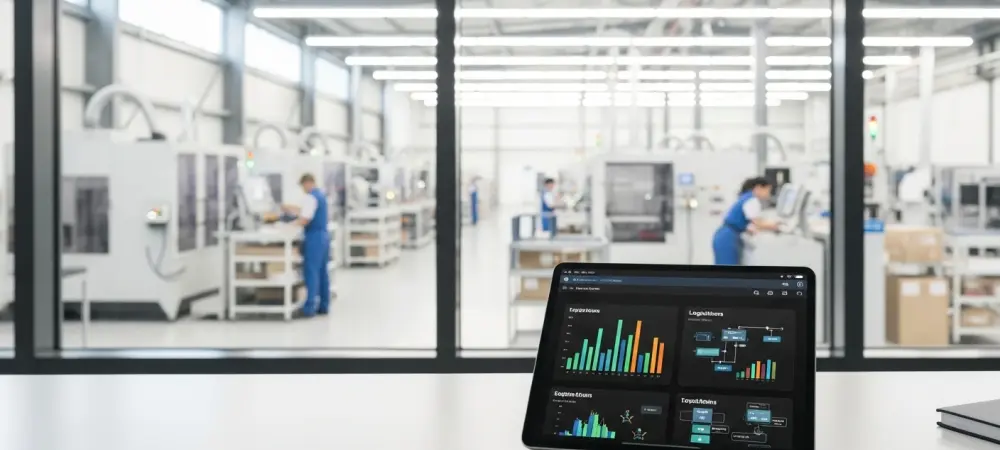
The rapid-fire release of high-level autonomous technologies has often left non-tech industries feeling like they are standing on the sidelines of a game they were never invited to play. While Silicon Valley remains obsessed with the dream of artificial general intelligence, a massive segment of the global economy—comprising construction, retail, and manufacturing—has been quietly suffocating under a mountain of manual data entry and fragmented spreadsheets. This research examines a significant strategic shift where the focus of innovation is moving away from speculative “unicorn” startups and toward providing practical, operational utility for these traditional sectors.
This transition is not merely a change in marketing but a necessary evolution to bridge the gap between high-level engineering ambitions and the immediate need for basic administrative automation. By addressing the “perpetual whiplash” of the tech sector, developers are beginning to realize that the most sustainable value of artificial intelligence lies in modernizing legacy infrastructure. This shift is vital for the broader economy because it focuses on reducing employee burnout and increasing efficiency in the very industries that provide the physical backbone of society.
Strategic Shift from Tech Speculation to Operational Utility
The pivot from speculative tools to practical utilities marks a turning point in how technology interacts with the general workforce. For years, the narrative surrounding artificial intelligence was dominated by the prospect of wholesale human replacement, which created a culture of resistance among traditional business owners. However, the current landscape reveals that these stakeholders are not looking for a digital overlord; they are seeking a digital assistant that can handle the repetitive, mind-numbing “grunt work” that currently drains their human capital.
By repositioning technology as a tool for operational support rather than a replacement for human intuition, developers have found a more receptive audience. In traditional industries, the challenge is rarely a lack of vision but rather a lack of bandwidth. When high-level logic is applied to mundane tasks like processing purchase orders or managing inventory updates, it creates a stabilizing effect. This allows legacy businesses to maintain their core values while adopting modern speeds, effectively transforming the tech sector from a source of disruption into a source of support.
The Pivot Toward Pragmatic AI Adoption
Observing the tech sector often feels like watching a cycle of unproductive flux, where new updates are released before the previous ones have even been integrated. This research identifies this phenomenon as a catalyst for a more pragmatic approach to adoption. Instead of chasing the next big breakthrough, forward-thinking startups are looking backward at the massive, underserved markets of the “old economy.” This pivot is grounded in the reality that a construction firm or a boutique retailer gains more from a reliable data extraction tool than from a speculative autonomous agent.
Understanding this shift is essential for recognizing how modern software can revitalize sectors that have historically been slow to digitize. When a business moves from a “messes of spreadsheets” model to a streamlined, automated workflow, the resulting economic stability benefits more than just the individual company. It reduces the overhead costs that are often passed down to consumers and allows lean teams to compete on a global scale. This pragmatic integration ensures that technological advancement serves the many rather than just the tech-native few.
Research Methodology, Findings, and Implications
Methodology
The study employed a case-study approach, specifically analyzing the trajectory of the startup Lightswitch and its transition from creating tech-centric software to solving problems for traditional industries. Researchers gathered primary data through field observations at major industry events, such as Expo West, where the appetite for automation in the Consumer Packaged Goods (CPG) sector was measured against existing technological offerings. This direct engagement provided a clear picture of what business owners actually need versus what tech developers often assume they want.
Furthermore, the research utilized qualitative interviews with diverse stakeholders to understand the psychological and logistical barriers to adoption. To provide a broader context, a comparative analysis was conducted using secondary data from reputable sources like the AICPA, North Carolina State University, and EY. These datasets allowed the researchers to evaluate the stark disparity in AI readiness between large tech firms and small-to-medium enterprises, highlighting the specific areas where the “learning gap” is most pronounced.
Findings
The data revealed that traditional business owners possess a surprisingly high appetite for advanced tools, provided they are marketed as solutions for administrative burdens. For example, the sugar-free candy company Harken Sweets demonstrated how a lean team could operate with the maturity of a massive corporation by using automation to extract data from purchase orders. This allowed them to manage expansion into major retailers like Walmart and Kroger without hiring a massive administrative staff, proving that “small doses” of technology can have a transformative impact on scalability.
Despite this interest, significant barriers remain, particularly regarding legacy infrastructure and siloed data. The findings indicated that less than 20% of small organizations feel adequately equipped for deployment, largely due to a lack of specialized talent and the prevalence of outdated manual systems. The research also highlighted that the most successful implementations were those that focused on “automated flags” and error-checking rather than complex, fully autonomous decision-making, which many executives still view with skepticism.
Implications
The results suggest a profound democratization of business success, where reduced administrative costs make previously unviable models economically sustainable. When the barrier to entry for managing a complex supply chain is lowered through automation, it fosters a more diverse and competitive marketplace. Educational institutions are already responding to this reality by shifting curricula toward “real-life” applications in hospitality and construction, ensuring that the next generation of workers can integrate these tools into traditional roles.
Moreover, there is a clear departure from the “one-employee unicorn” hype that dominated previous years. Instead, the focus has shifted toward supporting the longevity of established, lean businesses. This move away from speculative growth toward operational efficiency suggests that the future of the economy will be defined by how well traditional sectors can absorb technological advancements. By streamlining the “back office,” companies can refocus their energy on product quality and customer relationships, which are the true drivers of long-term value.
Reflection and Future Directions
Reflection
The research process successfully highlighted that the most impactful “wins” in the current technological landscape were often the simplest ones. It was determined that navigating the contrast between tech-sector hype and the physical limitations of manual-heavy industries required a disciplined focus on practical utility. The study effectively captured the transition from a speculative mindset to one of operational necessity, proving that the value of any tool is ultimately defined by its ability to solve a tangible problem in the real world.
Future Directions
The investigation into these trends pointed toward several critical areas for further study. It became clear that there is a pressing need to examine the long-term effects of this integration on labor requirements, particularly to see if automation leads to job displacement or a shift toward higher-value tasks within manual industries. Additionally, future inquiries should focus on developing governance frameworks that are accessible to small businesses, as most current regulations are designed with the resources of major tech conglomerates in mind.
The Future of Practical AI Integration
The findings supported the conclusion that the next frontier of progress is firmly rooted in the automation of mundane, essential tasks across the general economy. By returning to the basics of data management and workflow optimization, developers provided sustainable value to sectors that were previously overlooked. This transition ensured that the benefits of innovation were not restricted to software companies but were used to bolster the stability and scalability of the entire economic landscape. The movement toward pragmatic integration suggested that the successful businesses of the future would be those that used technology to enhance their existing strengths rather than trying to reinvent themselves as tech companies. As specialized tools become more accessible, the focus should remain on bridging the gap between legacy systems and modern efficiency. This approach ultimately shifted the narrative from what technology might achieve in a vacuum to how it effectively repaired the fragmented processes of the present day.