

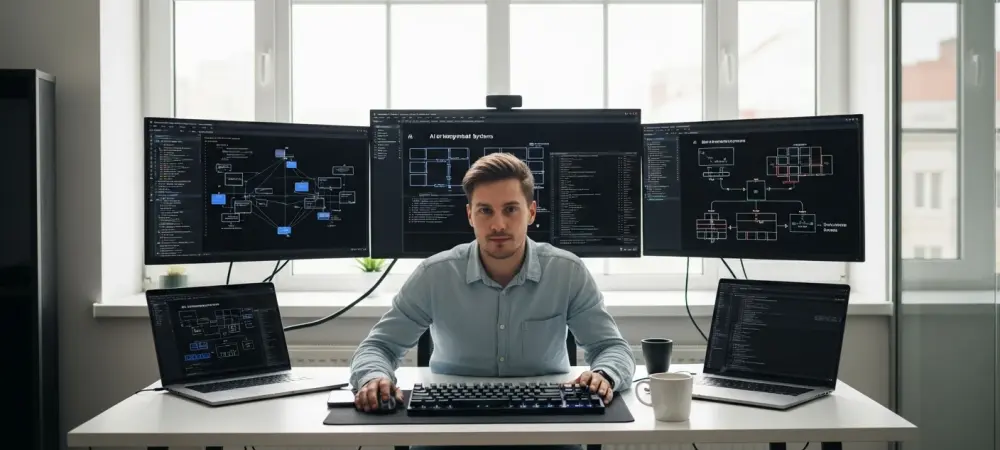
The rapidly accelerating capabilities of large language models have fundamentally altered the fundamental expectations placed upon software engineers, creating a scenario where historical hiring metrics no longer align with daily professional demands. For over a decade, the technology sector has maintained an elaborate, standardized hiring apparatus centered on algorithmic puzzles, yet this legacy system is increasingly disconnected from the practical realities of modern software development. As artificial intelligence transforms how code is generated and managed, the industry has reached a critical inflection point where the traditional reliance on data structures and algorithms serves as a barrier rather than a bridge to talent. The misalignment between artificial interview environments and actual job functions represents a massive economic and intellectual drain that necessitates a complete overhaul of how technical proficiency is measured. Modern organizations are now forced to confront the reality that a candidate’s ability to solve a grammar-like logic riddle in forty-five minutes provides almost no insight into their capacity to navigate complex, AI-augmented systems.
The Growing Disconnect: Why Traditional Testing Fails
The current reliance on standardized coding assessments, frequently referred to through the lens of platforms like LeetCode, has created a significant diversion of human potential on an industrial scale. Community-driven estimates suggest that engineers collectively spend approximately sixty million hours annually practicing artificial riddles instead of building innovative products or solving pressing societal problems. This focus on “puzzle-based” hiring often excludes high-performing developers who possess deep expertise in system architecture but lack the specific training required to solve niche logic puzzles under extreme pressure. The resulting “false negatives” represent a staggering loss for the global economy, as qualified candidates are filtered out for failing a test that bears little resemblance to their actual professional responsibilities. The industry’s brightest minds are effectively forced to grind through repetitive coding exercises that do not translate to the work they are actually hired to perform once they join a team.
This standardized testing apparatus has inadvertently prioritized “grinders” over “builders,” creating a workforce that is highly skilled at passing tests but may struggle with the ambiguity of real-world software production. While these puzzles were originally intended as a proxy for raw intelligence and problem-solving ability, they have evolved into a predictable hurdle that rewards memorization over creative technical thinking. The cost of this misalignment extends beyond simple recruitment metrics; it affects employee morale and slows down the pace of innovation within companies that cannot find the specific talent they need. By maintaining these outdated barriers, organizations risk missing out on diverse thinkers who approach technology from a holistic perspective rather than a purely mathematical one. The shift toward a more representative assessment model is no longer just a theoretical preference but a competitive necessity in an environment where the speed of execution is determined by practical application rather than theoretical syntax knowledge.
Redefining Engineering: The Role of Orchestration
The emergence of AI coding assistants such as GitHub Copilot and specialized large language models has rendered traditional syntax-heavy interviews almost entirely obsolete by commoditizing basic code generation. In the current landscape, the role of a software engineer is shifting from a primary focus on “writing code” to a more sophisticated role of “orchestrating systems” and auditing AI-generated output. In the pre-AI era, syntax mastery and memorization of standard libraries held significant value, but today these are tasks that machines handle instantaneously and with high precision. The contemporary developer must now possess the judgment to evaluate architectural coherence and security vulnerabilities within codebases they may not have written from scratch. Recruitment models must pivot to measure reasoning and system navigation rather than output, as the ability to utilize artificial intelligence effectively has become a core competency for any senior professional.
Because artificial intelligence can now handle boilerplate code and common syntax errors, the value of an engineer increasingly lies in their ability to manage technical trade-offs and architectural integrity. Modern recruitment processes must therefore focus on how a candidate handles ambiguity and structures complex problems rather than their ability to reproduce a known algorithm. The transition from manual coding to system orchestration requires a different set of cognitive tools, including high-level critical thinking and the ability to verify the logic of automated suggestions. Most traditional interviews still prohibit the use of AI tools, which creates a bizarre scenario where candidates are tested in a vacuum that excludes the very tools they will use to succeed in their roles. Aligning the interview environment with the actual professional ecosystem is the only way to accurately gauge whether an engineer can thrive in a modern, high-speed development team that leverages automation.
Visible Proof: The Rise of Portfolio-Based Evaluation
As the value of rote memorization continues to decline, “visible proof” of a developer’s skills is emerging as the primary currency for technical talent across the global market. Recruiters are moving away from isolated coding tests and toward a holistic evaluation of a candidate’s historical contributions, including open-source projects, research, and documented system designs. Historically, evaluating these varied artifacts at scale was a significant challenge for hiring teams, but artificial intelligence is now providing the solution to the very problem it helped create. Advanced AI-driven tools can now analyze massive repositories and complex GitHub histories to objectively judge the quality of a developer’s real-world behavior and decision-making patterns. This allows companies to adopt a “portfolio-based” hiring model that looks at the impact and longevity of a candidate’s work rather than their performance during a single high-stress hour.
This shift toward longitudinal assessment provides a much clearer picture of how an engineer operates within a collaborative environment and how they respond to long-term technical debt. By examining community engagement metrics, such as stars and forks, alongside the actual logic of commits, hiring managers can identify developers who have a proven track record of shipping stable and scalable products. This approach also helps identify “quiet” talent—engineers who consistently deliver high-value work but may not be the fastest at solving abstract riddles under a spotlight. The focus on verifiable project history also encourages developers to engage more deeply with the broader tech community, fostering a culture of transparency and shared innovation. Ultimately, a developer who has navigated the complexities of maintaining a live system has demonstrated professional judgment that no algorithmic puzzle could ever replicate, making this “visible proof” the gold standard for 2026.
The Infrastructure Gap: Implementing Realistic Assessments
One of the primary reasons organizations have clung to outdated testing models is the “infrastructure gap,” which makes it operationally difficult to scale realistic technical evaluations. Setting up a comprehensive, “messy” environment for a debugging test or a complex system design session requires significant time from senior engineering staff who are already overextended. Standardized puzzles are popular not because they are effective predictors of success, but because they are easy to deploy across thousands of candidates with minimal manual intervention. To overcome this hurdle, a new category of “interview infrastructure” has emerged, led by specialized platforms designed to simulate the actual job environment. These systems provide candidates with pre-configured, realistic technical scenarios where they can use modern tools and AI assistants to solve genuine problems, allowing interviewers to observe their natural workflow and thought processes.
By bridging this gap, companies can finally run “the right interview” without placing an undue operational burden on their technical leads or recruitment departments. These modern platforms, such as those developed by startups like Fulloop, allow for a transparent and structured evaluation of how a candidate navigates real-world complexity and uses automation to enhance their productivity. The primary signal of a high-quality candidate is no longer whether they can produce a perfect, identical solution to a known puzzle, but how they think and what questions they ask when encountering a roadblock. This transition represents a broader movement toward work-based hiring, where the focus remains on professional judgment and the ability to solve a problem from start to finish. Removing the friction from realistic assessments ensures that the hiring process is both rigorous and fair, providing a clear window into how an engineer will actually perform once they are integrated into the existing development team.
Future Considerations: Authenticity in Technical Assessment
The industry-wide move toward work-based hiring has effectively signaled the end of the artificial hurdle era in technical recruitment. By adopting AI-assisted evaluation tools and focusing on real-world system challenges, organizations have begun to align their hiring practices with the actual requirements of modern software development roles. The technical interview was the last holdout of an outdated professional model, but the transition toward authentic assessment has proven far more effective at identifying true talent. Companies that prioritized process over output found that they could build more resilient and innovative teams by focusing on the professional judgment and reasoning skills of their candidates. The focus shifted away from finding someone who could solve a riddle and toward finding someone who could maintain the architectural integrity of a complex, AI-supported system. This evolution has fostered a more transparent and productive relationship between candidates and employers, setting a new standard for the entire technology sector.